Trump Criticizes NATO for Rejecting Support in Iran Military Action
Synopsis
President Donald Trump voiced strong criticism against NATO for their refusal to join the US military operation against Iran. He claimed that the US can effectively act alone, emphasizing that allied support is unnecessary, particularly in light of recent military successes against Iran.
Key Takeaways
Trump's criticism highlights NATO's reluctance to engage in military operations.
The US claims to have achieved significant military success against Iran.
Trump emphasizes self-reliance over NATO support in military matters.
Burden-sharing remains a contentious issue within NATO.
Iran's nuclear ambitions continue to influence US foreign policy.
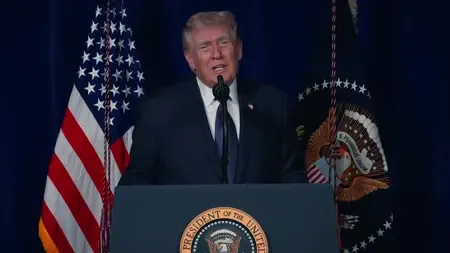
Washington, March 17 (NationPress) President Donald Trump stated on Tuesday that the majority of NATO partners have opted out of supporting the US military efforts against Iran, criticizing the alliance while asserting that the United States can operate independently.
Trump remarked, "The United States has been made aware by the majority of our NATO 'Allies' that they prefer not to engage in our military action against the Terrorist Regime of Iran."
He continued, despite their hesitation, "nearly every country has expressed strong agreement with our actions, emphasizing that Iran must not be permitted to acquire nuclear weapons in any form."
Trump expressed no surprise regarding NATO members' stance, stating, "I have always viewed NATO, where we invest Hundreds of Billions of Dollars annually to defend these nations, as a one-sided arrangement—We provide protection, but they contribute little in return, especially during critical times."
He claimed that US forces have effectively diminished Iran's military strength. "Thankfully, we have severely weakened Iran’s military capabilities—their Navy has been largely neutralized, their Air Force is incapacitated, their Anti-Aircraft and Radar systems are dismantled, and their leadership, at nearly every level, has been significantly impacted," Trump asserted.
Due to these military advancements, he stated that assistance from allies was no longer essential. "Given our military success, we do not require, nor do we desire, the support of NATO countries—WE NEVER DID!" he emphasized.
Trump extended this sentiment to major US allies in Asia, remarking, "Similarly, Japan, Australia, or South Korea," adding, "WE DO NOT NEED THE HELP OF ANYONE!"
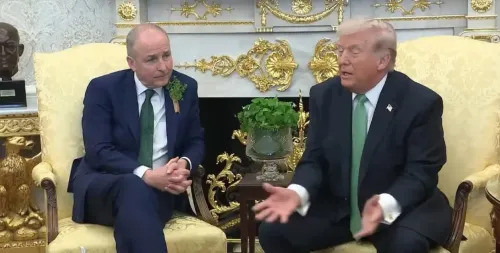
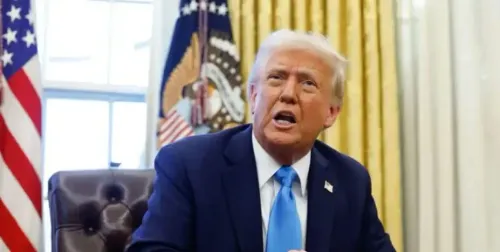
These remarks build on previous comments made by Trump in the Oval Office, where he expressed disappointment at certain US allies’ unwillingness to contribute militarily.
"What surprises me is their lack of eagerness to assist," Trump noted. "There are nations that have greatly let me down."
When discussing the UK, he remarked, "When I think of the UK, often regarded as the premier ally," he had requested that "it would be extremely beneficial if you could send some ships and, if available, minesweepers."
However, he found the response lacking. "He said he needed to consult his team," Trump recalled. "I told him, you don’t need to consult a team. You are the prime minister; you can make the call."
Trump later dismissed any offers of support. "I explained that I no longer wanted them. I don’t need them after we achieve victory; I want them before we commence. I don’t need your aircraft carriers after the fact," he said.
He also connected this issue to the long-term presence of US troops overseas. "We maintain 45,000 troops in Japan, another 45,000 in South Korea, and between 45,000 to 50,000 in Germany," he pointed out. "We provide defense for all these nations."
Trump framed the situation as a confirmation of his ongoing criticism regarding burden-sharing within the alliance. "I have long maintained that this is the greatest outcome from this situation," he stated, referring to the ongoing conflict.
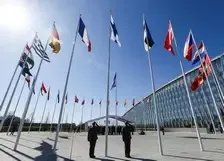
NATO, established in 1949, operates under the principle of collective defense, with the United States being its largest military and financial supporter. The issue of burden-sharing has consistently been a point of contention, with Washington frequently urging allies to boost defense budgets and engage in collaborative operations.
Iran’s nuclear ambitions and regional actions have been critical to US strategy in the Middle East. Trump withdrew the United States from the 2015 Iran nuclear agreement during his initial term, arguing it failed to permanently inhibit Tehran from developing a nuclear arsenal.
Point of View
Trump's statements highlight ongoing tensions within NATO regarding burden-sharing and military collaboration. The rejection of support from allies during a critical military operation raises questions about the effectiveness and unity of international alliances.
NationPress
24 Sept 2026
Frequently Asked Questions
Why did NATO allies decline to support the US in the Iran military operation?
Most NATO allies expressed a preference not to engage in the US military operation against Iran, as indicated by President Trump.
What are the implications of the US not needing NATO support?
Trump's assertion suggests a shift in US military strategy, indicating that the US may rely more on its own capabilities rather than NATO allies during conflicts.
How does Trump's view on NATO impact US foreign policy?
Trump's criticism of NATO may lead to reevaluated defense commitments and partnerships, particularly in regions where allies are not forthcoming with military support.
What has been the historical role of NATO since its formation?
NATO has operated on the principle of collective defense, primarily supported by the US as its largest military and financial contributor since its establishment in 1949.
What was Trump's stance on the Iran nuclear agreement?
Trump withdrew the US from the 2015 Iran nuclear agreement, arguing that it did not effectively prevent Iran from pursuing nuclear weapons.