White House Backs Huizenga Op-Ed on Working Families Tax Cuts
Synopsis
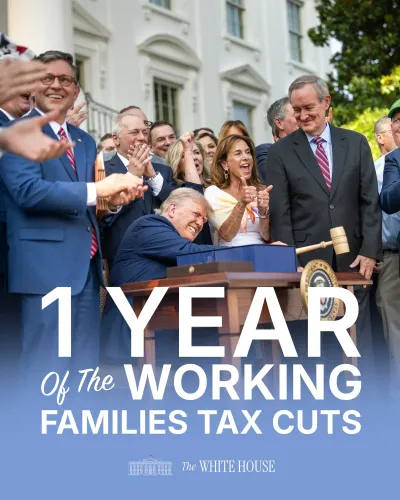
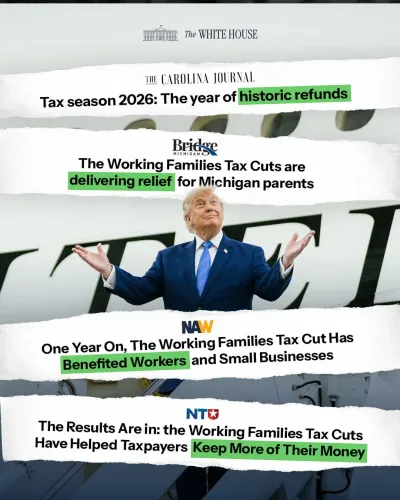
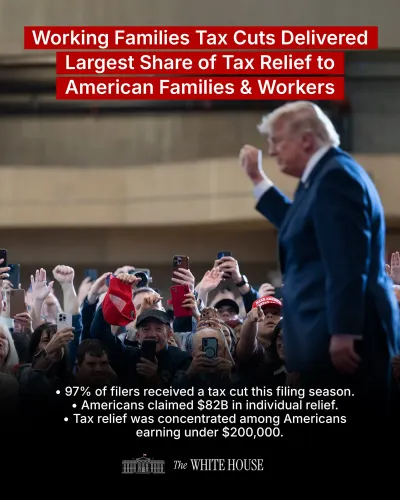
The White House on 8 July 2026 reshared Rep. Bill Huizenga's op-ed claiming Working Families Tax Cuts are boosting savings for Michigan workers, signalling executive support for extending expiring 2017 tax provisions as congressional negotiations continue.
Key Takeaways
The White House amplified Rep.
Bill Huizenga's op-ed on 8 July 2026 , endorsing his argument that Working Families Tax Cuts benefit Michigan workers.
Huizenga has represented Michigan's 4th congressional district since 2011 and sits on the House Financial Services Committee .
The 'Working Families Tax Cuts' framing traces to the Tax Cuts and Jobs Act of 2017 , which doubled the child tax credit and raised the standard deduction.
Most individual provisions of the 2017 tax law were set to expire after 2025 , making their extension a live legislative question.
Michigan's large automotive and manufacturing workforce makes it a frequently cited example in federal tax policy debates.
The White House repost signals executive-branch backing for preserving or extending the individual tax-rate reductions ahead of further congressional action.
The White House on Wednesday, 8 July 2026 amplified a statement by Republican Representative Bill Huizenga of Michigan, sharing his argument that 'Working Families Tax Cuts' are helping workers in the state save money — pointing readers to an opinion piece published in a Michigan daily newspaper.
Context
Rep. Bill Huizenga, who has represented Michigan's 4th congressional district since 2011 and serves on the House Financial Services Committee, wrote that federal tax reductions are delivering tangible financial benefits to working households in his state. The White House repost signals executive-branch endorsement of that messaging ahead of ongoing congressional debates over tax policy.
Michigan — a state with a large manufacturing and automotive workforce — has frequently been used as a case study in federal tax discussions, given its mix of union and non-union industrial employment and its status as a closely contested state in national elections.
Policy Backdrop
The 'Working Families Tax Cuts' framing is rooted in the Tax Cuts and Jobs Act of 2017, which temporarily reduced most individual income-tax brackets, doubled the child tax credit, and raised the standard deduction. Most of those individual provisions were set to expire after 2025, making their extension a central battleground in congressional negotiations.
Republican lawmakers have consistently argued that these rate reductions increase household take-home pay and encourage greater savings, particularly among middle-income earners in industrial states. The White House amplifying Huizenga's op-ed fits a broader pattern of using state-level voices to build the case for preserving or extending those provisions.
Stakeholders and Impact
Michigan workers and working families are the stated beneficiaries in Huizenga's framing. The automotive and manufacturing sectors that dominate the state's economy mean that shifts in take-home pay and savings rates have an outsized effect on local consumer spending and household financial stability.
Critics of the 2017 tax overhaul have argued that its largest long-term benefits flow to corporations and higher-income households, while defenders point to the near-doubling of the standard deduction as a direct gain for lower- and middle-income filers. The White House's endorsement of Huizenga's piece does not address those competing claims directly.
What's Next
Congressional negotiations over whether to make expiring individual tax provisions permanent — or to modify them — remain active. State-specific savings data from the Treasury Department or congressional offices could sharpen the debate over who has actually benefited from the cuts.
The White House's decision to amplify a sitting lawmaker's op-ed on this topic suggests that tax policy will remain a prominent feature of the administration's public communications as the legislative calendar advances.
Point of View
Worker-centric voice to build public support for extending the expiring individual provisions of the 2017 tax overhaul. Michigan's electoral and industrial profile makes it an ideal stage for this kind of retail tax politics. The amplification also signals that the administration views the 'Working Families' framing — rather than the corporate rate cut — as the most politically durable argument heading into a contentious legislative stretch. Whether the op-ed shifts opinion in Congress or among voters will depend on whether verifiable, state-level savings data can be produced to back the claim.
NationPress
8 Jul 2026
Frequently Asked Questions
What are the Working Families Tax Cuts mentioned by the White House?
The 'Working Families Tax Cuts' refers to the individual-rate reductions, doubled child tax credit, and raised standard deduction introduced under the Tax Cuts and Jobs Act of 2017 . Most of these provisions were temporary and set to expire after 2025 , making their extension a key policy debate.
Who is Rep. Bill Huizenga and why is he relevant?
Rep. Bill Huizenga is a Republican U.S. Representative who has served Michigan's 4th congressional district since 2011 . He sits on the House Financial Services Committee and is a consistent advocate for tax reduction measures, making him a natural voice for the White House to amplify on this issue.
How do the 2017 tax cuts affect Michigan workers?
The Tax Cuts and Jobs Act of 2017 reduced most individual income-tax brackets and nearly doubled the standard deduction, which supporters say increased take-home pay for many Michigan manufacturing and automotive workers. The precise savings figures for the state have not been independently verified in this context.
Why does the White House focus on Michigan for tax policy messaging?
Michigan is an industrially significant and electorally competitive state, making it a powerful example in national tax debates. Its large base of union and non-union manufacturing workers allows policymakers to frame tax cuts in terms of direct household benefit for working-class Americans.
What happens if the 2017 individual tax provisions are not extended?
If Congress does not act, most individual income-tax provisions from the Tax Cuts and Jobs Act of 2017 — including the higher standard deduction and reduced brackets — would expire, potentially raising tax bills for millions of middle-income households across the United States, including in Michigan .