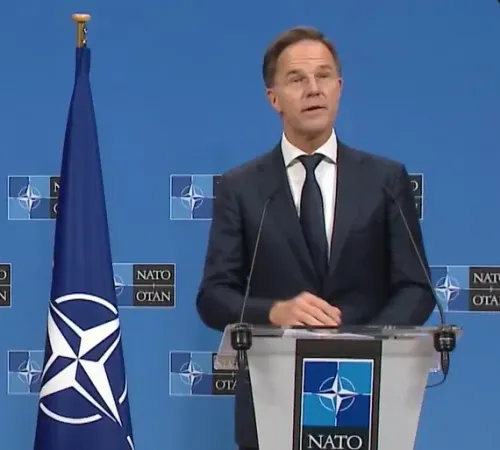
NATO chief announces billions in defence deals at Ankara forum
Synopsis
At the NATO Defence Industry Forum in Ankara, Secretary General Mark Rutte converted year-old Hague pledges into hard numbers: billions in signed contracts, a $40 billion anti-drone commitment, and a quintupling of drone operators by 2027. The forum marks a rare moment where NATO's spending rhetoric met visible, contractual delivery — and the scale signals a structural shift in European defence-industrial ambition.
Key Takeaways
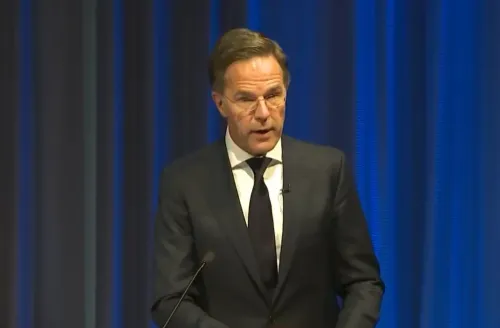
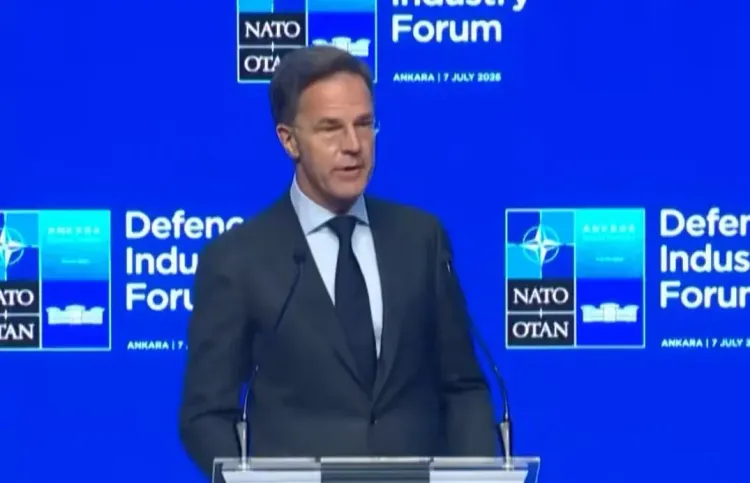
NATO Secretary General Mark Rutte announced 'new major projects' at the Defence Industry Forum in Ankara on 7 July .
Contracts worth billions of dollars were signed, projected to create hundreds of thousands of jobs .
Over $40 billion will be invested in anti-drone capabilities over the next five years , with drone operators to be quintupled by 2027 .
Finland joined the MRTT fleet; the tenth Airbus A330 MRTT is set for imminent delivery, approaching the fleet's full capacity of 12 aircraft .
Finland , France , and Sweden joined the NATO Flight Training Europe (NFTE) initiative, now extended to drone operator training.
The NSPA awarded a contract worth 'hundreds of millions of dollars' for allied surveillance drones.
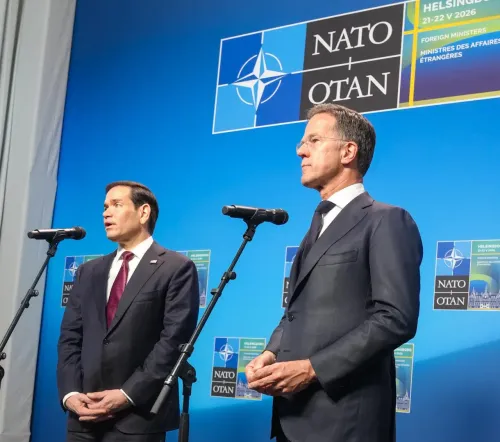
NATO Secretary General Mark Rutte on 7 July announced a series of 'new major projects' in defence at the Defence Industry Forum in Ankara, Turkey, including contracts worth billions of dollars, a $40 billion anti-drone investment, and expanded multinational fleet capabilities. The announcements mark the first concrete delivery of commitments made at The Hague summit a year ago, where allies pledged to invest 5 per cent of GDP in defence and security by 2035.
Key Announcements at the Forum
Rutte opened the forum by pointing to measurable outcomes from the 2024 Hague commitments. 'Today and tomorrow, we will sign contracts worth billions of dollars, which will boost our economies, enhance our security, and create hundreds of thousands of jobs,' he said. 'These are NATO-made capabilities, achieved by working together, in close cooperation.'
Among the headline projects is an in-flight refuelling platform and a rapid equipment-movement initiative spanning several allies. Finland has formally joined the multinational Multi-Role Tanker Transport (MRTT) fleet, bringing the membership to nine nations: Belgium, Czech Republic, Denmark, Finland, Germany, Luxembourg, Netherlands, Norway, and Sweden. The nine members jointly announced the imminent delivery of the tenth Airbus A330 MRTT, moving the fleet closer to its full capacity of 12 aircraft.
$40 Billion Anti-Drone Push
A major pillar of the forum's output is an investment of over $40 billion in anti-drone capabilities over the next five years. NATO also set a target to quintuple the number of drone operators by the end of 2027. To accelerate procurement, the alliance will establish a dedicated anti-drone capability market to ensure availability of tested systems compatible with NATO standards.
For training, allies will leverage the multinational NATO Flight Training Europe (NFTE) initiative, which covers all flight personnel and will now be extended to drone operator training. At the forum, Finland, France, and Sweden joined the existing 17 NFTE members, expanding the programme's reach.
NSPA Surveillance Drone Contract
The NATO Support and Procurement Agency (NSPA) separately awarded a contract worth 'hundreds of millions of dollars' for the purchase of surveillance drones for allied nations. The contract underscores the alliance's accelerating shift toward unmanned systems as a core defence layer.
What This Signals for NATO's Defence Posture
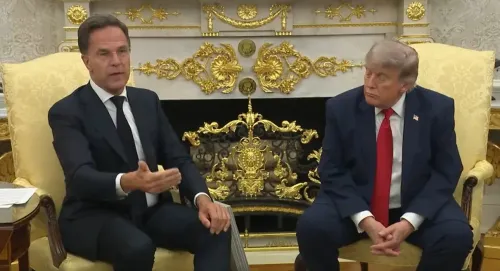
This comes amid sustained pressure — particularly from the United States — on European allies to increase defence spending and reduce dependence on US capabilities. The Ankara forum's output represents a visible effort to demonstrate burden-sharing in action. Notably, the anti-drone investment and MRTT fleet expansion both address capability gaps that have been highlighted repeatedly since Russia's full-scale invasion of Ukraine in 2022. The contracts signed this week are expected to sustain defence-industrial activity across multiple member economies for years ahead.
Point of View
Not just commitments. But the real test is sequencing — the anti-drone market and MRTT expansion address 2022-era capability gaps that should have been filled sooner. The quintupling of drone operators by 2027 is an ambitious target given current training pipeline constraints across member states. If European defence industries can absorb these contracts without the bottlenecks that plagued earlier ammunition-production pledges, this forum will matter. If not, it risks becoming another headline number without delivery.
NationPress
6 Oct 2026
Frequently Asked Questions
What did NATO announce at the Ankara Defence Industry Forum?
NATO Secretary General Mark Rutte announced contracts worth billions of dollars, a $40 billion anti-drone investment over five years, expansion of the MRTT tanker fleet with Finland joining, and an extension of the NATO Flight Training Europe initiative to drone operators. The announcements were framed as the first concrete results of commitments made at The Hague summit in 2024.
How much is NATO investing in anti-drone capabilities?
NATO allies announced an investment of over $40 billion in anti-drone capabilities over the next five years. The alliance also plans to quintuple the number of drone operators by the end of 2027 and will establish a dedicated anti-drone capability market for tested, NATO-standard systems.
Which countries are now part of the NATO MRTT fleet?
The MRTT fleet now has nine members: Belgium, Czech Republic, Denmark, Finland, Germany, Luxembourg, Netherlands, Norway, and Sweden. Finland joined at the Ankara forum, and the group announced the imminent delivery of the tenth Airbus A330 MRTT, moving toward a full fleet of 12 aircraft.
What is the NATO Flight Training Europe initiative and who joined it?
The NATO Flight Training Europe (NFTE) initiative facilitates training for all flight personnel across member states and is now being extended to drone operator training. Finland, France, and Sweden joined at the Ankara forum, bringing total membership to 20 nations.
What surveillance drone contract did the NSPA award?
The NATO Support and Procurement Agency (NSPA) awarded a contract worth 'hundreds of millions of dollars' for the purchase of surveillance drones for allied nations, reflecting the alliance's accelerating investment in unmanned systems.