NATO eyes Hormuz defence push as Rubio, Rutte meet in Sweden
Synopsis
At the NATO Foreign Ministers' Meeting in Sweden, Rubio and Rutte issued a dual warning: the alliance cannot produce munitions fast enough for future threats, and Iran's attempt to control the Strait of Hormuz is flatly unacceptable. With the Ankara summit looming, the Helsingborg talks have set a high-stakes agenda — and surfaced real cracks in transatlantic unity over US Middle East operations.
Key Takeaways
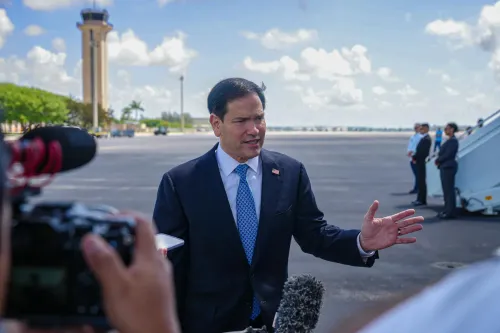
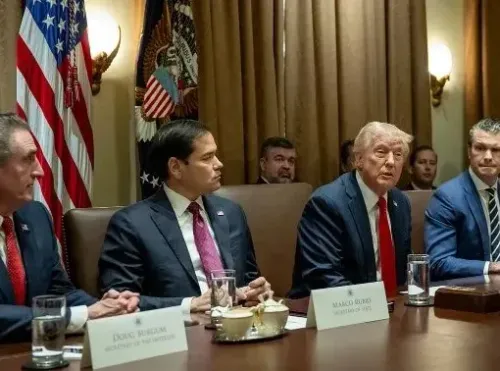
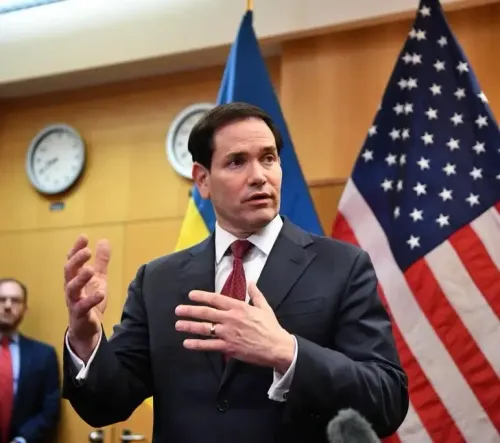
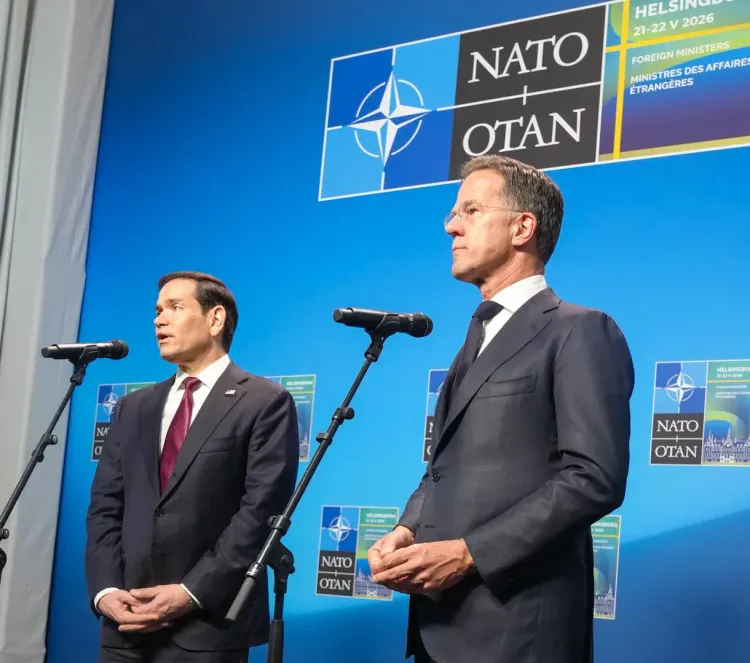
US Secretary of State Marco Rubio and NATO Secretary General Mark Rutte met on 22 May in Helsingborg, Sweden on the sidelines of the NATO Foreign Ministers' Meeting.
Both leaders warned that NATO's defence industrial base cannot produce munitions at the rate required for future threats.
Rutte confirmed defence budgets are rising sharply but flagged supply-side constraints in both Europe and the US .
Rubio accused Iran of imposing a 'tolling system' on the Strait of Hormuz , calling it unacceptable; the US is backing a Bahrain -supported UN Security Council resolution on navigation rights.
Rubio acknowledged US 'disappointment' at some NATO allies over their response to American military operations in the Middle East .
The NATO Summit in Ankara is expected to make industrial production capacity and Hormuz security central agenda items.
US Secretary of State Marco Rubio and NATO Secretary General Mark Rutte on Thursday, 22 May called for urgent expansion of alliance defence production and the protection of freedom of navigation in the Strait of Hormuz, following talks on the sidelines of the NATO Foreign Ministers' Meeting in Helsingborg, Sweden. The bilateral meeting addressed defence spending, military production capacity, Iran's nuclear and missile programmes, and maritime security ahead of the alliance summit scheduled in Ankara later this year.
Key Developments from Helsingborg
According to a State Department readout attributed to spokesperson Tommy Pigott, Rubio and Rutte discussed 'strategic imperatives for the Alliance, including increased Allied defence spending, the upcoming NATO Summit in Ankara, and expanded Transatlantic defence production.' The readout also flagged US opposition to 'protectionist measures that risk NATO interoperability and readiness, weaken the Transatlantic defence industrial base, and jeopardise the ability to deliver equipment to our warfighters.'
Industrial Base Under Strain
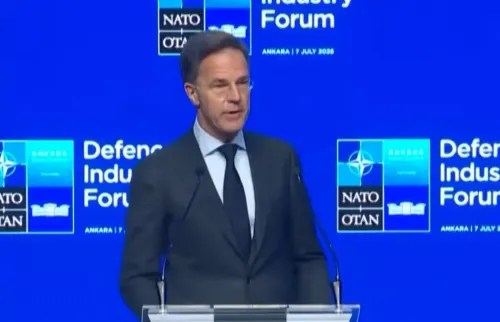
Rutte acknowledged that defence budgets across NATO member states are rising sharply. 'The good news is the money is now coming in,' he said. 'Defence spending is rapidly ramping up.' However, he cautioned that the alliance's defence industrial base is struggling to keep pace with demand. 'This is a problem in Europe, this is a problem in the US,' Rutte said, adding that the issue would be 'a big issue at the Ankara Summit.'
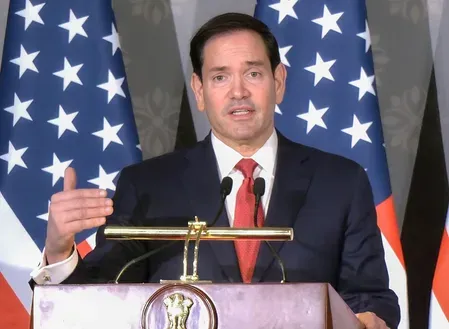
Rubio echoed the concern, warning that current munitions output falls well short of future requirements. 'It is clear to the world, to all of us in the Alliance and beyond, that we simply are not able to produce munitions today at a rate that are necessary for future needs,' he said. He described the upcoming Ankara summit as 'probably one of the more important leaders' summit in the history of NATO.'
Hormuz Tensions and Iran's Military Posture
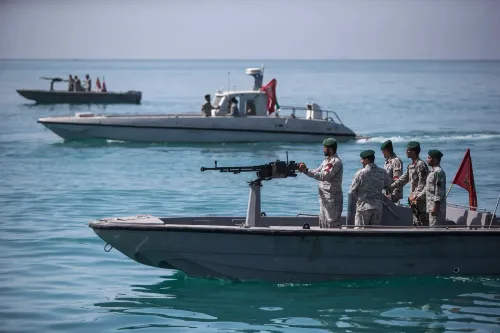
The Strait of Hormuz — through which roughly 20% of global oil supplies transit — emerged as a central security concern. Rutte said NATO ministers were 'deeply concerned' about threats to navigation in the waterway. 'I hear from many of my colleagues here that it's not acceptable that freedom of navigation is basically trampled upon as it is at the moment,' he said.
Rutte also praised recent US military actions, stating that 'the US degrading the nuclear capability of Iran but also the long-range missile capability of Iran, is crucial for the Middle East, for Europe, for the whole world.' Rubio accused Iran of attempting to impose a 'tolling system' in the Strait of Hormuz, calling it flatly 'not acceptable.' He confirmed the US is backing a Bahrain-supported resolution at the United Nations Security Council to safeguard freedom of navigation in international waters, and reiterated Washington's position that 'Iran can never have a nuclear weapon.'
Intra-Alliance Tensions Surface
Rubio did not shy away from acknowledging divisions within the alliance over recent US military operations in the Middle East. 'The President's views — frankly, disappointment — at some of our NATO Allies and their response to our operations in the Middle East, they are well documented,' he said. This comes amid broader transatlantic friction over burden-sharing, trade, and the pace of European rearmament — fault lines that the Ankara summit will be under pressure to paper over.
What Comes Next
All eyes now turn to the NATO Summit in Ankara, where defence industrial capacity and Iran-linked maritime security are set to dominate the agenda. Whether member states can align on concrete production targets — and resolve the US-Europe friction over protectionist procurement — will determine whether the Helsingborg signals translate into binding commitments.
Point of View
And a maritime chokepoint that a non-member state is increasingly treating as a toll road. Rubio's public airing of presidential 'disappointment' at allies over Middle East operations is notable — it signals that Washington's patience with symbolic solidarity, without operational backing, is thinning. The Ankara summit will need to deliver more than communiqué language on both counts. If it does not, the gap between NATO's rhetorical ambition and its actual production capacity risks becoming a strategic liability that adversaries can exploit.
NationPress
19 Sept 2026
Frequently Asked Questions
What did Rubio and Rutte agree on at the NATO Foreign Ministers' Meeting?
Rubio and Rutte agreed that NATO allies must urgently scale up defence production and protect freedom of navigation in the Strait of Hormuz. They met on 22 May in Helsingborg, Sweden, and discussed defence spending, Iran, maritime security, and the upcoming NATO Summit in Ankara.
Why is the Strait of Hormuz a concern for NATO?
NATO ministers are concerned because Iran is reportedly threatening freedom of navigation in the Strait of Hormuz, through which a significant share of global oil supplies passes. Rubio accused Iran of trying to impose a 'tolling system' on the waterway, which the US has called unacceptable.
What is the NATO Summit in Ankara and when is it scheduled?
The NATO Summit in Ankara is a leaders-level meeting scheduled later in 2025 in Turkey. Rubio described it as 'probably one of the more important leaders' summits in the history of NATO,' with defence industrial capacity and Hormuz security expected to be central agenda items.
What is the US position on Iran's nuclear programme?
The US position, reiterated by Rubio in Helsingborg, is that Iran can never be permitted to possess a nuclear weapon. Rutte also praised US military actions that he said degraded Iran's nuclear and long-range missile capabilities.
Why did Rubio mention disappointment with NATO allies?
Rubio acknowledged that US President Donald Trump is disappointed with some NATO allies over their response to US military operations in the Middle East. The remarks signal ongoing transatlantic friction over burden-sharing and operational solidarity within the alliance.