Rubio warns Hormuz control by Iran risks Indo-Pacific precedent
Synopsis
Rubio's Manila address recast the Hormuz standoff as a global rules-of-the-sea crisis, not a bilateral US-Iran dispute. With 20% of world energy supply at stake and an explicit warning to ASEAN that the precedent could reach their own waterways, Washington is clearly trying to internationalise the pressure on Tehran — and recruit Indo-Pacific partners into the coalition.
Key Takeaways
US Secretary of State Marco Rubio warned on 23 July that Iran controlling the Strait of Hormuz would set a dangerous precedent for Indo-Pacific maritime routes.
Rubio said the strait handles roughly 20 percent of the world’s energy supply, making the dispute a global economic threat.
He argued Iran’s demand to control Hormuz transit has no basis under existing international law .
The US accused Tehran of failing to honour commitments despite initiating direct and indirect contacts with Washington.
Rubio addressed ASEAN foreign ministers in Manila , explicitly linking Middle East maritime tensions to Indo-Pacific security.
Washington signalled readiness for diplomacy but warned it would ‘do what is necessary’ to protect its interests and those of allies if Iran is not serious.
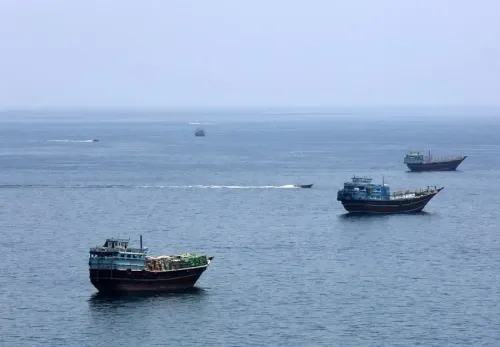
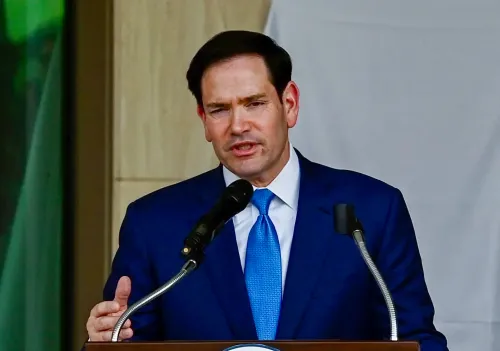
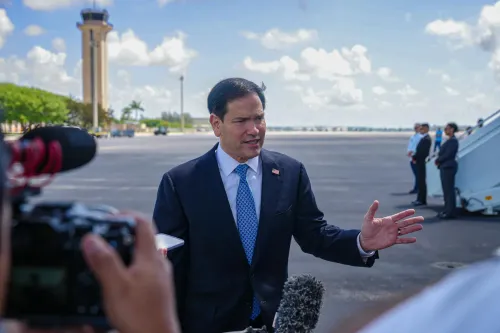
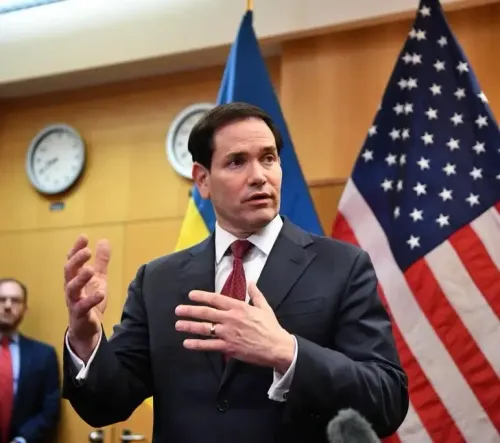
US Secretary of State Marco Rubio on Thursday, 23 July warned that permitting Iran to assert control over shipping through the Strait of Hormuz would set a perilous precedent that could ripple far beyond the Middle East into the Indo-Pacific, framing the standoff as a direct threat to freedom of navigation and the foundations of global trade. Rubio made the remarks at the ASEAN Post-Ministerial Conference with the United States in Manila, addressing foreign ministers of Southeast Asian nations.
The Core Argument: A Precedent, Not Just a Bilateral Dispute
Rubio was unambiguous in framing the Hormuz issue as something larger than a confrontation between Washington and Tehran. He described the Strait of Hormuz as an international waterway and argued that Iran's demand to control transit through it had no basis in existing international law. “At its core, it’s very simple — Iran demands the right, which they do not have under any existing legal mechanism, to control the transit of traffic through the Straits of Hormuz,” Rubio said.
He went further, spelling out the cascading risk: “If we create a precedent in the Middle East, where a nation state can decide that they are going to control an international waterway, charge a toll, and if you don’t pay them, blow up your ships, we have created a very dangerous precedent, which will repeat itself in other parts of the world, including in this region.” The reference to ‘this region’ was directed squarely at the ASEAN foreign ministers in the room, signalling that the South China Sea and broader Indo-Pacific maritime corridors could face similar challenges if the Hormuz principle is conceded.
What Is at Stake: Energy Supply and Global Commerce
Rubio underscored the economic dimension, noting that the Strait of Hormuz is a chokepoint for roughly 20 percent of the world’s energy supply. He argued that without firm international pushback, a significant portion of the region’s and the world’s energy would effectively be held hostage. “What is at stake here is not simply the issue of what’s happening in the Straits of Hormuz; it’s a very fundamental principle about freedom of navigation. And if that is threatened, then I think the global economy is threatened and the rules which have underpinned 150 years of international trade and commerce are also threatened,” he said.
This framing carries particular weight for ASEAN economies, many of which depend heavily on maritime trade routes and import a substantial share of their energy through Gulf shipping lanes. Notably, the warning comes at a moment when several Indo-Pacific nations are already navigating competing pressures from China’s maritime assertiveness in the South China Sea.
US Position on Iran: Open to Diplomacy, Firm on Commitments
Rubio reiterated that the United States remained open to a negotiated resolution but accused Tehran of failing to honour past commitments. He said Iran had reached out to Washington “both directly and indirectly” but had not followed through on agreements reached during those engagements. “Unfortunately, so far, even though we have reached agreements, they have not kept their commitments,” he said.
Citing President Donald Trump’s position, Rubio said the US remained prepared to engage if Iran demonstrated genuine intent. “If they’re serious, we’re serious. If they’re not, then we will do what is necessary to protect that, our interest and also the interests of our allies.”
Why the ASEAN Audience Matters
The choice of the ASEAN Post-Ministerial Conference as the platform for these remarks was deliberate. By linking the Hormuz situation to Indo-Pacific security, Rubio appeared to be building a broader coalition of concern, drawing Southeast Asian nations — many of them major energy importers — into a shared stakes argument. The speech reinforces a pattern of US diplomatic outreach that seeks to frame Middle East flashpoints as globally consequential rather than regionally contained.
How ASEAN members respond will be closely watched, particularly those that maintain economic ties with Iran or prefer non-alignment on Gulf disputes. The next move rests with Tehran, whose response to renewed US diplomatic pressure will shape whether the standoff escalates or finds a negotiated off-ramp.
Point of View
If conceded to Iran, could be weaponised by any state controlling a regional chokepoint. The argument has obvious resonance in Southeast Asia, where China’s maritime claims already test freedom-of-navigation norms. Yet the credibility of the US position rests on what it does next: past agreements with Iran have, by Rubio’s own admission, gone unfulfilled, and ASEAN partners will weigh words against outcomes before committing to any shared stance.
NationPress
22 Oct 2026
Frequently Asked Questions
What did Marco Rubio say about the Strait of Hormuz at the ASEAN conference?
Rubio warned that allowing Iran to control the Strait of Hormuz would set a precedent that could spread to Indo-Pacific waterways, threatening freedom of navigation and the rules underpinning 150 years of global trade. He made the remarks at the ASEAN Post-Ministerial Conference in Manila on 23 July.
Why does the Strait of Hormuz matter for global energy supply?
The Strait of Hormuz is a critical maritime chokepoint through which roughly 20 percent of the world’s energy supply passes. Rubio argued that Iran asserting control over it would effectively hold a significant share of global and regional energy hostage, with no legal basis under international maritime law.
What is the US stance on diplomacy with Iran over Hormuz?
The US says it remains open to a negotiated settlement but accuses Tehran of failing to honour commitments made during previous engagements. Rubio said Iran had reached out both directly and indirectly, but added: ‘Even though we have reached agreements, they have not kept their commitments.’
Why did Rubio raise the Hormuz issue at an ASEAN meeting?
By addressing ASEAN foreign ministers in Manila, Rubio sought to link the Hormuz standoff to Indo-Pacific security, arguing that a precedent allowing one state to control an international waterway could repeat itself in Southeast Asian maritime corridors. ASEAN economies are major energy importers reliant on Gulf shipping lanes.
What happens if Iran does not engage seriously with the US on Hormuz?
Rubio, citing President Donald Trump’s position, said the US would ‘do what is necessary’ to protect its interests and those of its allies if Iran does not demonstrate genuine intent to negotiate. He did not specify what measures would be taken.