Trump, Rubio warn Iran on nuclear weapons and Strait of Hormuz tolls
Synopsis
Trump and Rubio delivered their sharpest coordinated warnings yet to Iran on 22 May — declaring total naval control of the Strait of Hormuz, ruling out any Iranian enriched uranium retention in a deal, and warning of 'drastic' military action if diplomacy fails. With Rubio heading to India for Quad talks, the Gulf standoff is now directly tied to Asia's energy security calculus.
Key Takeaways
President Trump and Secretary of State Rubio issued coordinated warnings to Iran on 22 May , calling nuclear weapons acquisition a red line.
Rubio declared any Strait of Hormuz tolling system 'unacceptable' and said a UN Security Council resolution opposing it has the highest co-sponsor count in Council history.
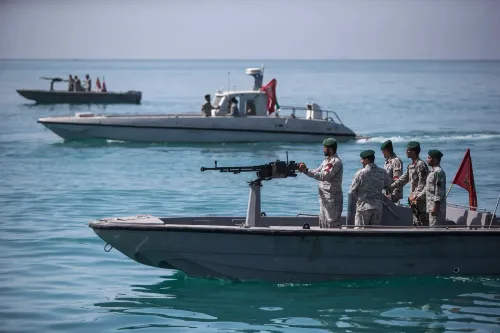
Trump claimed the US has 'total control' of the Strait of Hormuz and that Iran's navy, air force, and most missile capability had been severely degraded — claims not independently verified.
Trump ruled out any deal allowing Iran to retain enriched uranium , warning of 'very drastic' action if diplomacy fails.
Rubio said energy cooperation and Quad discussions would be on the agenda during his upcoming visit to India .
The Strait of Hormuz handles nearly one-fifth of global oil shipments, making any disruption acutely consequential for India and other Asian economies.
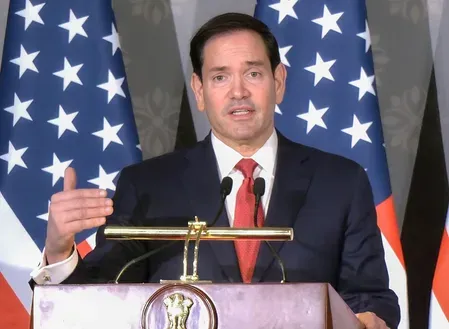
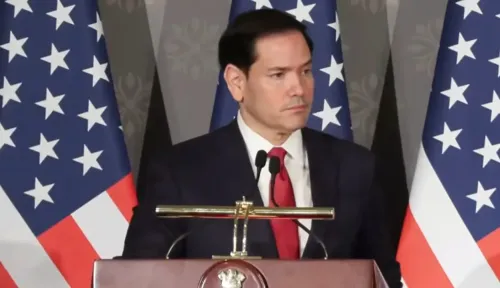
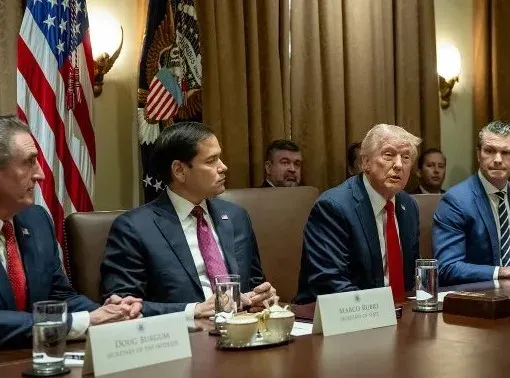
US President Donald Trump and Secretary of State Marco Rubio on 22 May issued coordinated warnings to Iran, declaring that Tehran would not be permitted to acquire nuclear weapons and that any attempt to impose tolls on the Strait of Hormuz would be unacceptable. The remarks came as negotiations over Iran's nuclear programme continued and tensions in the Gulf remained elevated.
Hormuz Toll Warning and UN Resolution
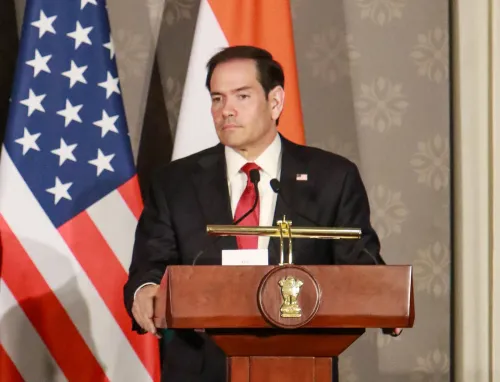
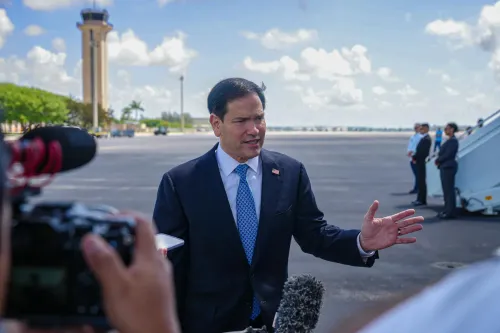
Rubio, speaking to reporters at Miami Homestead Airport before departing for India, drew a hard line on the Strait of Hormuz, through which nearly one-fifth of global oil shipments pass. 'We've always said a tolling system in the strait would be unacceptable,' Rubio said.
He said Washington was backing a United Nations Security Council resolution sponsored by Bahrain opposing any such move, describing it as having 'the highest number of co-sponsors in the history of the Security Council.' Rubio added that China also opposed the proposal. 'No one in the world is in favor of a tolling system. It can't happen; it would be unacceptable,' he said, warning that pursuing it 'would make a diplomatic deal unfeasible.'
Trump's Claims on Military Control
At the White House later the same day, Trump asserted that the United States had 'total control of the Strait of Hormuz' through its naval operations. 'There hasn't been a ship that's been able to get through without our approval,' he said. 'It's like a steel wall.'
Trump also claimed Iran's military infrastructure had suffered severe damage, saying, 'We wiped out their navy. We wiped out their air,' and adding that Iran had lost most of its missile capability. These claims could not be independently verified.
Nuclear Red Line and Diplomatic Track
Trump repeatedly stressed that preventing Iran from obtaining a nuclear weapon was his administration's highest foreign policy priority. 'We cannot let Iran have a nuclear weapon,' he said. 'You will have a nuclear war in the Middle East, and that war will come here, that war will go to Europe.'
While leaving the door open to negotiations, Trump warned that military options remained on the table. 'We're going to either make sure they don't have a nuclear weapon or we're going to have to do something very drastic,' he said. He also ruled out any deal that allowed Iran to retain enriched uranium. 'No, no we get the highly enriched. We will get it,' Trump said. 'We'll probably destroy it after we get it, but we're not going to let them have it.'
Rubio, for his part, signalled cautious optimism about diplomacy. 'The President's preference is always a deal,' Rubio said. 'His preference is always an agreement. His preference is always diplomacy.' He nonetheless tempered expectations: 'I'm not here to tell you that it's going to happen for sure. But I'm here to tell you that we're going to do everything we can to see if we can get one.'
India Angle: Energy Security and Quad
India featured in Rubio's pre-departure remarks as well. When asked what the United States could do for India amid energy security concerns linked to Hormuz tensions, Rubio said, 'We want to sell them as much energy as they'll buy,' describing India as 'a great ally, a great partner.' He said energy cooperation would be part of his agenda in India, alongside discussions tied to the Quad grouping.
This is directly relevant for India, which depends heavily on Gulf crude imports and would face immediate consequences from any disruption to Hormuz shipping lanes. With Rubio heading to New Delhi, the Iran standoff and energy supply security are set to be central to bilateral talks.
What Comes Next
Negotiations between Washington and Tehran over the nuclear programme are reportedly ongoing, though no timeline for a deal has been indicated. The breadth of international opposition to a Hormuz tolling system — including from China — suggests that particular Iranian proposal is unlikely to advance. Whether the nuclear talks yield an agreement before Trump's stated military deadline remains the central question hanging over the Gulf.
Point of View
Even as negotiations drag on. The contradiction is hard to miss: if the US truly has total naval control and has wiped out Iran's military capacity, why does the nuclear threat remain so urgent? The real leverage question is whether Tehran calculates that Washington will actually strike enrichment facilities, or whether the warnings are calibrated to extract concessions without crossing into open conflict. For India, Rubio's energy pitch is a reminder that Washington sees New Delhi as both a strategic partner and a potential buyer to displace Gulf crude dependency — a commercial interest dressed in alliance language.
NationPress
19 Sept 2026
Frequently Asked Questions
What did Trump and Rubio warn Iran about on 22 May?
Trump and Rubio warned Iran that acquiring nuclear weapons would not be permitted and that imposing tolls on the Strait of Hormuz would be unacceptable. Trump also said the US would take 'very drastic' action if diplomacy over the nuclear programme fails.
What is the US position on Iran retaining enriched uranium in a deal?
Trump explicitly ruled it out, saying the US would take possession of Iran's highly enriched uranium under any agreement and would 'probably destroy it.' He made clear no deal allowing Iran to keep enriched uranium would be acceptable.
Why does the Strait of Hormuz matter for India?
The Strait of Hormuz handles nearly one-fifth of global oil shipments, and India depends heavily on Gulf crude imports routed through it. Any disruption — including an Iranian tolling system — would directly affect India's energy costs and supply security.
What is Rubio's India visit about in this context?
Rubio was departing for India when he made the Hormuz remarks, and he indicated that energy cooperation and Quad-related discussions would be central to his agenda. He described India as 'a great ally, a great partner' and said the US wanted to sell India as much energy as it would buy.
Are US-Iran nuclear negotiations still ongoing?
According to both Trump and Rubio, diplomatic channels remain open. Rubio said the President's preference is 'always a deal' but cautioned that an agreement was not guaranteed. No timeline or breakthrough has been publicly confirmed.