Trump claims tariffs sparked $19.2 trillion US factory boom
Synopsis
At the NATO summit in Ankara, Trump claimed his tariff regime has generated $19.2 trillion in US manufacturing commitments — six times any prior record, he said — with Toyota, Eli Lilly, and Merck among companies he named as relocating production. The scale of the claim, and how much of it is independently verifiable, is already the central question.
Key Takeaways
President Donald Trump claimed $19.2 trillion in new US manufacturing investment on 8 July , speaking after the NATO summit in Ankara .
Toyota is reportedly building one of the world’s largest car plants in Texas , which Trump attributed to a 25 per cent tariff on vehicles made in Mexico.
Drug companies including Eli Lilly and Merck are building US production facilities, Trump said, citing ‘record’ pharmaceutical reshoring.
Companies manufacturing outside the US face tariffs of up to 250 per cent on products such as chips, cars, and pharmaceuticals.
Trump said the US is building “the largest aluminium plant in the world” in Oklahoma and claimed America leads China in artificial intelligence.
AI companies have been required to build their own electricity generation, given energy demands Trump described as exceeding current national output.
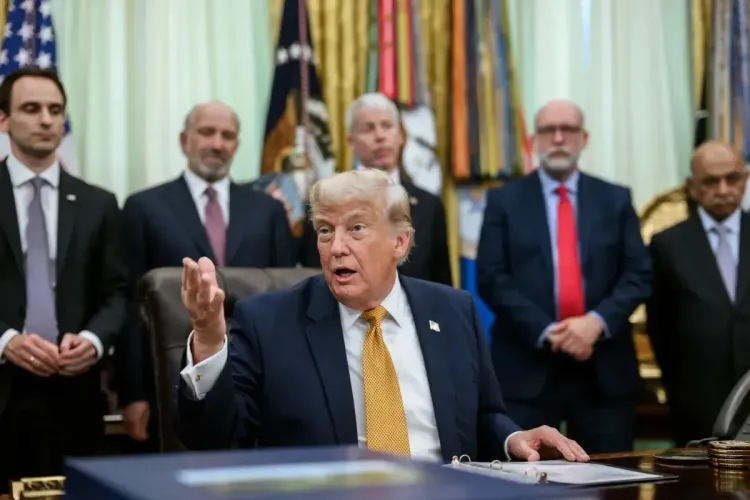
US President Donald Trump on Wednesday, 8 July declared that his administration's tariff policies had unleashed an unprecedented wave of manufacturing investment in the United States, citing $19.2 trillion in committed business investment as proof that companies across sectors — from automobiles to pharmaceuticals and semiconductors — are relocating production to America to sidestep higher import duties.
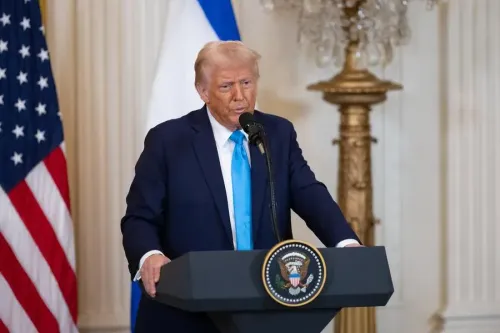
Trump made the remarks at a news conference following the NATO summit in Ankara, framing the investment surge as a direct consequence of his trade policy architecture.
The Investment Claims
“We have the biggest investment ever made, $19.2 trillion,” Trump said. “That’s six times more than we’ve ever had.” The President argued that tariffs had fundamentally altered the calculus for global manufacturers, making domestic production economically preferable to exporting into the American market.
Trump pointed to Toyota as a headline example, saying the Japanese automaker was exiting Mexico to build “one of the biggest car manufacturing plants in the world in Texas.” He attributed the decision directly to the 25 per cent tariff imposed on vehicles manufactured in Mexico.
Pharmaceuticals and Semiconductors in Focus
Trump named Eli Lilly and Merck among drug companies he said were actively building new US production facilities. “The pharmaceutical companies are moving in at record levels. There’s never been anything like what’s happening,” he said.
He warned that companies choosing to manufacture outside the United States would face steeply escalating duties — up to 100 per cent, 200 per cent, or even 250 per cent — depending on the product category, including chips, cars, and pharmaceuticals. The threat underscores how his administration has increasingly merged trade policy with industrial strategy in sectors considered strategically sensitive.
Steel, Aluminium, and AI Infrastructure
Trump also highlighted gains in steel and aluminium, claiming that tariff protection had revived both industries. He said the United States would soon be home to what he described as “the largest aluminium plant in the world” in Oklahoma.
On artificial intelligence, Trump said his administration had required technology companies to build their own electricity generation capacity rather than draw from the national grid. “Some of the AI... we let them build their own electric plants,” he said, adding that the AI industry alone needed “more energy than the entire country produces right now.” He claimed the United States remained ahead of China in AI development and argued that new investment would widen that lead.
The Broader Policy Context
Reshoring manufacturing has been a central pillar of Trump’s economic agenda since his return to the White House. His administration has tied tariff levels directly to production location: companies that manufacture in the US pay no tariff, while those that produce abroad face duties ranging from 25 per cent to over 200 per cent depending on the sector.
Critics and independent economists have cautioned that while some investment announcements are real, attributing the full $19.2 trillion figure solely to tariffs risks conflating pre-existing corporate plans with policy-driven decisions. The longer-term impact on consumer prices, supply chains, and global trade relationships remains contested. How these investments translate into verifiable job creation and sustained output will be the true measure of the tariff-led industrial push.
Point of View
But it conflates announcements, pledges, and multi-year capital plans — categories that rarely survive contact with delivery timelines. Trump’s tariff-as-industrial-policy logic has a coherent internal architecture: make imports expensive enough and domestic production becomes rational. The real test is whether these factory announcements translate into operational plants and verifiable jobs, or remain in the announcement phase through the next election cycle. The Toyota Texas plant and pharmaceutical reshoring are real signals; the aggregate dollar figure is a political number until independently audited. Meanwhile, the consumer cost of tariff-inflated goods — a distributional question that mainstream coverage routinely underweights — will determine whether this is remembered as industrial revival or a regressive tax dressed as patriotism.
NationPress
7 Oct 2026
Frequently Asked Questions
What did Trump claim about US manufacturing investment at the NATO summit?
Trump claimed that his tariff policies have generated $19.2 trillion in new US manufacturing investment — which he described as six times the previous record. He made the remarks at a press conference following the NATO summit in Ankara on 8 July.
Why is Toyota building a plant in Texas, according to Trump?
Trump said Toyota is leaving Mexico and building one of the world’s largest car manufacturing plants in Texas because of the 25 per cent tariff his administration imposes on vehicles produced in Mexico. He cited it as a direct example of tariffs reshaping corporate production decisions.
Which pharmaceutical companies did Trump name as investing in the US?
Trump specifically named Eli Lilly and Merck , saying drug companies broadly were building US facilities at record levels. He warned that companies not manufacturing in the US face tariffs of up to 250 per cent on pharmaceutical products.
What did Trump say about artificial intelligence and energy?
Trump said his administration required AI companies to build their own electricity generation rather than draw from the national grid, given that the sector’s energy demand reportedly exceeds the country’s current total output. He also claimed the US is ahead of China in AI development.
How do Trump’s tariffs work as an industrial policy tool?
Under Trump’s framework, companies that manufacture inside the United States pay no tariff on their products, while those producing abroad face import duties ranging from 25 per cent to over 200 per cent depending on the sector — creating a financial incentive to relocate production domestically.