Trump touts tariff factory boom at Pennsylvania Mack Trucks plant
Synopsis
Trump took his tariff pitch directly to the factory floor at Mack Trucks in Macungie, Pennsylvania, claiming 25–50% levies on steel, autos, and trucks have triggered a record factory-building wave — three times any previous period, by his count. The unverified claims land as economists and critics continue to dispute whether tariffs are building industry or just building costs.
Key Takeaways
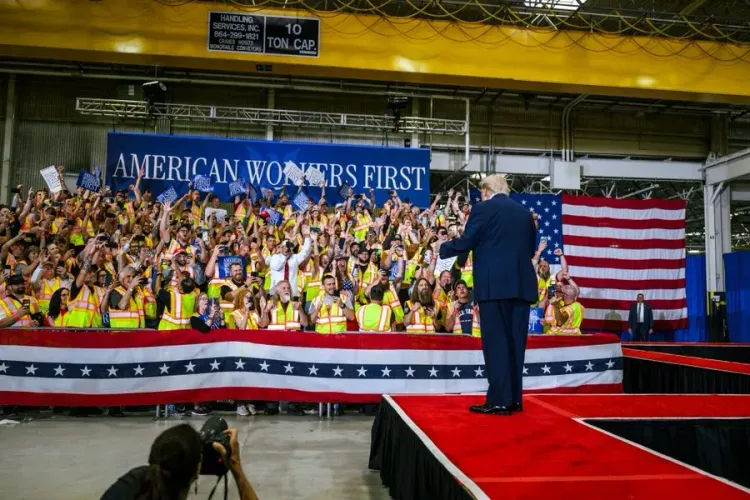
President Donald Trump visited Mack Trucks in Macungie, Pennsylvania on 24 June to defend his tariff-driven trade strategy.
Trump cited 50% tariffs on copper, aluminium, and steel, and 25% tariffs on foreign automobiles and medium and heavy-duty trucks.
He claimed US factory construction is at a record level — 'three times' any previous period — though the figure was not independently verified at the event.
Trump said American exports rose by $150 billion and the trade deficit with China was cut by a record amount within his first year.
Pennsylvania investment announcements from Eli Lilly , Nokia , and B.
Braun were highlighted as evidence of business confidence.
Critics argue tariffs raise costs for businesses and consumers; supporters say they restore domestic industrial capacity.
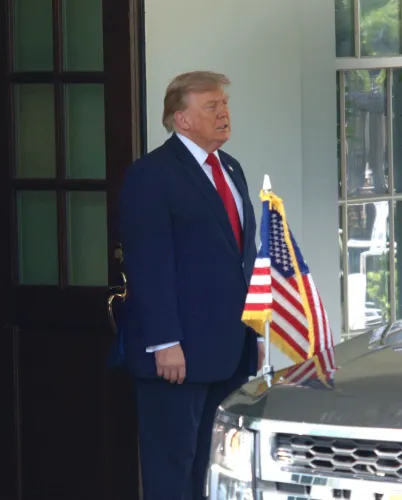
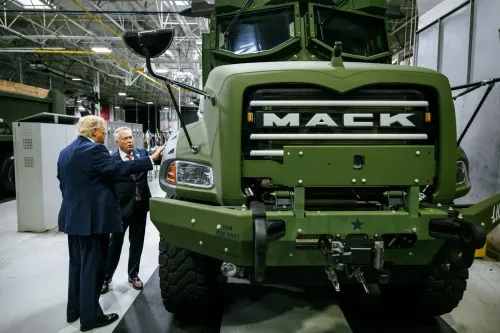
US President Donald Trump on 24 June visited a Mack Trucks facility in Macungie, Pennsylvania, defending his administration's tariff-driven trade strategy and claiming that import duties on steel, aluminium, copper, automobiles, and heavy-duty trucks were reversing decades of American manufacturing decline.
What Trump Said at the Plant
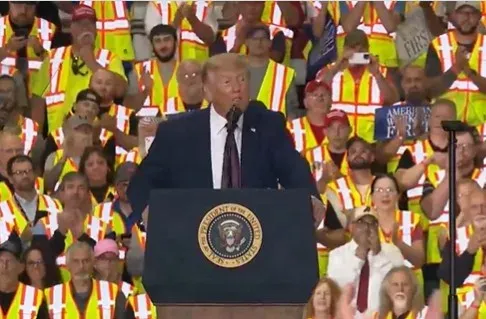
Speaking directly to the factory workforce, Trump argued that tariffs had compelled foreign manufacturers to shift production to the United States rather than absorb the levies. 'How don’t you pay a tariff? You build your factory here and you hire American workers,' he said.
Trump cited specific tariff rates: 50 per cent on imported copper, aluminium, and steel, and 25 per cent on foreign automobiles and medium and heavy-duty trucks. He said the truck tariff was intended directly to benefit facilities such as the Mack Trucks plant in Pennsylvania. 'I imposed a 25 per cent tariff on medium and heavy-duty trucks so that Mack Truck could do very well with its factory in Pennsylvania,' he said.
Factory Investment Claims
Trump asserted that the United States is currently seeing record levels of factory construction. 'Right now, we have more factories being built — car factories, AI factories, factories of every type — than we’ve ever had in the history of our country by three times,' he claimed. He also said American exports to the rest of the world are up by $150 billion and credited his administration with what he called 'the biggest trade deficit cut in the history of our country,' including a reduction in the trade deficit with China 'by the largest amount in the history of trade' within his first year in office. These figures were not independently verified at the event.
Investment Announcements in Pennsylvania
Trump highlighted several corporate investment announcements in Pennsylvania, citing pharmaceutical firm Eli Lilly, telecommunications company Nokia, and medical technology firm B. Braun as examples of growing private-sector confidence in the American manufacturing environment. He described such moves as validation of his tariff strategy.
Patrick McHugh, a Marine Corps veteran and third-generation Mack Trucks employee, addressed the gathering and voiced support for domestic production. 'At Mack Trucks, we work hard to build the trucks that help build America and we are proud that those trucks are built in the United States of America,' McHugh said.
The Debate Around Tariffs
Trump's remarks come as tariffs remain among the most contested elements of his economic agenda. Supporters contend that the measures rebuild industrial capacity and protect American jobs from low-cost foreign competition. Critics, however, argue that broad import duties raise input costs for businesses and translate into higher prices for consumers — a tension that has accompanied every major tariff escalation of his administration. This is not the first time Trump has used a manufacturing-sector visit to make the case for his trade policy; similar events at steel mills and auto plants have been a recurring feature of his political calendar.
Whether the factory-building surge Trump described reflects a durable structural shift or a short-term investment pull-forward ahead of further policy changes remains a key question for economists and industry observers watching the data.
Point of View
Sector-level protection to plants like Mack Trucks. The broader question is whether targeted protection translates into the kind of structural manufacturing renaissance Trump is describing, or whether it primarily shifts costs upstream to industries that depend on steel, aluminium, and imported components as inputs.
NationPress
22 Sept 2026
Frequently Asked Questions
What did Trump say at the Mack Trucks plant in Pennsylvania?
Trump defended his tariff policy at the Mack Trucks facility in Macungie, Pennsylvania on 24 June, claiming that levies on steel, aluminium, copper, automobiles, and heavy-duty trucks were driving a record wave of factory construction in the United States. He also said American exports had risen by $150 billion and that the trade deficit with China had been cut by a record amount.
What tariff rates did Trump announce or reference?
Trump referenced a 50% tariff on imported copper, aluminium, and steel, and a 25% tariff on foreign automobiles and medium and heavy-duty trucks. He said the truck tariff was specifically designed to benefit domestic manufacturers like Mack Trucks.
Which companies announced investments in Pennsylvania?
Trump highlighted investment announcements from pharmaceutical firm Eli Lilly, telecommunications company Nokia, and medical technology firm B. Braun as signs of growing confidence in US manufacturing under his tariff regime.
What do critics say about Trump's tariff policy?
Critics argue that broad import tariffs raise input costs for businesses and push up consumer prices, potentially offsetting the benefits of domestic production incentives. Supporters counter that the measures protect American jobs and rebuild industrial capacity that decades of globalisation eroded.
Are Trump's factory-boom claims verified?
Trump's claim that factory construction is at a level 'three times' any previous period in US history, as well as the $150 billion export figure and 'record' trade deficit cut with China, were not independently verified at the event. NationPress has not been able to confirm these figures against official government data.