NATO Ankara summit 2025: fault lines over Iran, defence spending deepen
Synopsis
NATO arrives at its Ankara summit more divided than it has been in years. European allies refused to join US military action against Iran, Trump is demanding 5% of GDP on defence by 2035, and streets in Ankara, Istanbul, and Izmir are filling with protesters calling the alliance an 'imperialist war organisation.' The gap between the summit's unity optics and the underlying fractures has rarely been wider.
Key Takeaways
NATO leaders meet in Ankara on Tuesday and Wednesday amid visible internal divisions.
No European ally agreed to take a direct role in the US-Israel military operation against Iran that began in late February .
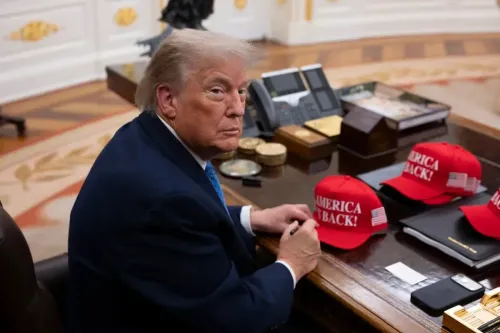
US President Donald Trump criticised European allies for avoiding military risks while relying on US security guarantees.
The alliance's 5% of GDP defence spending target, agreed at The Hague summit , must be met by 2035 — analysts question its feasibility given slow growth and public debt.
Anti-NATO protests were held in Ankara , Istanbul , and Izmir ; similar rallies occurred in the Netherlands and Spain in 2025 and 2026.
Major defence procurement deals are expected at the summit, reportedly benefiting US defence manufacturers .
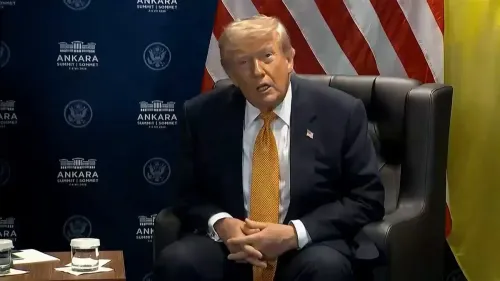
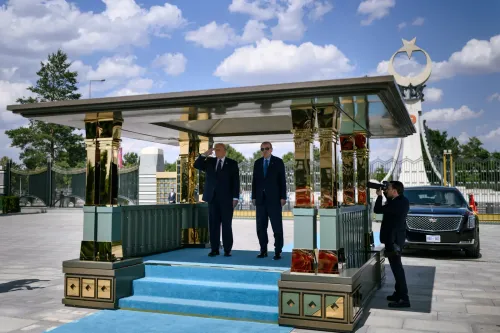
NATO leaders convene in Ankara on Tuesday and Wednesday for a high-stakes summit that the alliance hopes will project unity — even as disagreements over strategic priorities, defence spending targets, and NATO's long-term purpose grow harder to paper over. The gathering comes at one of the most fractious moments in the alliance's recent history.
Iran strikes expose allied divisions
The most visible fissure heading into the summit concerns the US-Israel military operation against Iran, which began in late February. While several NATO allies voiced political support for Washington's stated objective of preventing Iran from acquiring nuclear weapons, none agreed to take a direct operational role.
The refusal of European allies to send warships to help 'reopen' the Strait of Hormuz drew sharp criticism from US President Donald Trump, who accused European partners of benefiting from American security guarantees while sidestepping the risks of military action.
Oytun Orhan, a senior researcher at Ankara's Centre for Middle Eastern Studies, said most European members assessed the Iran strikes through the lens of regional stability rather than allied solidarity. 'A direct military role could have exposed them to retaliation, disrupted energy supplies, and increased migration pressures at a time when many countries are already facing significant domestic challenges,' Orhan said.
Serkan Demirtas, an Ankara-based foreign policy analyst specialising in NATO affairs, argued the European response reflects hard lessons from prior conflicts. 'Experiences in Iraq, Afghanistan and Libya have made many European governments much more reluctant to participate in military operations without broad international legitimacy and clearly defined objectives,' he said.
The 5% GDP defence target: ambition vs reality
A second major flashpoint is the implementation of the 5 per cent of GDP defence spending target agreed at last year's NATO Summit in The Hague, with a deadline of 2035. The commitment is central to what the Trump administration has branded 'NATO 3.0' — a strategic reorientation that shifts primary responsibility for Europe's conventional defence from Washington to European member states.
Analysts, however, question whether the target is realistic. One analyst, identified as Unal, argued that several European governments accepted the figure primarily to avoid a direct confrontation with Washington. 'Agreeing to a target for 2035, which is still a decade ahead, was politically easier than opposing the United States directly, which could create serious tensions,' he said.
Unal pointed to structural obstacles: slow economic growth, high public debt, and ageing populations across parts of Europe. Domestic politics could prove equally constraining, he noted, as European publics broadly prioritise healthcare, education, and social welfare over military expenditure. 'Governments may find it difficult to convince voters that such dramatic military budget increases are necessary,' he said.
Anti-NATO protests in Turkish cities
Ahead of the summit, anti-NATO demonstrations were held in Ankara, Istanbul, and Izmir. Protesters denounced the alliance as an 'imperialist war organisation' threatening peace and accused it of diverting resources from education, healthcare, and workers' wages. Banners read 'NATO wants war, workers want peace' and 'Budget for the people, not for NATO.'
In Istanbul, workers, civilians, and members of political parties joined large rallies over the weekend, calling for NATO's dissolution and opposing pressure on member states to raise military spending. Similar demonstrations were reported in the Netherlands and Spain in 2025 and 2026.
Baris Doster, a scholar at Istanbul-based Marmara University, said the protests reflect public anxiety over the domestic costs of rising militarisation. 'NATO is not an ordinary, simple defence and security organisation. It is an organisation with economic, political and ideological preferences. It is the gendarme of capitalism, imperialism, and liberalism under US leadership,' he said.
Defence procurement and US industry gains
The Ankara summit is expected to announce major defence procurement agreements, many of which are likely to benefit US defence manufacturers. 'American defence companies naturally benefit when allies purchase NATO-compatible military equipment,' Unal said. 'There is no doubt that the United States exercises considerable influence over the alliance's strategic direction.'
What to watch
The summit's closing communiqué will be closely scrutinised for language on Iran, the pace of the 5% spending ramp-up, and any formal announcements on procurement. Whether NATO can sustain the appearance of cohesion — let alone translate it into coordinated action — will define the alliance's credibility heading into the second half of the decade.
Point of View
Dressed up as solidarity. The 5% GDP target, agreed a decade out, is a diplomatic fig leaf: no European government has credibly mapped how it gets there without gutting welfare states or running deeper deficits. Trump's 'NATO 3.0' framing is strategically coherent — shift the burden, retain the leverage — but it assumes European publics will accept militarisation that polls consistently show they do not want. The protests in Ankara and Istanbul are not fringe noise; they reflect a structural tension between alliance obligations and democratic mandates that no communiqué language will resolve.
NationPress
5 Oct 2026
Frequently Asked Questions
Why is the NATO Ankara summit significant?
The NATO Ankara summit on Tuesday and Wednesday is significant because it comes amid deepening divisions over the US-Israel military operation against Iran, a contested 5% GDP defence spending target, and rising public protests against the alliance across Europe. It is widely seen as a test of whether NATO can maintain cohesion under compounding internal pressures.
Why did European allies refuse to join the US military operation against Iran?
European allies declined a direct military role in the US-Israel strikes on Iran, which began in late February, citing risks of retaliation, energy supply disruption, and increased migration pressure. Analysts note that experiences in Iraq, Afghanistan, and Libya have made European governments reluctant to join operations lacking broad international legitimacy and clear objectives.
What is the NATO 5% GDP defence spending target?
At last year's NATO Summit in The Hague, member states agreed to raise defence-related expenditure to 5% of GDP by 2035. The target is a cornerstone of the Trump administration's 'NATO 3.0' strategy, which aims to shift the primary burden of Europe's conventional defence from the United States to European member states.
Can European NATO members realistically meet the 5% GDP defence target?
Analysts are sceptical. Several European countries face slow economic growth, high public debt, and ageing populations. Domestic political pressures — with publics prioritising healthcare and social welfare — could make it difficult for governments to justify the scale of military budget increases required by 2035.
What are the anti-NATO protests in Turkey about?
Protests in Ankara, Istanbul, and Izmir ahead of the summit denounced NATO as an 'imperialist war organisation,' accusing it of diverting public funds from education, healthcare, and wages toward military spending. Demonstrators called for NATO's dissolution and opposed the alliance's pressure on member states to increase defence budgets.