Trump signals F-35 deal progress with Turkey ahead of Ankara NATO summit
Synopsis
Trump's 'yeah, I think so' on the F-35 question is the clearest public signal yet that Washington may restore Turkey's access to the stealth jet — five years after Ankara was ejected from the programme over its S-400 purchase. With VP Vance framing it as a legal compliance check rather than a geopolitical favour, the Ankara NATO summit on 7-8 July could mark a decisive shift in one of the alliance's most consequential bilateral disputes.
Key Takeaways
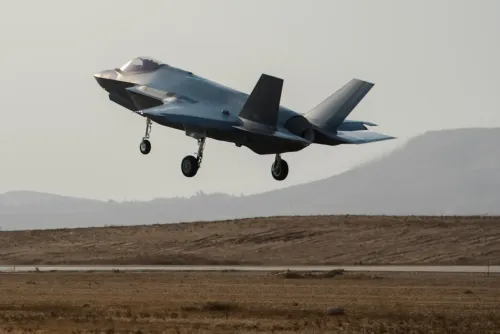
President Trump signalled on Wednesday that he would likely approve F-35 aircraft and F-110 engines for Turkey ahead of the Ankara NATO summit .
Vance said the administration is conducting a review to confirm Turkey has met US legal requirements for the sale.
Turkey was removed from the F-35 programme in 2019 after purchasing Russia's S-400 missile system.
Trump praised Erdogan for staying out of the recent Iran conflict at Washington's request.
The NATO summit in Ankara is scheduled for 7-8 July , with defence spending and Ukraine support on the agenda.
NATO Secretary General Mark Rutte noted Turkey's defence industry spans 3,000 companies across the alliance.
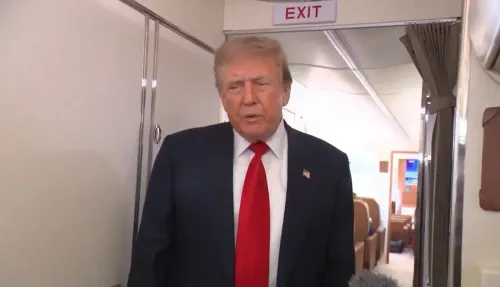
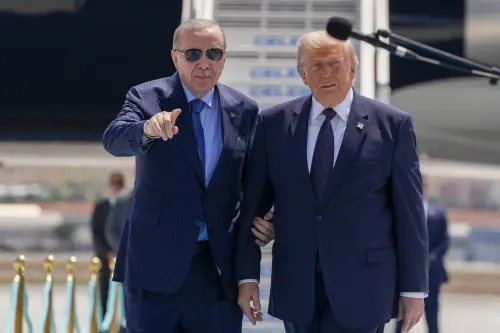
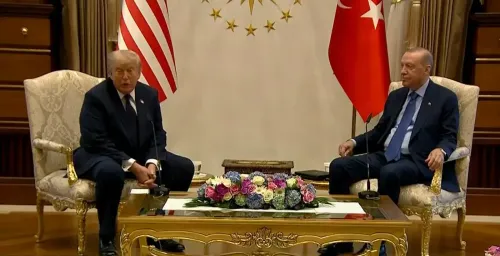
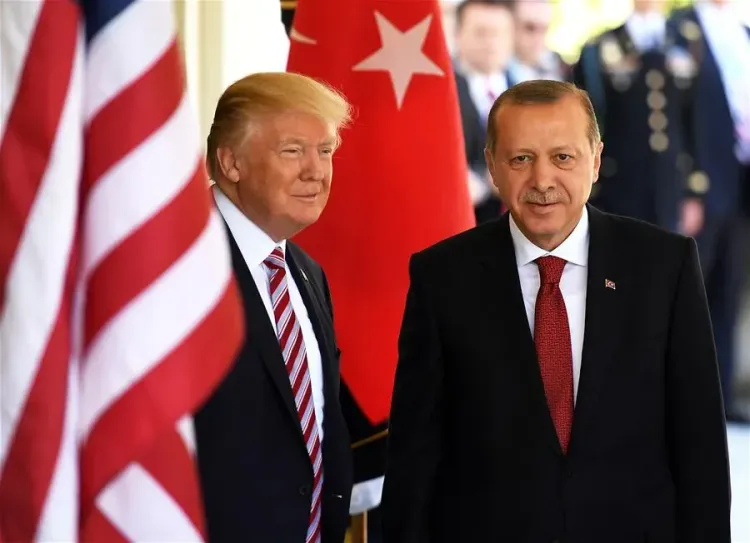
US President Donald Trump on Wednesday signalled potential progress on Turkey's long-standing bid to acquire F-35 fighter aircraft, calling Turkish President Recep Tayyip Erdogan 'a friend' and suggesting he would bring something to 'make him very happy' at next month's NATO summit in Ankara. Speaking alongside NATO Secretary General Mark Rutte at the White House, Trump confirmed he would attend the July 7-8 summit largely as a show of respect for the Turkish leader.
What Trump Said
Trump praised Erdogan's restraint during the recent conflict with Iran, saying he had personally urged the Turkish president to stay out of the fighting. 'He was a prime candidate to go into the war with Iran, maybe on the Iran side, because he's not a big fan of Israel, as you know. And I asked him to stay out; he stayed out,' Trump said.
When asked directly whether he would arrive in Ankara with a 'big gift bag' — including approval for F-110 jet engines and F-35 aircraft — Trump replied: 'Yeah, I think so.' He added that Erdogan 'is a strong member of NATO' and that he was 'going to probably do something that's going to make him very happy.'
Vance: Legal Review Underway
Vice President J.D. Vance, invited by Trump to address the F-35 question directly, indicated the administration was conducting a compliance review before any formal announcement. 'We're running the traps and confirming that's happened,' Vance said. 'This is really a congressional thing, and ensuring that Turkey has complied with American law so they can get the F-35s.'
Vance said a formal announcement would follow once the review concluded, signalling that no final decision had been made as of Wednesday.
Background: Why Turkey Lost Access to the F-35
Turkey was removed from the F-35 Joint Strike Fighter programme in 2019 after it purchased the Russian-made S-400 surface-to-air missile system, triggering US sanctions under the Countering America's Adversaries Through Sanctions Act (CAATSA). Ankara has since repeatedly sought reinstatement, arguing that its NATO membership and strategic importance warrant reconsideration.
Notably, this is not the first time the Trump administration has floated the possibility of restoring Turkey's access — similar signals emerged during Trump's first term without a final resolution. The current review by Vance's office suggests the White House is now treating the question as one of legal compliance rather than pure geopolitical discretion.
NATO's Stakes at the Ankara Summit
NATO Secretary General Mark Rutte reinforced Turkey's value to the alliance, noting that the country's defence industrial base comprises 3,000 companies operating across member states, including in the United States. Trump echoed the point, describing Turkey as possessing 'a very strong military' and noting it already operates significant quantities of American military equipment.
The Ankara summit on 7-8 July is expected to focus on implementing the alliance's new defence spending commitments, expanding defence industrial production, and coordinating continued support for Ukraine. Turkey, NATO's second-largest military after the United States, occupies a strategically critical position linking Europe, the Middle East, and the Black Sea region.
Trump also revealed that his decision to attend was directly tied to Erdogan's role as host: 'If not for the fact that it was being held in Turkey by President Erdogan, I don't think I would have gone to it.'
What Happens Next
The Vance-led review's outcome will determine whether the F-35 question moves from diplomatic signalling to a formal congressional notification — the legal step required before any sale can proceed. Industry and alliance observers will be watching closely whether the July 7-8 summit produces a concrete announcement or remains, as on previous occasions, a statement of intent.
Point of View
I think so' on the F-35 question is doing significant diplomatic work — it signals intent to Ankara without triggering the formal congressional notification process that a sale would require. Vance's framing of this as a legal compliance check is shrewd: it shifts accountability to Congress and gives the administration cover if the deal stalls again. But the deeper issue is strategic. Restoring Turkey's F-35 access would mark a de facto acknowledgement that CAATSA sanctions have limits when the target is a NATO ally of Turkey's size and location. That precedent will be watched closely in Brussels, Kyiv, and Moscow alike.
NationPress
23 Sept 2026
Frequently Asked Questions
Why was Turkey removed from the F-35 programme?
Turkey was ejected from the F-35 Joint Strike Fighter programme in 2019 after it purchased Russia's S-400 surface-to-air missile system, triggering US sanctions under the Countering America's Adversaries Through Sanctions Act (CAATSA). Washington argued the S-400 posed a security risk to the F-35's stealth technology.
What did Trump say about the F-35 deal with Turkey?
Trump said he would 'probably do something that's going to make him very happy' when asked about approving F-35 aircraft and F-110 engines for Turkey ahead of the Ankara NATO summit. He stopped short of a formal announcement, with VP Vance indicating a legal review was still underway.
What is the legal hurdle for the F-35 sale to Turkey?
VP J.D. Vance said the administration is reviewing whether Turkey has complied with US law — a reference to CAATSA sanctions conditions. He described it as 'really a congressional thing,' indicating Congress must be notified before any sale can proceed.
When is the NATO summit in Ankara, and what will it cover?
The NATO summit is scheduled for 7-8 July in Ankara, Turkey. It is expected to focus on the alliance's new defence spending commitments, expanding defence industrial production, and coordinating continued support for Ukraine.
Why is Turkey strategically important to NATO?
Turkey is NATO's second-largest military after the United States and occupies a critical geographic position linking Europe, the Middle East, and the Black Sea. NATO Secretary General Mark Rutte noted Turkey's defence industrial base includes 3,000 companies operating across the alliance, including in the US.