Trump signals F-35 revival for Turkey amid 'best-ever' US-Ankara ties
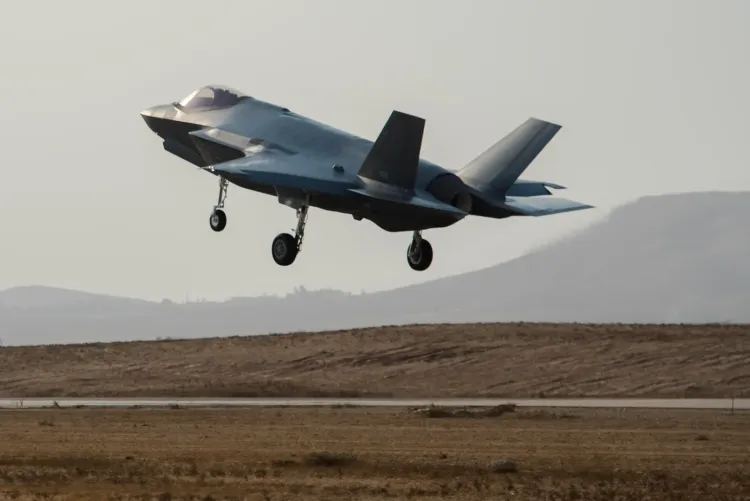
Synopsis
For the first time since Turkey was ejected from the F-35 programme in 2019 over its S-400 purchase, a sitting US president has openly floated reviving the deal. Trump's remarks at the NATO Summit sidelines go beyond diplomatic niceties — they put a politically explosive policy reversal squarely on the table, with Congress and NATO allies watching closely.
Key Takeaways
President Trump on 7 July said the US would 'certainly consider' selling F-35 fighter jets to Turkey .
Turkey was expelled from the F-35 programme in 2019 after buying the Russian S-400 system, triggering CAATSA sanctions.
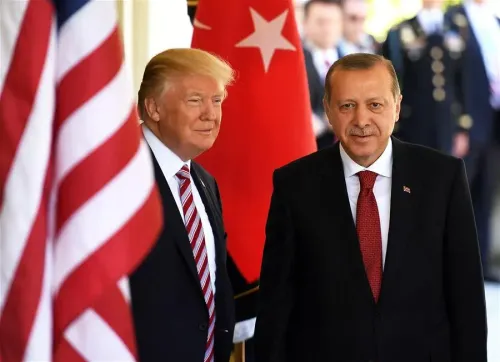
Trump described US-Turkey relations as 'better probably than it's ever been' at a joint appearance with President Erdogan .
Any F-35 sale revival would require navigating significant legal and congressional hurdles in the US.
The two leaders were set to discuss trade, military cooperation, and Iran during their bilateral meeting at the NATO Summit .
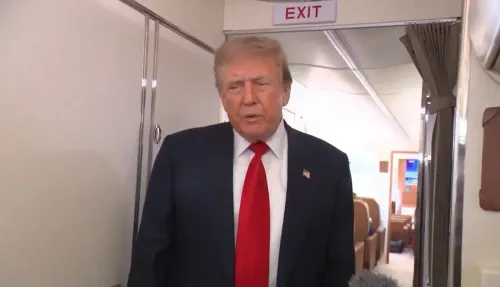
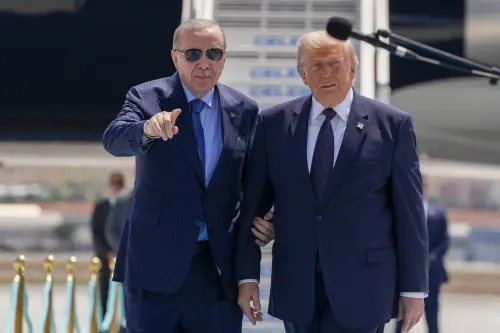
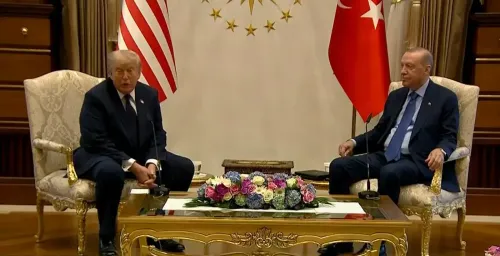
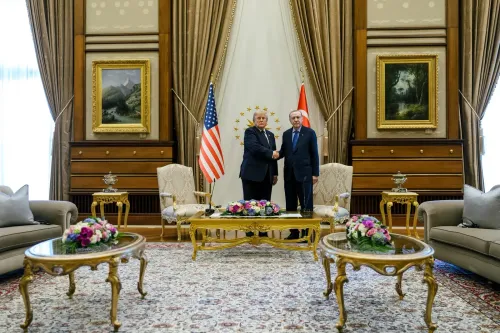
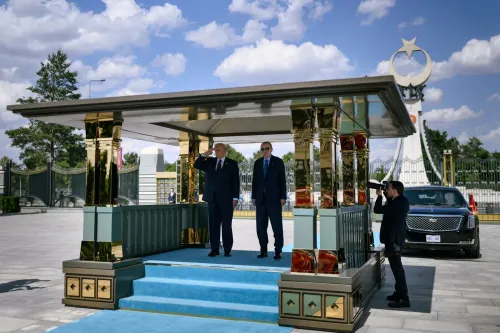
US President Donald Trump on Tuesday, 7 July signalled that his administration is open to reconsidering the sale of F-35 fighter jets to Turkey, saying it was 'certainly something we will consider', as he described the current phase of US-Turkey relations as the strongest in history. The remarks came at a joint media appearance with Turkish President Recep Tayyip Erdogan ahead of their bilateral meeting on the sidelines of the NATO Summit in Ankara.
What Trump Said
Asked directly whether the United States would sell F-35 aircraft to Turkey despite existing legal and political restrictions, Trump replied: 'It's a decision we're going to make, right? We have a very good relationship.'
He went further, suggesting that Turkey's loyalty had surpassed that of other American allies. 'I would think that many people — including the people sitting right here — think, why wouldn't we do that? We have a better relationship with Turkey, and Turkey's been in many ways much more loyal than other countries that we think would be loyal,' Trump said.
Trump also framed the potential sale in terms of an American obligation to countries that purchase US military equipment. 'When they buy a product from us, whether it's a plane or anything else, when it's time for maintenance, I think we have — don't we have an obligation to help them?' he said.
The Background: S-400 and CAATSA Sanctions
Turkey was formally removed from the multinational F-35 fighter programme in 2019 after it acquired the Russian S-400 air defence system. The purchase triggered US sanctions under the Countering America's Adversaries Through Sanctions Act (CAATSA). Since then, Ankara has sought to restore defence ties with Washington while pressing ahead with its own air force modernisation.
Any resumption of F-35 deliveries would mark a significant reversal in US policy and would require navigating substantial legal and congressional hurdles. The issue has remained one of the most contentious fault lines in the US-Turkey alliance, even as both NATO partners have continued to cooperate on regional security, counterterrorism, and Black Sea stability.
Erdogan as a 'Respected Leader'
Trump repeatedly praised Erdogan during the appearance, calling him 'a respected leader all over the world' and noting that Turkey had become 'a very powerful country militarily.' He credited personal chemistry for the durability of the bilateral relationship. 'We've had right from the beginning, good chemistry. We've had a very special relationship,' Trump said.
The two leaders were scheduled to discuss trade, military cooperation, and Iran during their bilateral meeting. Trump also suggested that Turkey had played a constructive role during recent tensions involving Iran, saying Ankara had been 'very instrumental' in efforts aimed at what he called the 'denuclearisation' of Iran. He added he was 'totally sure' Erdogan did not want Iran to acquire a nuclear weapon.
What Happens Next
Trump expressed confidence that bilateral cooperation would deepen following the NATO Summit. 'The relationship with Turkey right now is better probably than it's ever been,' he said. 'It was good in my first four years, but I think now it's probably even better than that, if that's possible.'
Notably, any formal move to revive the F-35 sale would require the White House to either waive or work around CAATSA provisions — a step that would face resistance in the US Congress and scrutiny from other NATO allies wary of Turkey's continued operation of the S-400. The coming weeks will likely test whether Trump's signals translate into a concrete policy shift or remain diplomatic goodwill.
Point of View
But it is still just a signal. The structural obstacle — CAATSA — has not moved; Congress has not moved; and Turkey's S-400 batteries remain operational. What Trump is doing is applying personal-relationship diplomacy to a problem that requires legislative action. That gap between presidential intent and congressional reality is where previous attempts at a Turkey workaround have died. The broader NATO dimension is also underplayed in coverage: other alliance members, particularly Greece, will watch any F-35 concession to Ankara with acute alarm.
NationPress
6 Oct 2026
Frequently Asked Questions
Why was Turkey removed from the F-35 programme?
Turkey was expelled from the F-35 fighter programme in 2019 after it purchased the Russian S-400 air defence system, which the US deemed a security risk to the F-35's stealth technology. The acquisition triggered sanctions against Turkey under the Countering America's Adversaries Through Sanctions Act (CAATSA).
What did Trump say about selling F-35s to Turkey?
Speaking at the NATO Summit on 7 July alongside President Erdogan, Trump said selling F-35s to Turkey was 'certainly something we will consider,' adding that Turkey had been 'much more loyal than other countries.' He framed the potential sale partly as an American obligation to countries that buy US military equipment.
What legal hurdles exist for a US-Turkey F-35 deal?
Any revival of F-35 sales to Turkey would require the White House to address CAATSA sanctions, which were imposed after Turkey's S-400 purchase. Congressional approval or a presidential waiver would likely be necessary, and the move would face significant opposition from lawmakers on both sides of the aisle.
What else did Trump and Erdogan discuss at the NATO Summit?
The two leaders were scheduled to discuss trade, military cooperation, and Iran during their bilateral meeting. Trump also credited Turkey with playing a constructive role during recent Iran tensions, saying Ankara had been 'very instrumental' in efforts toward what he described as Iran's 'denuclearisation.'
How significant is this shift in US-Turkey relations?
Trump described the current state of US-Turkey ties as 'better probably than it's ever been,' marking a notable warming after years of tension over the S-400 purchase, sanctions, and Turkey's foreign policy posture. However, analysts note that a formal policy reversal on the F-35 remains contingent on overcoming substantial legal and political barriers.