Trump backs Turkey F-35 sale, rebuffs Israel objections on arms deals
Synopsis
Trump's mid-air remarks on Air Force One were a blunt message to Israel: Washington sets its own arms-sale agenda. With Turkey seeking F-35 reinstatement after its 2019 expulsion over the S-400 purchase, and Netanyahu due in Washington the very next day, Trump's 'nobody tells me' declaration has set up one of the most diplomatically loaded bilateral meetings of his current term.
Key Takeaways
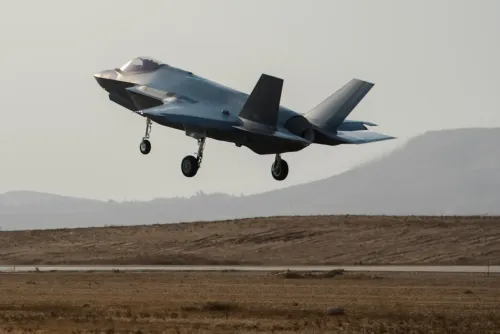
President Trump signalled on Monday, 28 July 2025 that the US may sell F-35 fighter jets to Turkey , dismissing Israeli objections.
Trump said 'nobody tells me what we should be selling or not,' asserting full US autonomy over defence exports.
He praised Turkish President Recep Tayyip Erdogan , calling Turkey 'a great ally' with a 'tremendous military.' Trump claimed Iran is now 'eight per cent of what they were four months ago' after recent US military operations, and said Tehran had sought talks.
A Trump-Netanyahu meeting scheduled for Tuesday was set to cover Iran, Middle East security, and reportedly the F-35 question.
Turkey was removed from the F-35 programme in 2019 after purchasing Russia's S-400 system; any reinstatement would mark a major NATO policy reversal.
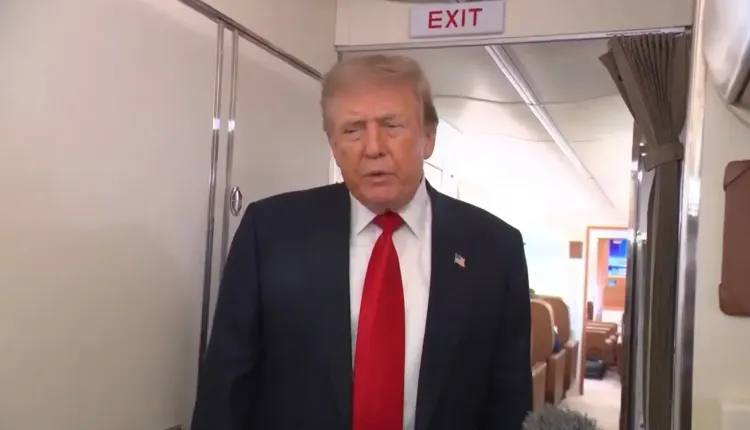
US President Donald Trump on Monday, 28 July 2025, strongly defended Turkey as a key American ally and signalled that Washington would not allow objections from Israel or any other country to influence its decisions on arms exports, including the prospective sale of F-35 stealth fighter jets to Ankara. The remarks, made aboard Air Force One en route to Michigan, came a day before Trump's scheduled meeting with Israeli Prime Minister Benjamin Netanyahu.
Trump's Defence of Turkey
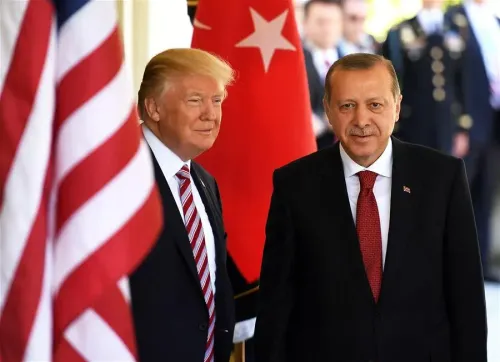
Speaking to reporters mid-flight, Trump praised Turkish President Recep Tayyip Erdogan and reaffirmed the depth of Washington's ties with Ankara. 'Turkey's been a great ally for me,' Trump said. 'I think he's done a very good job. Did a good job with Syria. He's a friend of mine.' He also highlighted Turkey's military capabilities, describing it as a 'very powerful country' with a 'tremendous military.'
On Arms Sales: 'Nobody Tells Me'
Trump was unequivocal when asked whether Netanyahu's reported opposition to an F-35 sale to Turkey would weigh on the decision. 'Nobody tells me what we should be selling or not,' he said, making clear that defence export decisions would be driven by US strategic interests alone. He acknowledged the fraught state of Turkish-Israeli relations — 'Turkey's not a big fan of Israel. You know that, right? And not a big fan of Bibi' — but insisted that Turkey had been 'great' for his administration regardless.
Iran: 'They Asked Us Very Nicely to Stop'
Trump also addressed the Iran situation ahead of his talks with Netanyahu. He claimed recent US military operations had substantially degraded Iran's capabilities, asserting that Tehran was now 'eight per cent of what they were four months ago.' He said Iran had approached Washington seeking a halt to hostilities. 'Iran took a beating over the last 14 days. They asked us very nicely, "Please stop. Let's meet." That's what we are right now. See what happens. If we don't make a deal, we go back to the same thing,' Trump said. He added that he and Netanyahu were 'pretty close' on Iran despite 'a little difference.'
Netanyahu Meeting and Middle East Stakes
The Trump-Netanyahu meeting, scheduled for Tuesday, was expected to cover Iran and broader Middle East security architecture. Trump praised Netanyahu's wartime leadership — 'Bibi has been great. He was a wartime prime minister. We did very well together' — while declining to reveal whether the Israeli leader preferred continued military pressure or a diplomatic settlement with Tehran. The F-35 question is expected to add a layer of tension to the bilateral agenda, given Israel's longstanding objections to advanced US weapons reaching a country it views as adversarial.
Strategic Implications
Trump's comments underscore a broader pattern in his foreign policy: prioritising bilateral relationships and transactional arms diplomacy over the preferences of regional partners. Turkey was removed from the original F-35 programme in 2019 after Ankara purchased Russia's S-400 missile defence system, triggering US sanctions. Any reversal of that exclusion would mark a significant shift in NATO's internal dynamics and is likely to draw sharp pushback from both Congress and Tel Aviv. How Washington navigates competing alliance obligations in the coming weeks will be closely watched across the region.
Point of View
Undermining the deterrent value of US arms-transfer conditionality. Israel's discomfort is understandable: an F-35-equipped Turkey changes the regional air-power calculus in ways Tel Aviv cannot ignore. What is missing from Trump's framing is any acknowledgement of the structural contradiction — you cannot simultaneously claim to lead a rules-based alliance and sell its most advanced platform to a member that bought Russian air defence systems. The coming weeks will test whether this is a trial balloon or a genuine policy pivot.
NationPress
26 Oct 2026
Frequently Asked Questions
Why is Trump considering selling F-35 jets to Turkey?
Trump has signalled support for Turkey as a key US ally and stated that no country — including Israel — can dictate American arms-sale decisions. The move would mark a reversal of Turkey's 2019 exclusion from the F-35 programme, which was triggered by Ankara's purchase of Russia's S-400 missile defence system.
Why did Israel oppose the F-35 sale to Turkey?
Israel and Turkey have strained relations over regional conflicts and security issues. Tel Aviv views an F-35-equipped Turkey as a potential threat to its regional air-power advantage, and Israeli Prime Minister Benjamin Netanyahu reportedly raised the issue ahead of his Tuesday meeting with Trump.
What did Trump say about Iran during his Air Force One remarks?
Trump claimed that recent US military operations had reduced Iran to 'eight per cent of what they were four months ago' and said Tehran had approached Washington seeking a halt to hostilities. He indicated that negotiations were under way but warned that military pressure would resume if a deal was not reached.
When was Turkey removed from the F-35 programme and why?
Turkey was expelled from the F-35 programme in 2019 after it purchased Russia's S-400 surface-to-air missile defence system, prompting the US to impose sanctions under CAATSA. Reinstatement would require Turkey to resolve the S-400 issue to Washington's satisfaction.
What was the agenda for the Trump-Netanyahu meeting on Tuesday?
The two leaders were expected to discuss Iran's military posture, a potential diplomatic deal with Tehran, and broader Middle East security. The F-35-Turkey question was also expected to feature, given Netanyahu's reported opposition to the sale.