Trump signals F-35 return for Turkey after Erdogan's Middle East restraint
Synopsis
For the first time since Turkey was expelled from the F-35 programme in 2019 over its S-400 purchase, a sitting US president has publicly signalled willingness to bring Ankara back in. Trump's framing — that Erdogan's restraint in the Middle East conflict earned this goodwill — turns a defence procurement dispute into a geopolitical reward, and sets up what could be the most consequential shift in US-Turkey relations in years.
Key Takeaways
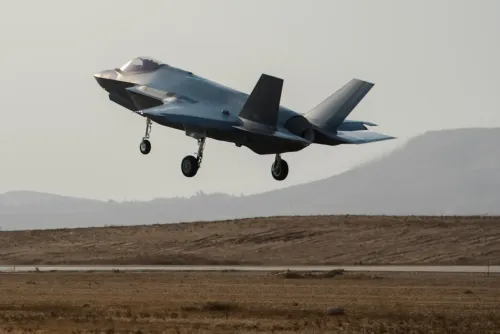
President Trump signalled at the NATO Ankara summit on 8 July that he is inclined to restore Turkey's access to the F-35 stealth fighter programme .
Trump credited President Erdogan for keeping Turkey out of the recent Middle East conflict 'at my request' as the primary reason for his favourable disposition.
Turkey was removed from the F-35 programme in 2019 after purchasing the Russian-made S-400 air defence system; CAATSA sanctions followed.
No final decision has been announced; any reinstatement would require navigating CAATSA waivers and Congressional approval.
Trump described Turkey as 'the second most powerful country in NATO ' and called bilateral ties 'one of our best relationships.'
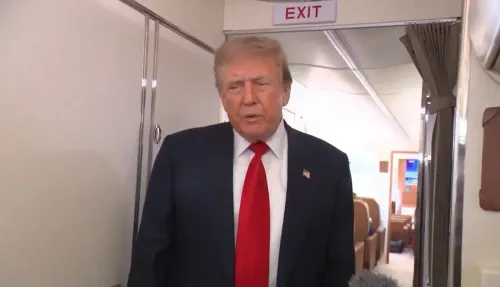
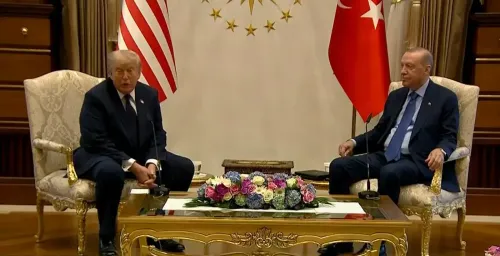
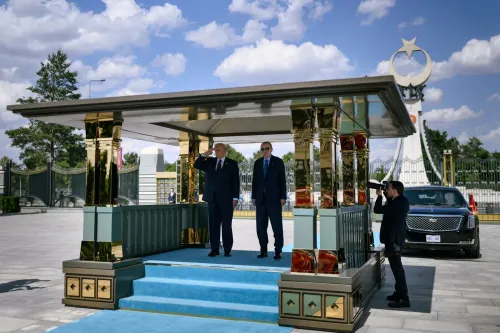
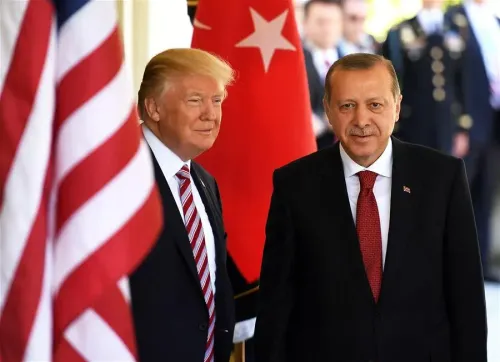
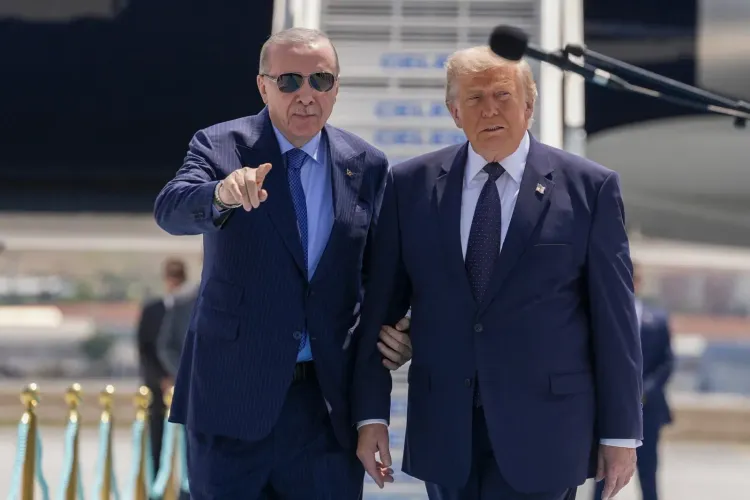
US President Donald Trump on Wednesday, 8 July signalled that his administration was inclined to restore Turkey's access to the F-35 stealth fighter programme, crediting President Recep Tayyip Erdogan for keeping Ankara out of the recent Middle East conflict and describing the bilateral relationship as one of Washington's strongest. The remarks, made at a news conference following the NATO summit in Ankara, represent the clearest indication yet that Washington may revisit one of the most contentious disputes in US-Turkey defence relations.
What Trump Said
'They're talking about the F-35 airplane, and it's the best plane, and everybody wants it, and we have to make a decision who we give it to,' Trump said at the post-summit press conference. He stopped short of announcing a final decision but was explicit about his disposition: 'My inclination, because again, he stayed out of... he's not a huge fan of Bibi, and he's not a huge fan of Israel. But he stayed out of that war. He could have gone into that war very easily, and he did at my request; he stayed out of that war.'
Trump also praised Erdogan in personal terms, calling him 'a really great man' and 'a great leader,' and noted that Secretary of State Marco Rubio could attest to the strength of the bilateral relationship. 'Marco could tell you we have a very strong relationship with Turkey,' he said.
Erdogan's Restraint as Diplomatic Currency
Central to Trump's reasoning was Erdogan's decision not to intervene in the recent regional conflict despite strained relations with Israel and Prime Minister Benjamin Netanyahu. 'He could have gone into the war because he doesn't like Israel much and he doesn't like Bibi much. And he didn't go because of me,' Trump said, adding that Turkey's military capacity made that restraint strategically significant. 'This is a military power. Millions of soldiers. Turkey's very strong. They have a lot of our best equipment. They're trying to get the F-35s.'
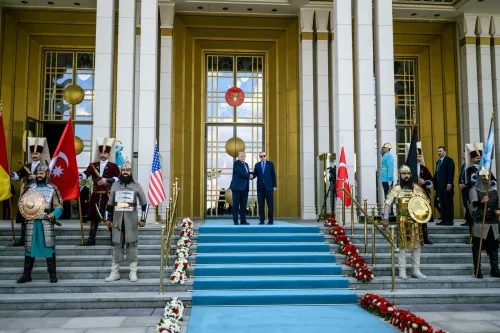
Trump had also praised Erdogan earlier in the day during a bilateral meeting with NATO Secretary General Mark Rutte, saying the Turkish leader had exercised restraint despite tensions with Israel. 'I like Erdogan. I'll tell you, I like President Erdogan. He rolled out the red carpet. He's terrific,' Trump said.
Background: Why Turkey Was Expelled from the F-35 Programme
The United States removed Turkey from the multinational F-35 programme in 2019 after Ankara acquired the Russian-made S-400 air defence system. Washington argued that operating the two systems simultaneously could compromise the aircraft's sensitive stealth technology. The US also imposed sanctions on Turkey under the Countering America's Adversaries Through Sanctions Act (CAATSA). Turkey has consistently maintained that its exclusion was unjustified and has sought reinstatement ever since.
Shifting US-Turkey Ties Since January 2025
Trump attributed the warming of ties directly to his return to the White House, contrasting the current relationship with what he described as a deterioration under his predecessor. 'When Sleepy Joe Biden got in, bad things happened with a lot of things... I think Turkey was one of those countries. But that changed on November 5th when we had the election,' he said. He also recalled the release of American pastor Andrew Brunson from detention in Turkey during his first term as an example of productive bilateral engagement.
Turkey is the second-largest military power in NATO by Trump's own description, and its strategic position — bordering both the Black Sea and the Mediterranean, and sharing frontiers with Syria, Iraq, and Iran — gives Ankara considerable leverage in any defence negotiation. The NATO summit in Ankara has provided fresh momentum for deepening that cooperation, and Trump's public comments are widely seen as an opening bid in what is likely to be a complex negotiation involving CAATSA waivers, S-400 disposition, and F-35 delivery timelines.
What Comes Next
No formal announcement has been made, and any reinstatement would require navigating CAATSA sanctions, Congressional scrutiny, and concerns from other F-35 partner nations. Defence analysts note that Turkey's return would also require resolution of the S-400 question — whether Ankara stores, deactivates, or returns the Russian system. The issue is now reportedly under active consideration as Washington and Ankara seek to consolidate gains from the NATO summit amid evolving security dynamics across the Middle East and Eastern Europe.
Point of View
Which sets a precedent that purchasing Russian hardware carries no permanent cost, a message with obvious resonance for other NATO partners watching closely. The S-400 question has not gone away: Turkey still operates the system, and no disposition plan has been disclosed. Framing Erdogan's Middle East restraint as the justification also conflates strategic self-interest with personal loyalty — Ankara had strong independent reasons not to enter that conflict. The harder test comes when the White House must translate Trump's 'inclination' into a sanctions waiver that survives Capitol Hill.
NationPress
7 Oct 2026
Frequently Asked Questions
Why did the US remove Turkey from the F-35 programme?
The United States expelled Turkey from the F-35 programme in 2019 after Ankara purchased the Russian-made S-400 air defence system. Washington argued that operating both systems together could expose the F-35's sensitive stealth technology to Russian intelligence, and subsequently imposed sanctions on Turkey under CAATSA.
What did Trump say about restoring Turkey's F-35 access?
Speaking at a news conference after the NATO summit in Ankara on 8 July, Trump said his 'inclination' was to approve Turkey's return to the programme, citing Erdogan's decision to stay out of the recent Middle East conflict. He stopped short of a formal announcement.
What role did Erdogan's Middle East restraint play in Trump's remarks?
Trump explicitly credited Erdogan for keeping Turkey out of the recent regional conflict 'at my request,' describing that restraint as evidence of a strong alliance. He told reporters that Turkey, as a significant military power, could have entered the conflict but chose not to.
What obstacles remain before Turkey can rejoin the F-35 programme?
Any reinstatement would require the US to issue a CAATSA sanctions waiver, secure Congressional approval, and resolve the unresolved question of Turkey's S-400 system. Other F-35 partner nations may also raise objections. No timeline or formal process has been announced.
How has the US-Turkey relationship changed since Trump returned to office?
Trump stated that bilateral ties deteriorated under his predecessor but rebounded sharply after his return to office in January 2025. He cited the current relationship as 'one of our best' and pointed to the NATO Ankara summit as a symbol of renewed cooperation.