US senator warns Pentagon over China espionage risk in military AI

Synopsis
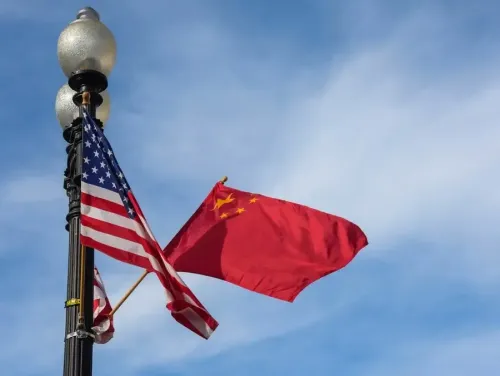
A US Republican senator is sounding the alarm that China-linked insiders at AI giants like OpenAI and Google could steal military AI models or plant backdoors in systems used by American forces — and is pressing the Pentagon to act before a breach, not after.
Key Takeaways
Senator Jim Banks wrote to Defence Secretary Pete Hegseth on 8 October 2026 urging stronger counterintelligence safeguards at frontier AI companies.
Banks warned that compromised insiders could steal AI model weights , reveal military application details, or insert software backdoors into US defence systems.
He cited China as the principal threat actor, pointing to a former Google engineer convicted in January 2026 of economic espionage on behalf of China-based businesses.
The Pentagon has existing agreements with OpenAI and Google , announced in May , to deploy advanced AI across military operations.
Banks called on Congress , the Pentagon , and the Office of Management and Budget to jointly fund and coordinate counterintelligence efforts with private AI developers.
The letter proposes closer oversight and information-sharing, but does not announce a new law or identify any new espionage incident.
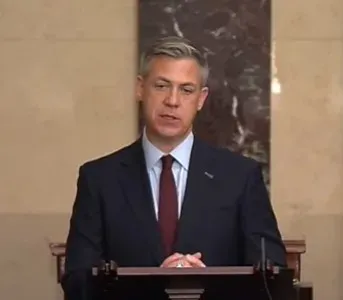
Republican Senator Jim Banks of Indiana has urged the Pentagon to tighten counterintelligence safeguards at leading artificial intelligence companies, warning that compromised insiders could expose sensitive US military applications, steal advanced AI model weights, or sabotage systems relied upon by American armed forces. The warning, delivered in a letter to Defence Secretary Pete Hegseth and Office of Management and Budget Director Russell Vought on 8 October 2026, highlights the growing national security anxiety surrounding the US military's deepening dependence on private AI developers.
What Banks Warned About
In his letter, Banks argued that the expanding use of advanced AI in military operations has created new vulnerabilities that existing corporate security programmes may not be equipped to handle. He specifically singled out China, contending that Beijing is actively seeking access to American technological capabilities through intelligence operations targeting the AI sector.
'As the Department relies more on these companies, insider threats in the frontier SI industry are becoming a direct risk to military operations,' Banks wrote, using the administration's terminology of super intelligence (SI). He warned that a malicious insider with sufficient access could reveal confidential information about military applications, steal model weights, or insert software backdoors capable of compromising defence systems.
The Google Espionage Case as a Cautionary Example
Banks cited the January 2026 conviction of a former Google engineer on economic espionage charges as evidence of the threat in practice. The engineer was found guilty of stealing confidential information about Google's AI technology for the benefit of China-based businesses — a case Banks used to illustrate the real-world consequences of inadequate insider-threat controls at AI firms.
Notably, this conviction was not an isolated incident in the broader US-China technology competition. It came against the backdrop of intensifying rivalry over advanced computing, AI models, and the technologies expected to shape future military capabilities.
Military-AI Partnerships Under the Spotlight
Banks acknowledged agreements announced in May between the US government and companies including OpenAI and Google, designed to accelerate the deployment of advanced AI capabilities across the military. He said these partnerships would grow increasingly important as AI models develop stronger capabilities in cyber operations and military planning — but warned those same systems would simultaneously become high-value targets for foreign intelligence services.
He acknowledged that major AI companies maintain internal security programmes but argued that private industry alone cannot adequately address the scale of the threat. 'An ongoing conversation between the Department and private industry will be needed to ensure that insider threats are adequately assessed and mitigated,' Banks wrote.
What Banks Has Asked the Pentagon to Do
The senator requested that the Pentagon obtain detailed information from frontier AI developers on their existing counterintelligence measures, the assets they consider most sensitive, and the controls governing employee access. He also asked for an assessment of gaps in corporate security programmes and the resources needed to close them.
Banks further sought a staff-level briefing covering principal national security risks, the Pentagon offices responsible for countering insider threats, and any additional funding or personnel requirements. He called on Congress, the Pentagon, and the Office of Management and Budget to jointly provide sufficient resources for counterintelligence and threat-reduction efforts.
What the Letter Does Not Do
Importantly, the letter does not identify a new espionage incident at any company currently participating in the military's AI partnerships. Nor does it announce a new law or binding security requirement. Instead, Banks is proposing closer government oversight and enhanced information-sharing arrangements as a framework for managing risk — an approach critics could characterise as advisory rather than enforceable. How quickly the Pentagon and OMB respond, and whether the concerns translate into concrete policy changes, remains to be seen.
Point of View
But using a single case to extrapolate a systemic insider-threat crisis at companies like OpenAI risks overstating what is currently a demonstrated but narrow vulnerability. The deeper tension is structural: the US military needs private AI capability precisely because government labs cannot match frontier development speeds, yet every such partnership is also a new attack surface. Without a binding security framework — not just an 'ongoing conversation' — the letter may raise awareness without closing any gap.
NationPress
8 Oct 2026
Frequently Asked Questions
What did US Senator Jim Banks warn about military AI and China?
Senator Jim Banks warned that China-linked insider threats at leading AI companies such as OpenAI and Google pose a direct risk to US military operations. In a letter to the Pentagon dated 8 October 2026, he said compromised employees could steal AI model weights, reveal sensitive military application details, or plant backdoors in defence systems.
Which AI companies are involved in US military partnerships?
The Pentagon announced agreements in May with OpenAI and Google to accelerate the deployment of advanced AI capabilities across military operations. Banks' letter specifically references these partnerships as creating new vulnerabilities that existing corporate security programmes may not adequately address.
What espionage case did Banks cite in his letter?
Banks cited the January 2026 conviction of a former Google engineer on economic espionage charges, in which the engineer was found guilty of stealing confidential AI technology information for the benefit of China-based businesses. He used the case to illustrate the real-world risks of insider threats at frontier AI firms.
What specific actions has Banks asked the Pentagon to take?
Banks asked the Pentagon to obtain detailed information from frontier AI developers about their counterintelligence measures, their most sensitive assets, and the controls governing employee access. He also requested a staff-level briefing on national security risks and called for joint resourcing of counterintelligence efforts by Congress, the Pentagon, and the Office of Management and Budget.
Does the letter announce a new law or identify a new espionage breach?
No. The letter does not identify any new espionage incident at companies participating in military AI partnerships, nor does it announce a new law or binding security requirement. It proposes closer government oversight and enhanced information-sharing arrangements as a framework for mitigating insider-threat risks.