US Senator Jim Banks urges tougher patent shields against Chinese AI mining
Synopsis
A US senator is warning that Chinese firms are using AI to mine American patent applications at machine speed — filing derivative biotech patents before US innovators can reach market. With 79% of American biotech companies already linked to Chinese manufacturers, Banks argues the patent scraping threat isn't just an IP problem; it's a supply chain vulnerability hiding in plain sight.
Key Takeaways
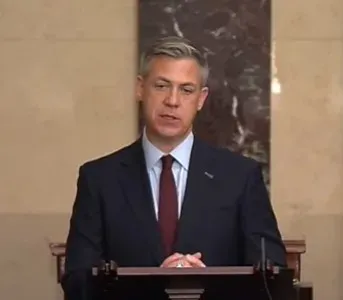
Senator Jim Banks (Republican, Indiana) wrote to Commerce Secretary Howard Lutnick urging stronger patent protections against Chinese AI-driven 'patent scraping'.
Banks alleges Chinese firms use AI to analyse US biotechnology patent applications , identify promising inventions, and file derivative patents before American innovators reach market.
A 2024 Biotechnology Innovation Organisation survey found 79 per cent of US biotech companies had at least one contract with a China-based or Chinese-owned manufacturer.
Banks warned that AI-generated filings at 'machine scale' could overwhelm the USPTO , worsening examination backlogs and complicating prior-art reviews.
The letter urges USPTO Under Secretary Squires and Lutnick to accelerate reforms protecting innovations vulnerable to AI-enabled duplication.
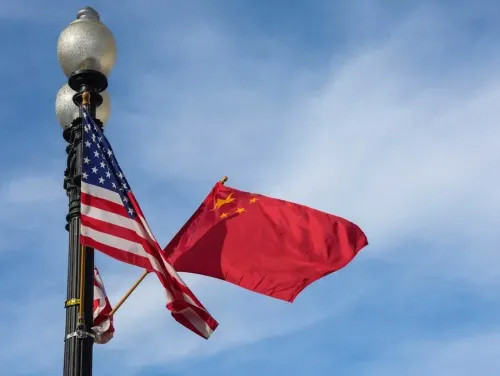
The concern is part of a broader US-China technology rivalry spanning biotechnology, semiconductors, AI, and quantum computing.
Republican Senator Jim Banks of Indiana has formally urged the US Commerce Department to strengthen patent protections against what he described as Chinese companies deploying artificial intelligence to systematically mine American patent applications. In a letter addressed to Commerce Secretary Howard Lutnick, Banks warned that the practice — which he termed 'AI-enabled duplication' — threatens US innovation, erodes pharmaceutical R&D incentives, and risks deepening America's dependence on China's biotechnology sector.
What Banks Alleges
According to the senator's letter, Chinese firms are increasingly using AI tools to analyse US biotechnology patent applications, identify commercially promising discoveries, and file derivative patents before American innovators can bring their products to market. Banks described the practice as 'patent scraping' — a process that allows competitors to appropriate an invention, make minor modifications, and obtain regulatory approval ahead of the original inventor.
'Patent scraping is intensifying the Chinese IP threat and risks undercutting American R&D investment, particularly given China's rapid drug approval process,' Banks wrote. 'When competitors can appropriate an invention, make minor modifications, and obtain regulatory approval before the original innovator, the incentives for investing in R&D are fundamentally weakened.'
The Pharmaceutical Supply Chain Concern
Banks argued that the challenge extends well beyond intellectual property theft. He noted that since the 1980s, the Chinese Communist Party has designated biotechnology a strategic national priority, investing heavily in research infrastructure and streamlining regulations to accelerate product development. This environment, he contended, has made China an increasingly attractive — and now strategically risky — manufacturing hub for the US pharmaceutical industry.
Citing a 2024 survey by the Biotechnology Innovation Organisation, Banks noted that 79 per cent of American biotechnology companies reported at least one contract or product agreement with a China-based or Chinese-owned manufacturer. He argued that such reliance 'not only creates vulnerabilities in our domestic supply chains but further exposes America's biotech sector to a country that actively seeks to undercut and exploit our industries.'
AI at Machine Scale: The USPTO Burden
Banks further warned that the combination of traditional patent analysis with AI tools enables competitors to file derivative patents 'at machine speed', without bearing original R&D costs. He cautioned that low-quality, AI-generated filings could overwhelm the US Patent and Trademark Office (USPTO), worsening examination backlogs and complicating prior-art analysis.
'Low-quality, AI-generated filings can burden patent systems. Machine-scale applications with little or no meaningful human contribution may further strain USPTO by worsening examination backlogs and complicating prior-art analysis,' he wrote.
Call to Action for USPTO
In his letter, Banks urged both Lutnick and USPTO Under Secretary Squires to prioritise reforms that protect innovations vulnerable to AI-assisted copying. He acknowledged existing USPTO engagement on the issue while pressing for continued and accelerated action.
This comes amid a broader US-China strategic contest over advanced technologies including biotechnology, semiconductors, artificial intelligence, and quantum computing. Washington has repeatedly accused Beijing of using state-backed industrial policies and cyber-enabled methods to acquire foreign technology — allegations that China has consistently denied. The patent scraping concern represents a newer, AI-accelerated dimension of that long-running dispute.
Point of View
More technically credible edge: AI doesn't just accelerate patent scraping, it industrialises it. The 79% figure on Chinese manufacturing dependencies is the more alarming data point — it means the same sector most exposed to IP appropriation is also structurally reliant on the alleged appropriator. What the letter does not address is whether current USPTO examination capacity, even post-reform, can realistically keep pace with machine-speed filings. If it cannot, tighter rules without additional resourcing may amount to a policy gesture rather than a structural fix. Beijing's consistent denial of state-directed IP theft also means any USPTO reform will need to be self-enforcing — dependent on domestic process changes rather than bilateral compliance.
NationPress
6 Oct 2026
Frequently Asked Questions
What is 'patent scraping' and why is Senator Banks concerned about it?
Patent scraping refers to the use of AI tools to systematically analyse patent applications, identify commercially valuable inventions, and file derivative patents before the original innovator can reach market. Senator Jim Banks argues that Chinese companies are deploying this technique against US biotechnology patents, effectively appropriating American R&D without bearing its costs.
What did Senator Jim Banks ask the Commerce Department to do?
Banks wrote to Commerce Secretary Howard Lutnick urging the USPTO to continue and accelerate reforms aimed at protecting American inventions from AI-enabled duplication. He specifically called on USPTO Under Secretary Squires to prioritise measures that guard innovations vulnerable to machine-speed derivative patent filings.
How dependent is the US biotech sector on Chinese manufacturers?
According to a 2024 Biotechnology Innovation Organisation survey cited by Banks, 79 per cent of American biotechnology companies reported at least one contract or product agreement with a China-based or Chinese-owned manufacturer. Banks argues this dependency compounds the IP risk by embedding supply chain vulnerability alongside the patent scraping threat.
How could AI-generated patent filings affect the USPTO?
Banks warned that low-quality, AI-generated applications filed at machine scale could worsen USPTO examination backlogs and complicate prior-art analysis. The concern is that volume alone — even without successful patent grants — could strain the office's capacity to protect legitimate American inventions.
Is this part of a wider US-China technology dispute?
Yes. Intellectual property protection has become a central flashpoint in US-China strategic competition, particularly across biotechnology, semiconductors, artificial intelligence, and quantum computing. Washington has repeatedly accused Beijing of using state-backed policies and cyber-enabled methods to acquire foreign technology, allegations China has consistently denied.