China IP Theft Costs US $600B Yearly, Senate Warns
Synopsis
At a Senate Judiciary Committee hearing on April 25, 2025, bipartisan US lawmakers warned that China's IP theft costs America up to $600 billion annually. A former CIA officer called it a national security failure, while experts flagged AI distillation and an OpenAI breach as emerging frontiers of the technology war.
Key Takeaways
China's IP theft costs the US economy an estimated $225 billion to $600 billion every year , according to bipartisan senators at the April 25, 2025 Senate Judiciary Committee hearing.
Former CIA officer Tom Lyons testified that US firms are competing not against businesses but against the largest intelligence apparatus in the world.
Linwei Ding allegedly stole Google's latest-generation TPU designs ; experts warn the strategic damage will take years to fully materialise.
Georgetown University's Helen Toner identified AI distillation by Chinese firms and a breach of OpenAI's internal systems as acute threats to US AI leadership .
IP expert Mark Cohen cautioned that China has evolved from copying to genuine innovation and may soon become a global intellectual property norm setter.
Lawmakers called for stronger export controls on advanced computing , with Toner calling it the best lever in the US-China AI competition .
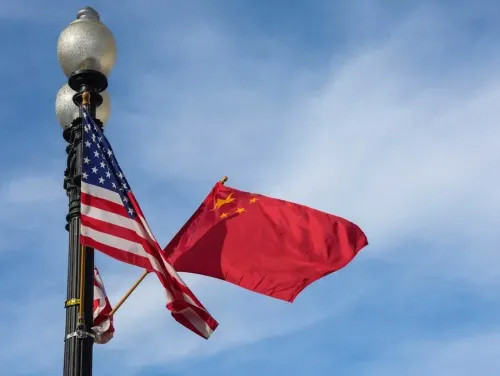
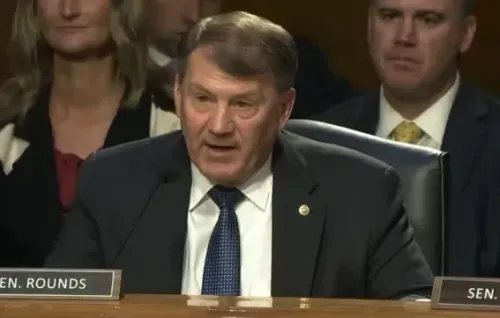
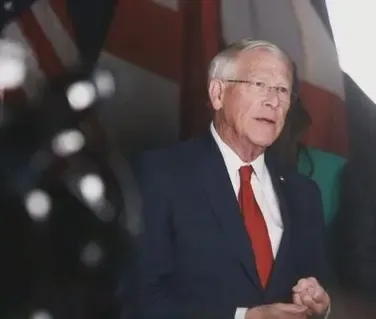
Washington, April 25, 2025 — China's systematic theft of American intellectual property is draining up to $600 billion annually from the US economy and poses an escalating threat to national security, technological leadership, and economic competitiveness, bipartisan lawmakers declared at a high-stakes Senate Judiciary Committee hearing that laid bare the deepening fault lines in the US-China innovation rivalry.
Senators Sound Alarm Over Billion-Dollar IP Losses
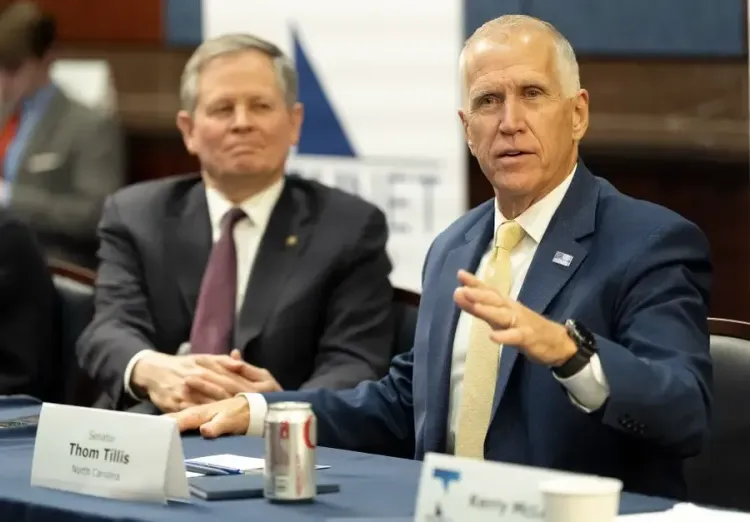
Senator Thom Tillis (R-NC) placed the annual economic damage from Chinese intellectual property theft at between $400 billion and $600 billion, warning that Beijing's ultimate ambition is to displace the United States as the world's foremost innovation leader. Tillis stressed that innovation and creativity are critical to our national security, framing the issue not merely as an economic dispute but as a civilisational contest.
Senator Richard Durbin (D-IL) reinforced those figures, citing estimates of between $225 billion and $600 billion lost every year to economic espionage and IP theft. He warned that persistent theft erodes the financial incentive for US companies to invest in research and development, creating a long-term drag on American innovation capacity.
Former CIA Officer: US Firms Face the World's Largest Intelligence Apparatus
Former CIA officer Tom Lyons delivered one of the hearing's most striking assessments, telling lawmakers that American businesses are not engaged in ordinary commercial competition with Chinese rivals but are instead pitted against the largest intelligence apparatus in the world.
Lyons cited the case of Linwei Ding, who allegedly stole Google's latest-generation TPU chip designs, warning that the technology is gone and consequences will only emerge years later. He bluntly noted that the occasional DOJ conviction does not unsteal the technology, underscoring the structural inadequacy of criminal prosecution as a deterrent. He concluded that the cumulative effect of such incidents amounts to a national security failure.
AI Vulnerabilities and the Threat of Distillation
Helen Toner of Georgetown University focused the committee's attention on artificial intelligence, identifying distillation — a technique in which advanced AI models are used to train and enhance less capable ones — as a real threat to US AI competitiveness. She said Chinese firms are distilling from American models at large scale, effectively extracting competitive advantage without direct access to source code.
Toner also flagged a breach of OpenAI's internal communication systems in which hackers extracted algorithmic secrets, alongside separate incidents involving theft of training data and hardware-related information. She cautioned against policy tunnel vision, warning that focusing exclusively on one threat vector leaves US AI systems, data infrastructure, and semiconductor hardware exposed. She identified restricting access to advanced computing power as the best lever available in AI competition with China.
China Is No Longer Just Copying — It Is Innovating
Mark Cohen, a veteran intellectual property expert, offered a more nuanced perspective. He cautioned that US policy has been excessively focused on criminal enforcement while neglecting the systemic architecture that enables Chinese IP acquisition. He described China's IP system as state driven and deployed as a tool of industrial policy, backed by extraordinary scale, speed, and government resources.
Critically, Cohen warned that China is no longer merely replicating foreign technology. China is not only copying but is increasingly innovating, he said, adding that Beijing could soon emerge as a global norm setter in intellectual property — a development that would fundamentally reshape the rules of the global innovation economy.
Broader Implications: Semiconductors, Biotech, and Institutional Weakness
Lawmakers raised concerns spanning semiconductor export controls, AI competition, and biotechnology espionage. Several warned that weakened US institutions and inconsistent policy frameworks risk handing China a structural advantage in the technology race.
This hearing comes amid a broader pattern of escalating US-China tech tensions, including Washington's tightening of chip export restrictions under the CHIPS and Science Act, ongoing scrutiny of Chinese investments in sensitive sectors, and repeated FBI warnings about Chinese state-sponsored cyber intrusions targeting American universities, defence contractors, and tech firms. The Department of Justice has prosecuted dozens of economic espionage cases linked to China over the past decade, yet experts argue convictions remain a fraction of actual incidents.
The bipartisan consensus emerging from this hearing signals that Congress is moving toward more aggressive legislative action on IP protection, AI governance, and export controls — with major implications for US-China trade relations, technology investment, and the global competitive landscape in the months ahead.
Point of View
Meaning the US can no longer rely on a technological head-start as a buffer. The distillation of American AI models by Chinese firms is a silent force-multiplier that existing export controls were never designed to address. India, as a rising technology power with deep US partnerships and its own IP vulnerabilities, should closely watch the rules being written in Washington today as they will shape the global innovation order for decades.
NationPress
19 Sept 2026
Frequently Asked Questions
How much does China's intellectual property theft cost the US each year?
China's IP theft costs the United States an estimated $225 billion to $600 billion annually , according to figures cited by senators at the April 25, 2025 Senate Judiciary Committee hearing. The wide range reflects varying methodologies used by government and independent researchers.
What is AI distillation and why is it a threat to the US?
AI distillation is a technique where advanced AI models are used to train and improve less capable ones, effectively transferring knowledge without direct access to source code. Georgetown University's Helen Toner told the Senate that Chinese firms are distilling from American AI models at large scale , undermining US competitive advantage in artificial intelligence.
What was the Linwei Ding case about?
Linwei Ding is accused of stealing Google's latest-generation TPU chip designs , a case cited by former CIA officer Tom Lyons at the Senate hearing. Lyons warned that despite the prosecution, the technology is gone and its strategic consequences may not be visible for years.
Was OpenAI hacked as part of China's IP theft activities?
Helen Toner of Georgetown University told the Senate committee that hackers breached OpenAI's internal communication systems and extracted algorithmic secrets. Separate incidents also involved theft of AI training data and hardware-related information , highlighting multiple vulnerability points in US AI infrastructure.
Is China still just copying US technology or is it innovating independently?
IP expert Mark Cohen warned the Senate that China is no longer merely copying — it is increasingly innovating and could soon become a global norm setter in intellectual property. This marks a significant shift from earlier assessments that framed China primarily as a technology imitator.