KTR Visits Oil-Palm Farmers in Jayashankar, Slams Revanth Govt
Synopsis
BRS working president K. T. Rama Rao visited oil-palm farmers in Repaka village, Jayashankar Bhupalapalli, on 8 July 2026, alleging the Congress-led Telangana government is dismantling BRS-era schemes that promoted oil-palm cultivation to reduce India's edible-oil import dependence.
Key Takeaways
KTR visited oil-palm farmers in Repaka village, Jayashankar Bhupalapalli district , on 8 July 2026 .
The BRS government (2014–2023) promoted oil-palm cultivation through subsidies and buy-back assurances as an alternative crop to paddy.
KTR alleged the Revanth Reddy-led Congress government is 'neutralising' all oil-palm promotion programmes launched by the previous administration.
Oil palm is a long-gestation perennial crop, making policy continuity especially critical for farmers who have already invested in it.
The visit is part of a broader BRS rural outreach effort ahead of anticipated local body polls in Telangana.
State agriculture department decisions on oil-palm subsidies for the 2026-27 season will be a key indicator of the government's policy direction.
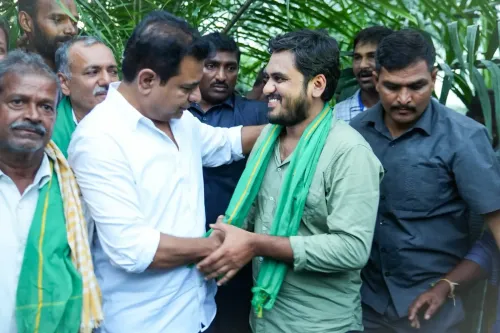
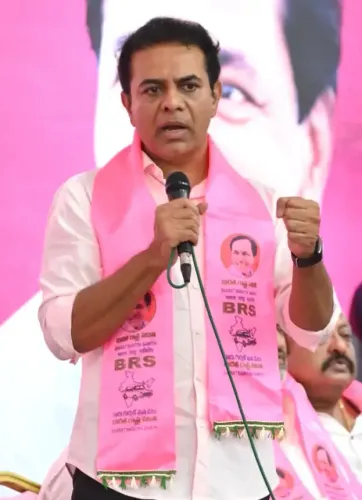
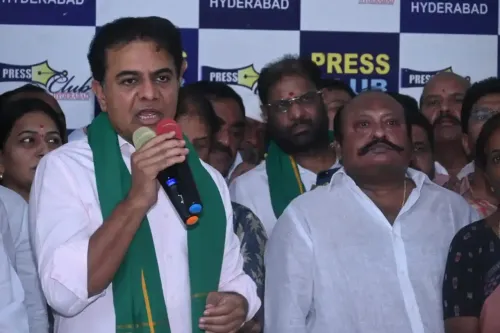
BRS working president K. T. Rama Rao visited oil-palm farmers in Repaka village, Jayashankar Bhupalapalli district, on 8 July 2026, to assess their welfare and highlight what he described as the Congress-led Telangana government's dismantling of agricultural programmes promoted by the previous BRS regime.
Posting on X in Telugu, KTR wrote: 'జయశంకర్ భూపాలపల్లి జిల్లా రేపాక గ్రామంలో ఆయిల్పామ్ రైతులను కలిసి వారి బాగోగులు అడిగి తెలుసుకున్నాను' ('I met oil-palm farmers in Repaka village of Jayashankar Bhupalapalli district and inquired about their well-being'). He added that the BRS government had widely promoted oil-palm cultivation as an alternative crop for farmers and to reduce edible-oil imports — and that the Revanth Reddy administration is now 'neutralising all those programmes.'
Context
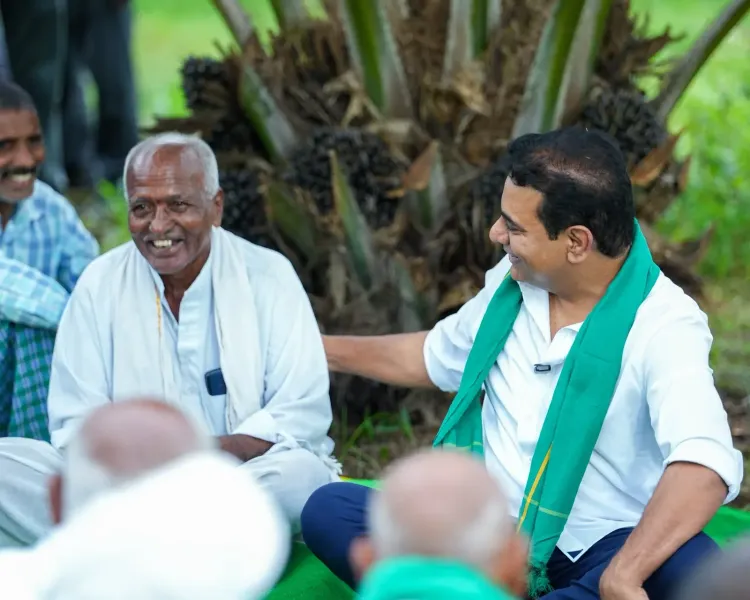
Jayashankar Bhupalapalli is a northern Telangana district where oil-palm cultivation gained ground under state-backed incentive schemes. The visit, accompanied by photographs of KTR meeting farmers in the field, is part of a broader outreach effort by BRS to stay visible in rural constituencies after losing power in December 2023.
The post includes a link to a full video of the interaction, signalling a structured campaign rather than a routine visit. KTR has positioned the trip as ground-level fact-finding ahead of what observers expect will be intensified political activity before local body polls.
Policy Backdrop
Between 2014 and 2023, the BRS government under K. Chandrashekar Rao ran oil-palm area-expansion programmes that offered subsidies and buy-back assurances to farmers willing to shift away from paddy. The stated twin goals were to diversify cropping patterns and reduce India's heavy dependence on imported edible oils — a national priority also reflected in the central government's National Mission on Edible Oils – Oil Palm (NMEO-OP).
After the Congress swept the 2023 Telangana assembly elections, BRS leaders have repeatedly alleged that the new administration has discontinued or diluted flagship agricultural schemes. The oil-palm sector has become one of the focal points of this criticism, with farmers caught between shifting policy signals from the state.
Stakeholders and Impact
Oil-palm farmers in districts like Jayashankar Bhupalapalli are among the most directly affected. Unlike seasonal crops, oil palm is a long-gestation perennial that requires years of investment before it yields commercially viable returns, making policy continuity especially critical for growers who have already committed land and capital.
If state-level procurement support or subsidies are wound down, these farmers face the dual risk of being locked into a crop with limited open-market buyers and losing the income support that made the switch from paddy viable in the first place. The broader edible-oil import bill — which runs into tens of thousands of crore rupees annually — is also a national-level concern that any state-level policy reversal could indirectly worsen.
What's Next
Attention will now turn to the Telangana agriculture department's orders on oil-palm subsidies and procurement arrangements for the 2026-27 season. The Revanth Reddy government has not publicly responded to KTR's specific allegations about programme discontinuation.
If BRS sustains this farmer-outreach campaign, it could translate into organised rallies in agrarian northern Telangana — a region that has historically been a stronghold for the party and will be keenly contested in upcoming local body elections. The government's response, or silence, on oil-palm policy will be watched closely by both farmers and political analysts.
Point of View
A crop with long payback periods and genuine farmer vulnerability to policy shifts, BRS is choosing ground where the human cost of discontinuity is tangible and visible. The Revanth Reddy government's silence on the specific allegations leaves a narrative vacuum that BRS is moving quickly to fill. How the Congress administration responds — through either policy clarification or counter-outreach — will shape the political temperature in rural northern Telangana ahead of local body elections.
NationPress
6 Oct 2026
Frequently Asked Questions
Why did KTR visit oil-palm farmers in Jayashankar Bhupalapalli?
KTR visited Repaka village in Jayashankar Bhupalapalli district on 8 July 2026 to meet oil-palm farmers, understand their problems, and highlight his allegation that the Congress-led Telangana government is dismantling BRS-era schemes that promoted oil-palm cultivation.
What did the BRS government do for oil-palm farmers in Telangana?
Between 2014 and 2023, the BRS government ran oil-palm area-expansion programmes offering subsidies and buy-back assurances to encourage farmers to shift from paddy to oil palm, aiming to reduce India's dependence on imported edible oils.
What is KTR's allegation against the Revanth Reddy government on oil palm?
KTR has alleged that the Revanth Reddy-led Congress government is 'neutralising' all programmes that the BRS government launched to promote oil-palm cultivation in Telangana.
Why is oil-palm farming policy important for Telangana farmers?
Oil palm is a long-gestation perennial crop that takes years to yield commercial returns, so farmers who have already invested in it depend heavily on state support such as subsidies and procurement assurances — making any policy reversal financially damaging.
What is the National Mission on Edible Oils – Oil Palm?
The National Mission on Edible Oils – Oil Palm (NMEO-OP) is a central government scheme to expand domestic oil-palm cultivation across India and reduce the country's large edible-oil import bill, which runs into tens of thousands of crore rupees annually.