US Officials and Lawmakers Raise Alarm Over China's Growing Space Dominance
Synopsis
As China strengthens its foothold in low Earth orbit, US lawmakers and officials express critical concerns regarding the transition from the ISS to commercial platforms. They highlight the risks and emphasize the necessity of maintaining American leadership in space.
Key Takeaways
US lawmakers express concerns over the transition from the ISS.
China's presence in low Earth orbit is expanding.
Strong demand for space-based work is evident.
Risks associated with aging ISS systems are increasing.
Policy clarity from NASA is crucial for future developments.
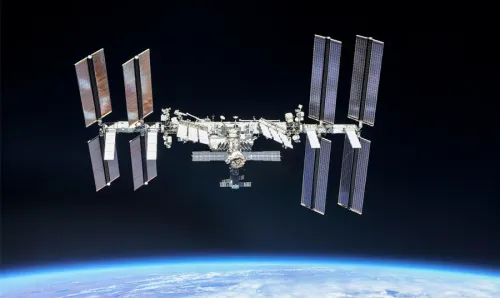
Washington, March 26 (NationPress) - US lawmakers and officials have expressed concerns regarding the challenges involved in transitioning from the International Space Station (ISS) to commercial space platforms, particularly as China enhances its activity in low Earth orbit.
On Wednesday, House Science Committee Chairman Brian Babin remarked, “The International Space Station is a remarkable achievement that showcases the brilliance of the American space program.”
Babin emphasized that the ISS has facilitated human spaceflight and research for over 25 years, but he cautioned that the aging structure requires careful management as we move forward.
Subcommittee Chairman Mike Haridopolos highlighted the necessity for competition with China. “America must take the lead in low Earth orbit,” he stated.
He further commented that leadership in space is not solely about deep space endeavors; it is equally dependent on strength in low Earth orbit.
Charles J. Precourt, a member of the Aerospace Safety Advisory Panel, raised safety concerns.
“The ISS is currently in the highest-risk phase of its operational lifecycle,” Precourt noted.
He indicated that the aging systems and wear are contributing to increasing risks.
“While continued safe operation is possible, it is not guaranteed without consistent engineering diligence, disciplined risk management, and sufficient resources,” he remarked.
Precourt also cautioned about the transition phase.
“There exists a credible risk of a gap in US human spaceflight capability in low Earth orbit,” he warned.
This gap could significantly impact research and future missions.
Industry leaders pointed out the strong demand for space-related activities.
David Cavossa, President of the Commercial Space Federation, stated, “The global value of space-related work is estimated at $570 billion and is projected to rise to $1.8 trillion by 2035.”
He mentioned the rapid growth of private research on the ISS.
Cavossa called for clearer policies, urging, “NASA should move forward with the CLD procurement and provide the industry with clarity regarding its acquisition strategy, requirements, and procurement timeline.”
He cautioned that any delays could hinder investment and slow the development of new stations.
NASA stated it is preparing for this transition.
Joel R. Montalbano, Acting Associate Administrator for Space Operations, commented, “NASA’s strategy is designed to encourage private sector initiatives and establish a commercial pathway to replace the International Space Station by 2030.”
He added that NASA aims to be “one of many customers in a robust commercial marketplace in LEO.”
Montalbano noted that the ISS has supported significant research in science and human health.
Lawmakers emphasized the importance of avoiding any gaps in human presence in orbit.
Babin cautioned that after decades of uninterrupted presence, any gap would be substantial.
The ISS was completed in 2011 following years of delays and has hosted nearly 200 American astronauts.
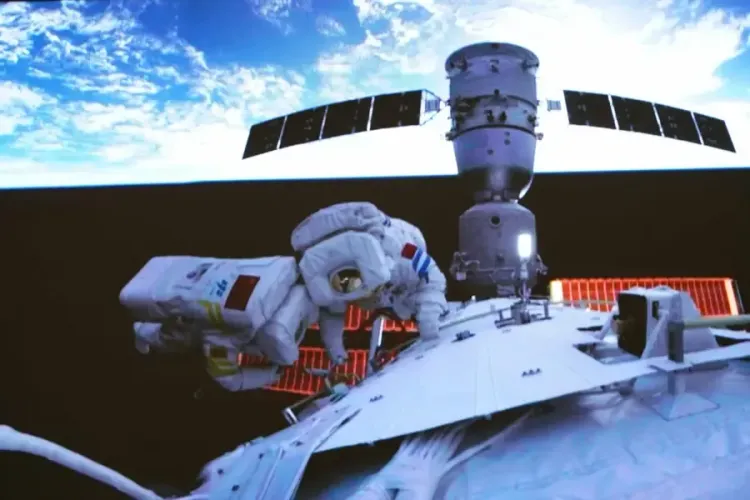
China launched its Tiangong space station in 2022, which has remained continuously crewed since its inception.
US officials indicated that the coming years will be crucial in determining leadership in low Earth orbit.
Point of View
The current developments underscore the critical importance of US leadership in space. With China's advancements, it is imperative for the United States to ensure a seamless transition from the ISS to commercial platforms to maintain its competitive edge and continue contributing to scientific research.
NationPress
19 Sept 2026
Frequently Asked Questions
What are the primary concerns regarding the ISS transition?
Lawmakers are worried about potential risks in transitioning from the ISS to commercial platforms, particularly due to China's expanding presence in low Earth orbit.
What is the projected growth of the space economy?
The global value of space-related work is estimated at $570 billion and is expected to grow to $1.8 trillion by 2035.
What role will NASA play in future space operations?
NASA aims to foster private sector initiatives and create a commercial pathway to replace the ISS by 2030.
Why is avoiding a gap in human presence in orbit critical?
A gap could significantly impact future research and missions, affecting the continuity of US human spaceflight capabilities.
How many astronauts have visited the ISS?
The ISS has hosted nearly 200 American astronauts since its completion in 2011.