US Senator Raises Concerns Over 'Golden Dome' Missile Defense Amidst China's Space Advancements
Synopsis
A US senator has voiced serious apprehensions regarding the costs and feasibility of the proposed 'Golden Dome' missile defense system, highlighting the strategic threats posed by China's burgeoning capabilities in space.
Key Takeaways
Senator Mark Kelly questions the feasibility and cost of the 'Golden Dome' missile defense system.
Concerns regarding China's space advancements raise strategic risks for US assets.
The system aims to intercept large-scale missile attacks.
Admiral Correll emphasizes the need for improved detection and tracking systems.
General Whiting warns of the implications of China's maneuver capabilities in space.
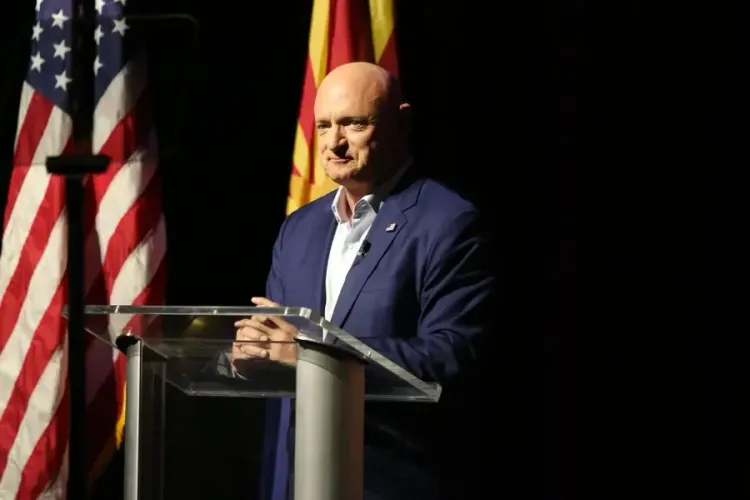
Washington, March 28 (NationPress) A prominent US senator has expressed serious concerns regarding the cost and feasibility of the proposed “Golden Dome” missile defense system, while cautioning that China's advancing space capabilities could introduce new strategic challenges to American assets.
During a Senate Armed Services Committee hearing focused on US Space Command and Strategic Command, Senator Mark Kelly scrutinized whether this ambitious missile defense framework could fulfill its promises effectively at scale.
“While I see the point that a more formidable missile defense architecture could enhance deterrence by denial and offer extra protection for the homeland, this raises substantial questions of cost, capability, and basic physics when considered at scale,” Kelly remarked.
“One of my significant worries is that we could invest $500 billion or even $1 trillion, only to find ourselves at the end of the timeline with a system that fundamentally fails to operate effectively or does not provide enough deterrence.”
The envisioned system aims to create a layered shield capable of intercepting extensive missile attacks, including sophisticated threats like hypersonic glide vehicles and advanced cruise missiles.
In response to Kelly's inquiries, Admiral Richard A. Correll noted that the initial focus would involve enhancing detection and tracking systems. “The first step is to strengthen our sensor layer and our ability to detect and track advanced missiles,” he stated.
Kelly acknowledged the urgency of tackling emerging threats, particularly maneuverable hypersonic weapons. He pointed out the complexities involved in intercepting multiple incoming missiles launched from various trajectories and platforms.
Correll indicated that the system would necessitate a variety of evolving technologies, including space-based interceptors. “This is one area we need to advance to understand its interception capabilities,” he added, mentioning the importance of analyzing the entire kill chain from pre-launch to impact.
The discussion also addressed China's expanding capabilities in space, which Kelly flagged as a major concern.
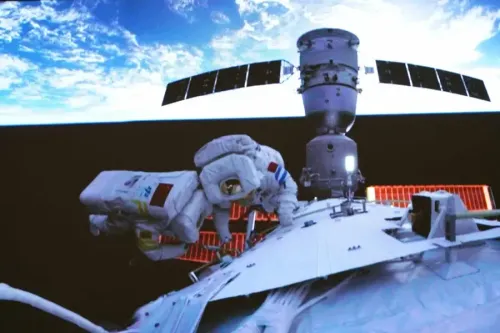
“Reports indicate that last year, China’s SJ 5 and SJ 21 maneuvered, suggesting they may have conducted a satellite refueling experiment. If verified, this would mark the first instance of a satellite in GEO refueling another,” Kelly stated.
He warned that such advancements could enable China to extend the operational lifespan of its satellites, reposition assets, and potentially jeopardize US systems.
General Stephen N. Whiting, who leads US Space Command, confirmed that Washington is vigilantly monitoring these developments. “China has shown significant sophistication in orbit, including the initiation of broad maneuver capabilities,” he remarked.
Whiting cautioned that if Beijing develops sustained maneuver capabilities in space, it could gain a strategic advantage akin to the way the US has historically utilized maneuverability in land, sea, and air warfare.
“My worry is that if they achieve this, they will possess the ability to maneuver for advantage… We must enhance our own maneuver warfare capabilities to ensure we can leverage the benefits our joint forces have cultivated over the decades in space,” he concluded.
Frequently Asked Questions
What is the 'Golden Dome' missile defense system?
The 'Golden Dome' missile defense system is a proposed layered shield designed to intercept large-scale missile attacks, including complex threats like hypersonic glide vehicles and advanced cruise missiles.
Why is Senator Kelly concerned about the system?
Senator Kelly is worried about the potential costs involved, suggesting that significant investments could lead to a system that fails to operate effectively, thus not enhancing deterrence.
What threats does China pose in space?
China's advancements in space include capabilities for maneuvering satellites and potentially refueling them, which could extend their operational lifespan and threaten US assets.
What is the role of the US Space Command?
The US Space Command monitors and assesses threats in space, ensuring that the US remains aware of advancements and capabilities demonstrated by other nations, particularly China.
How might China's space capabilities affect US national security?
If China develops sustained maneuver capabilities in space, it could gain a strategic edge, impacting US defense strategies and necessitating an enhancement of US capabilities in maneuver warfare.