US Congressional Hearing Highlights China's Missile Threats
Synopsis
In a pivotal congressional hearing, US defense officials spotlighted the rising threat from China, prompting a significant overhaul of missile defense strategies. The proposed Golden Dome system aims to bolster homeland security against advanced missile capabilities.
Key Takeaways
China is identified as the primary long-term threat in US missile defense discussions.
The proposed Golden Dome system aims to counter advanced missile threats.
Lawmakers express skepticism about the system's effectiveness and cost.
There is a growing trend of military collaboration among US adversaries.
The Pentagon emphasizes the urgency of enhancing missile defense capabilities.
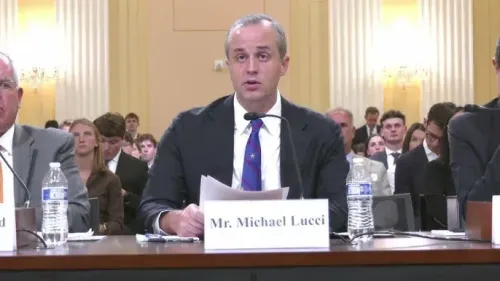
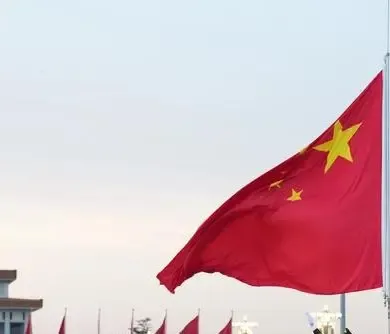
Washington, April 17 (NationPress) The focus of a crucial US congressional hearing on missile defense was squarely on China, with defense officials cautioning that Beijing's growing capabilities are prompting a significant transformation of the nation's homeland security framework.
During the session, senior Pentagon representatives consistently pointed to China as the foremost long-term adversary influencing the proposed “Golden Dome” missile defense shield, while lawmakers debated its financial implications, practicality, and strategic justification.
According to Marc Berkowitz, the assistant secretary of defense for space policy, “China is our pacing competitor,” as he elaborated on the justification for the new defense system.
Berkowitz emphasized that the United States intends to “deter China from a position of strength, not confrontation,” indicating that the expansion of missile defense is aimed not only at immediate threats but also at long-term strategic rivalry.
The envisioned Golden Dome system is designed as a layered, multi-domain defense architecture to counter ballistic, hypersonic, and advanced cruise missile threats—domains where US officials assert that China has rapidly advanced.
Berkowitz cautioned that US adversaries are “expanding, diversifying, and enhancing the sophistication of their arsenals,” integrating missile and aerial systems into joint operations to challenge American dominance.
“These threats are crafted to undermine our political resolve, social unity, and capacity to project power,” he stated.
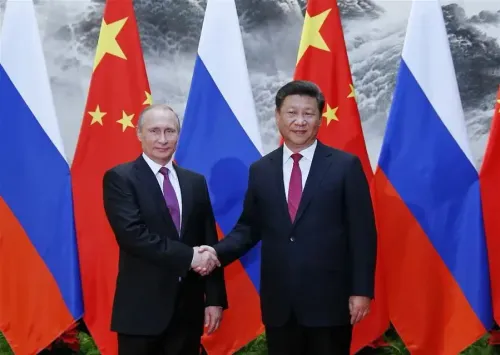
Military leaders echoed this assessment, highlighting a swiftly evolving threat landscape in which adversaries are not only advancing their missile capabilities but also collaborating with one another.
General Gregory Guillot, the commander of US Northern Command and NORAD, noted that adversaries are “relentless in their pursuit of more capability” and are sharing data and technologies to exploit vulnerabilities in US defenses.
General Michael Guetlein, who spearheads the Golden Dome initiative, warned that “for the first time in a generation, our nation’s margin of safety has disappeared,” with the US homeland increasingly vulnerable to advanced missile threats.
He explained that the new system would unify space-based and terrestrial defenses into a cohesive network to tackle threats from land, sea, air, and space.
However, lawmakers raised serious doubts about whether the system could fulfill its promises. Some suggested that missile defense might be outpaced by adversaries like China, which are developing countermeasures and alternative assault strategies.
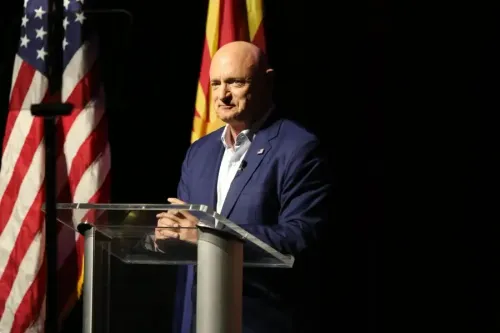
Seth Moulton, the ranking member, expressed concern that recent US actions have “bolstered China’s position,” questioning the overall strategic coherence of existing defense policies.
He also warned that missile defense systems have inherent limitations, stating they cannot provide an “impenetrable shield” against all threats.
Officials recognized that adversaries often adapt swiftly. General Heath Collins of the Missile Defense Agency remarked that “throughout history… adversaries immediately [try] to counter” new missile defense capabilities.
Despite the skepticism, the Pentagon insists that the Golden Dome is crucial for re-establishing deterrence against near-peer competitors, especially China, by complicating attack planning and increasing interception chances.
This hearing occurs amid escalating US-China rivalry across military, technological, and geopolitical arenas, with missile defense becoming a pivotal aspect of strategic competition.
Experts highlight that Beijing has heavily invested in hypersonic weapons, anti-satellite systems, and integrated air defense networks, challenging traditional US advantages and hastening the drive for next-generation defensive technologies.
Point of View
It’s imperative to recognize the strategic implications of the US's focus on China's military advancements. This shift in defense policy highlights the urgent need for a robust response to evolving global threats while maintaining a balanced approach to international relations.
NationPress
23 Sept 2026
Frequently Asked Questions
What is the Golden Dome missile defense system?
The Golden Dome is a proposed layered, multi-domain defense architecture designed to counter advanced ballistic, hypersonic, and cruise missile threats, particularly from China.
Why is China considered a primary threat?
China is viewed as a major long-term challenge due to its rapid advancements in missile technology and military capabilities, which have prompted significant changes in US defense strategies.
What concerns did lawmakers express during the hearing?
Lawmakers questioned the feasibility and cost-effectiveness of the Golden Dome system, raising doubts about whether it could effectively counter threats posed by adversaries like China.
How are US adversaries adapting their strategies?
US adversaries are enhancing their missile capabilities and collaborating to exploit weaknesses in American defenses, making the threat landscape increasingly complex.
What does the Pentagon say about the importance of the Golden Dome?
The Pentagon asserts that the Golden Dome system is crucial for restoring deterrence against near-peer competitors, particularly by complicating their attack strategies.