Divisions Emerge Among US Lawmakers Over Iran War Justifications

Synopsis
As US intelligence officials present alarming assessments of global threats, a congressional hearing reveals a significant divide in Washington regarding the motivations behind the ongoing conflict with Iran. The debate centers on evidence versus political judgment, highlighting crucial national security concerns.
Key Takeaways
US intelligence officials warn of a complex threat landscape.
Debate over evidence vs political judgment regarding the Iran conflict .
Significant risks from missile proliferation and cyber warfare .
Non-state actors increasingly pose threats through cyber operations.
The Annual Threat Assessment is crucial for informing policymakers.
Washington, March 20 (NationPress) As US intelligence leaders presented a stark overview of escalating global dangers, a congressional hearing unveiled a significant divide within Washington regarding whether the conflict with Iran was fueled by factual evidence or political motives.
Key intelligence figures informed lawmakers that the United States encounters a "complicated and evolving threat landscape" encompassing missile proliferation, cyber warfare, terrorism, and organized crime.
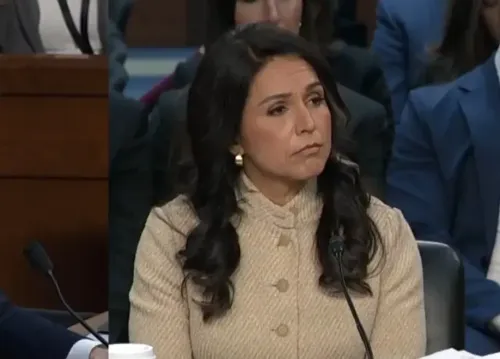
Director of National Intelligence Tulsi Gabbard stated that hostile nations are enhancing capabilities that could pose a direct risk to the US homeland. The intelligence community predicts that threats could surge "to over 16,000 missiles by 2035" from the existing level of more than 3,000.
According to her, China and Russia are advancing sophisticated delivery systems capable of breaching US missile defenses, while North Korea's intercontinental ballistic missiles already have the ability to reach American soil. Pakistan's missile program could evolve into capabilities that threaten the US, and Iran has showcased technologies that could facilitate future long-range missile advancements.
Cyber threats are also escalating. Gabbard mentioned that China, Russia, Iran, North Korea, and non-state actors are persistently targeting US government and private sector networks, in addition to critical infrastructure. The rising utilization of artificial intelligence is enhancing both the scale and speed of cyber operations.
"Financially or ideologically driven non-state actors are becoming increasingly audacious," she remarked, highlighting that ransomware groups are transitioning to quicker, high-frequency attacks that are more challenging to identify.
Islamist factions remain a continual threat, she pointed out. Although al-Qaida and ISIS are less potent than during their peak, their ideology continues to disseminate globally and provoke attacks. In 2025, there were at least three Islamist terrorist assaults in the United States, with law enforcement thwarting a minimum of 15 plots, she reported to the lawmakers.
Gabbard also emphasized the influence of transnational criminal entities, particularly drug cartels, which she described as a "daily and direct threat" to Americans through the trafficking of fentanyl and other narcotics.
However, the hearing rapidly transitioned to the ongoing struggle with Iran, illuminating profound political rifts.
Committee Chairman Rick Crawford defended former President Donald Trump's choice to initiate military action, asserting that diplomacy had failed and cautioning that "Iran is intent on acquiring nuclear weapons."
He stated that the president "made a difficult but essential choice" in response to a long-standing menace.
Democrats vehemently countered. Ranking member Jim Himes claimed that intelligence did not substantiate assertions that Iran constituted an imminent threat to the United States.
"The president has claimed that Iran was preparing an imminent attack on the United States. That is false," Himes argued. "Not a single one of your agencies has produced a report indicating that Iran posed an imminent threat."
The contention regarding what qualifies as an "imminent threat" became pivotal during the hearing. Gabbard clarified that the intelligence community provides assessments but refrains from making such determinations.
"The president… is accountable for identifying what constitutes an imminent threat," she explained, based on the "comprehensive nature of information and intelligence."
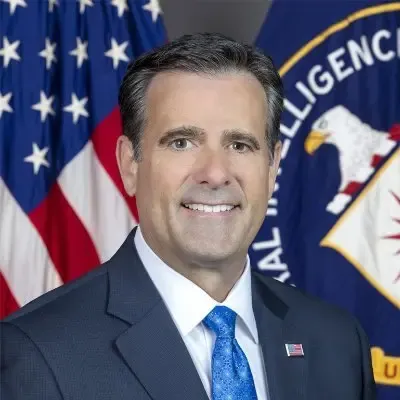
CIA Director John Ratcliffe indicated that intelligence suggested that in the event of a conflict between Iran and Israel, the United States would likely face immediate assaults, although he refrained from elaborating in the open session.
Lawmakers also expressed worries about election security, foreign influence, and the exclusion of such threats from the unclassified assessment. Gabbard affirmed that there are "multiple platforms and venues" through which intelligence on election threats is communicated.
The hearing accentuated the wide array of global risks highlighted by intelligence agencies, from geopolitical rivalry with China and Russia to instability in regions such as the Middle East, Africa, and Latin America.
The Annual Threat Assessment is presented to Congress annually to inform policymakers about the most urgent national security challenges confronting the United States.
Officials noted that the current climate is characterized by overlapping threats across military, technological, and ideological domains, necessitating ongoing vigilance and coordination within the intelligence community.
Point of View
It is evident that the ongoing discourse in Washington reflects a profound concern for national security. The conflicting narratives regarding Iran's threat level highlight the need for transparent and factual assessments to guide policy decisions. The stakes are high, and it is imperative that lawmakers prioritize the safety of the American public.
NationPress
29 Sept 2026
Frequently Asked Questions
What are the main threats discussed in the hearing?
The hearing addressed various threats, including missile proliferation, cyber warfare, terrorism, and organized crime, particularly focusing on the escalating risks posed by countries like Iran, China, and Russia.
What was the central debate during the congressional hearing?
The primary debate revolved around whether the military action against Iran was justified by evidence or was more a matter of political judgment, with significant division among lawmakers.
Who are the key figures mentioned in the hearing?
Key figures include Director of National Intelligence Tulsi Gabbard, Committee Chairman Rick Crawford, and Ranking member Jim Himes, among others.
What role do non-state actors play in current threats?
Non-state actors, driven by financial or ideological motives, are increasingly bold, particularly in cyber operations and attacks, presenting a growing challenge for national security.
How does the intelligence community assess threats?
The intelligence community provides assessments based on gathered information but does not determine what constitutes an imminent threat; that responsibility falls to the president.