MSRTC e-bus charging network: Fadnavis orders AI-driven rollout across Maharashtra
Synopsis
Maharashtra CM Fadnavis has ordered MSRTC to build a state-wide e-bus charging network and use AI to plan routes — but with supply-chain delays already stalling 5,150 contracted buses and a rural fleet of up to 22,000 to electrify, the 2029 target of 50% electric buses faces a serious infrastructure and logistics test.
Key Takeaways
CM Devendra Fadnavis on 1 June directed MSRTC to set up a state-wide e-bus charging network under the Viksit Maharashtra initiative.
Maharashtra targets 50% of the ST fleet electric by 2029 , 80% by 2035 , and 100% by 2047 .
MSRTC is implementing 5,150 e-buses under the GCC model , but has faced significant supply-chain delays from private manufacturers.
The state's EV policy provides a 10% subsidy capped at ₹20 lakh per bus for 1,500 e-buses .
AI technology will be used to optimise routes, grid availability, terrain, and charging schedules.
Bus inspections must be completed within seven days of delivery from suppliers.
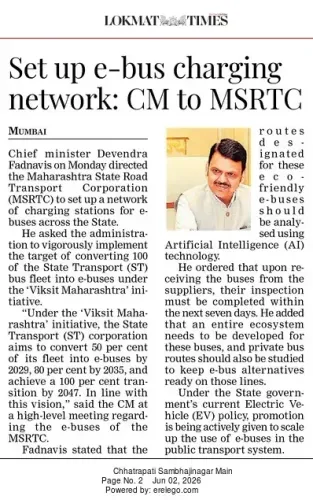
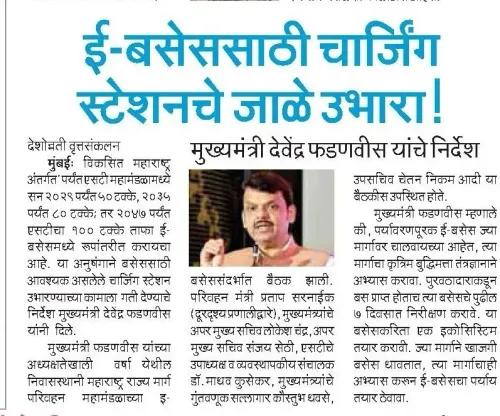
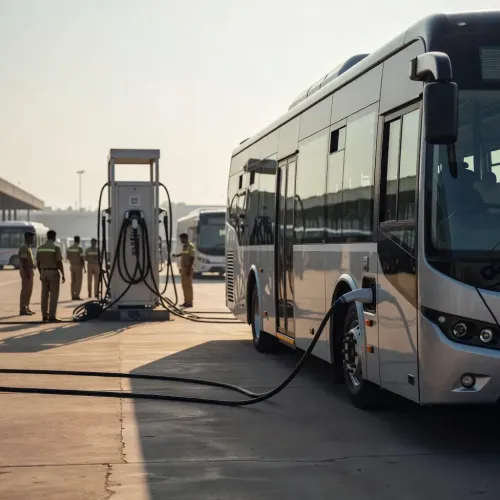
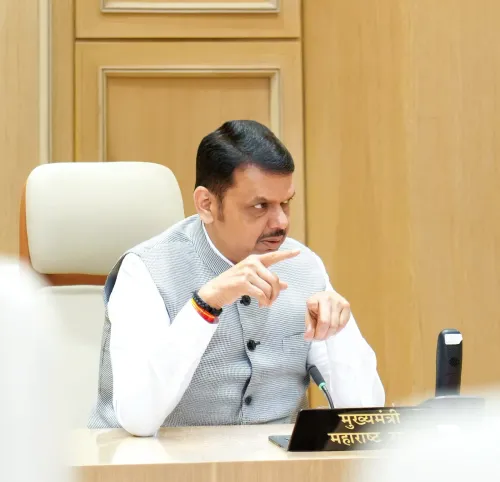
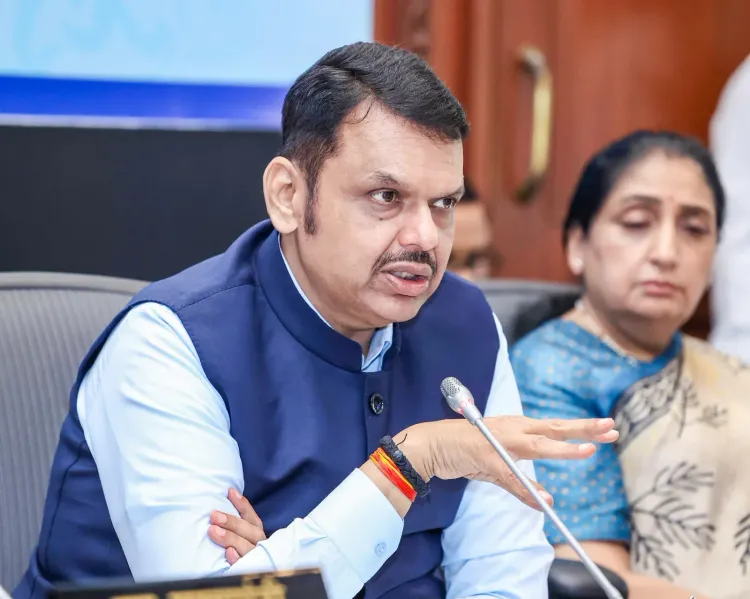
Maharashtra Chief Minister Devendra Fadnavis on Monday, 1 June directed the Maharashtra State Road Transport Corporation (MSRTC) to build a state-wide network of charging stations for electric buses, as the government pushes ahead with an ambitious fleet electrification roadmap under the 'Viksit Maharashtra' initiative. The directive came at a high-level meeting focused on MSRTC's e-bus programme.
Fleet Electrification Targets
At the meeting, Fadnavis outlined a three-stage transition timeline: 50 per cent of the ST fleet to be converted to e-buses by 2029, 80 per cent by 2035, and a full 100 per cent transition by 2047. He also directed the administration to vigorously implement the immediate target of converting 100 buses in the current fleet to electric.
'Under the Viksit Maharashtra initiative, the State Transport corporation aims to convert 50 per cent of its fleet into e-buses by 2029, 80 per cent by 2035, and achieve a 100 per cent transition by 2047. In line with this vision,' Fadnavis said at the meeting.
AI to Optimise Routes and Charging
Fadnavis directed that routes designated for e-buses be analysed using Artificial Intelligence (AI) technology. According to transport department sources, AI algorithms will calculate grid availability, traffic patterns, terrain slopes — which drain batteries faster — and passenger loads to determine precisely where and when a bus should stop to fast-charge without disrupting timetables.
He further ordered that upon receiving buses from suppliers, their inspection must be completed within seven days. The CM also stressed that an entire ecosystem needs to be developed around these buses, and that private bus routes should be studied to keep e-bus alternatives ready on those lines.
The GCC Model and Supply-Chain Pressures
MSRTC is currently implementing a project of 5,150 e-buses under the Gross Cost Contract (GCC) model, wherein a private operator owns, maintains, and deploys the buses while MSRTC pays a fixed rate per kilometre and retains ticket revenue. This structure reduces upfront government expenditure but has exposed the corporation to significant delays from private manufacturers.
Notably, Maharashtra has faced severe supply-chain bottlenecks in delivery of contracted buses. As a result, MSRTC is reportedly considering a shift toward owning its buses outright rather than depending solely on private operators — making the development of independent charging infrastructure even more critical, according to transport department sources.
EV Policy Subsidies and Operational Context
Under the state government's current Electric Vehicle (EV) policy, a 10 per cent subsidy on bus costs — capped at ₹20 lakh per bus — has been provisioned for 1,500 e-buses. The policy is positioned as a cornerstone of building an eco-friendly, sustainable public transport system across Maharashtra.
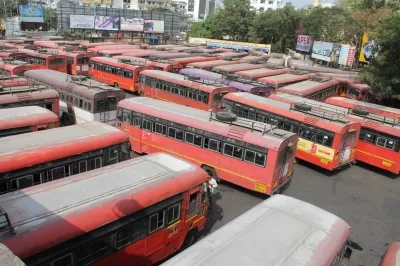
The scale of the challenge is significant: MSRTC manages a fleet of roughly 15,000 to 22,000 buses, which serves as the primary lifeline of rural Maharashtra. Transport department sources have noted that e-buses cannot be swapped one-for-one with diesel buses because they require scheduled downtime for charging — a logistical complexity that makes AI-driven route optimisation and a robust charging network essential prerequisites for the transition.
With supply-chain delays already testing the GCC model and rural connectivity at stake, how swiftly the charging infrastructure materialises will determine whether Maharashtra's 2029 milestone remains credible.
Point of View
But the operational math is daunting. MSRTC runs up to 22,000 buses — the circulatory system of rural Maharashtra — and e-buses cannot simply replace diesel units one-for-one given charging downtime. The GCC model, designed to shift financial risk to private players, has already shown its weakness: supply-chain delays that the government cannot directly control. A pivot toward MSRTC-owned buses would fix that dependency but reintroduce the capital burden the GCC was meant to avoid. The AI route-optimisation directive is the most practically sound element of the announcement, but it is only as useful as the charging infrastructure it is meant to coordinate. The 2029 milestone will be won or lost in the next 18 months of execution, not in high-level meetings.
NationPress
16 Oct 2026
Frequently Asked Questions
What did CM Devendra Fadnavis direct MSRTC to do on 1 June?
Fadnavis directed MSRTC to build a state-wide network of charging stations for e-buses and to use AI technology to optimise routes for these buses. He also ordered that bus inspections be completed within seven days of delivery from suppliers.
What are Maharashtra's e-bus fleet electrification targets?
Under the Viksit Maharashtra initiative, Maharashtra aims to convert 50% of the MSRTC fleet to e-buses by 2029, 80% by 2035, and achieve 100% electrification by 2047.
What is the GCC model being used for MSRTC's e-bus project?
Under the Gross Cost Contract model, a private operator owns, maintains, and deploys the buses while MSRTC pays a fixed rate per kilometre and retains ticket revenue. MSRTC is implementing 5,150 e-buses under this model, though it has faced supply-chain delays from private manufacturers.
What subsidy does Maharashtra's EV policy offer for e-buses?
The state's EV policy provides a 10% subsidy on bus costs, capped at ₹20 lakh per bus, covering up to 1,500 e-buses to promote eco-friendly public transport.
Why is AI being used for MSRTC's e-bus routes?
AI algorithms will calculate grid availability, traffic patterns, terrain slopes, and passenger loads to determine optimal fast-charging stops without disrupting timetables. This is critical because e-buses require scheduled charging downtime and cannot be swapped one-for-one with diesel buses.