Sonowal at NE India Infra Summit: Act East Fuels Growth
Synopsis
Union Minister Sarbananda Sonowal addressed industry leaders at the North East India Infrastructure Summit 2026 CEO Round Table in Shillong, invoking PM Modi's Act East Policy to position Northeast India as the country's new growth engine and calling on the private sector to invest in the region's infrastructure and connectivity.
Key Takeaways
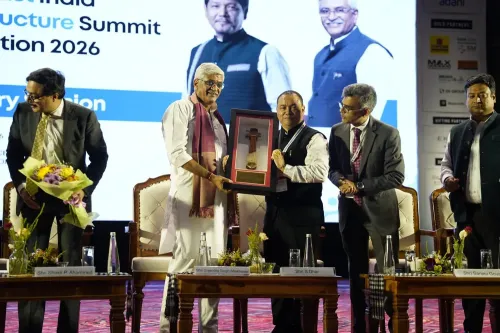
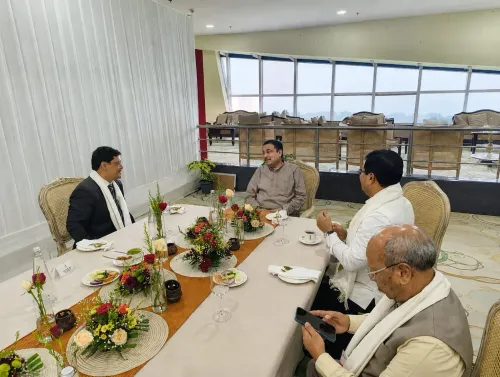
Union Minister Sarbananda Sonowal participated in the CEO Round Table at the North East India Infrastructure Summit 2026 in Shillong on June 15, 2026 .
Sonowal described the Northeast as 'India's new engine of growth' under PM Modi 's Act East Policy .
He urged industry leaders to become 'active partners' in realising the Northeast's potential as part of the Viksit Bharat vision.
The Act East Policy , launched in 2014 , repositions the Northeast as India's gateway to ASEAN and Southeast Asia.
The Bharatmala Pariyojana (approved 2015 ) includes dedicated road corridors across Northeastern states.
Follow-up investment commitments and potential new schemes in Union Budget 2027 are the key outcomes to watch.
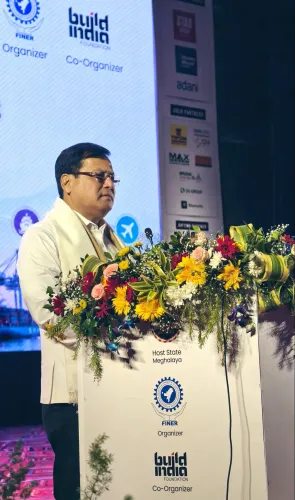
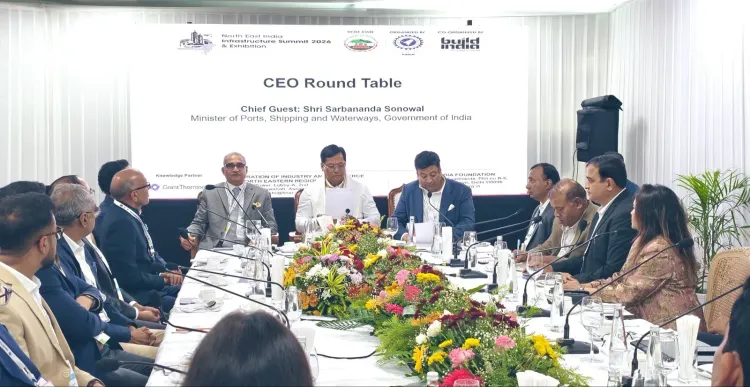
Union Minister of Ports, Shipping and Waterways Sarbananda Sonowal participated in the CEO Round Table at the North East India Infrastructure Summit 2026 in Shillong on Monday, June 15, 2026, engaging industry leaders on expanding infrastructure, trade, and connectivity across the Northeast.
Context
Sonowal used the platform to underscore the transformative impact of Prime Minister Narendra Modi's Act East Policy, describing the Northeast as 'India's new engine of growth.' He urged participating business leaders to 'realise the true potential of the region and be active partners in this glorious journey towards a Viksit Bharat.'
The summit, held in Shillong — the capital of Meghalaya — brought together government officials and corporate executives to chart a roadmap for accelerated investment in the region's physical and economic infrastructure.
Policy Backdrop
The Act East Policy was formally launched by Prime Minister Modi in 2014, repositioning India's Northeast as the country's strategic gateway to Southeast Asia and the broader ASEAN region. The shift upgraded the earlier 'Look East' approach into an action-oriented framework covering roads, waterways, digital links, and people-to-people ties.
Complementing this, the Bharatmala Pariyojana, approved in 2015, included dedicated road corridors to stitch together the eight Northeastern states with national and cross-border networks. Successive industry-government summits have been convened to channel private capital into these corridors alongside public investment.
Stakeholders and Impact
The CEO Round Table format places corporate decision-makers at the centre of policy dialogue, signalling the government's intent to move beyond state-funded projects and attract private equity into Northeast infrastructure. Sectors in focus include multimodal logistics, inland waterways — a domain directly under Sonowal's ministerial mandate — road connectivity, and cross-border trade facilitation with Myanmar, Bangladesh, and Bhutan.
For Northeast businesses and communities, sustained investment in connectivity infrastructure holds the promise of reduced freight costs, faster market access, and broader employment generation. Infrastructure investors, in turn, are being invited to treat the region not as a frontier market but as an emerging economic corridor.
What's Next
Attention will now turn to any follow-up project announcements, memoranda of understanding, or investment commitments that emerge from the North East India Infrastructure Summit 2026. Observers will also watch whether new Northeast-specific connectivity schemes feature in the Union Budget 2027, as the government looks to translate summit-level intent into funded, time-bound projects.
Point of View
The government is weaving regional connectivity into its overarching 2047 development agenda. The choice of a CEO-format roundtable, rather than a purely governmental forum, reflects a strategic pivot toward private-capital mobilisation in a region historically dependent on central transfers. Whether summit-level momentum translates into bankable projects will be the real test of this policy architecture.
NationPress
14 Sept 2026
Frequently Asked Questions
What is the North East India Infrastructure Summit 2026?
The North East India Infrastructure Summit 2026 is an industry-government forum held in Shillong to discuss boosting infrastructure, trade, and connectivity across India's Northeastern states, bringing together senior ministers and corporate executives.
What is India's Act East Policy?
India's Act East Policy, launched by Prime Minister Narendra Modi in 2014, is a strategic framework to deepen trade, infrastructure, and people-to-people ties with ASEAN and East Asian nations, using the Northeast as the primary gateway.
What did Sonowal say at the Shillong summit?
Sonowal urged industry leaders at the CEO Round Table to 'realise the true potential of the region and be active partners' in the journey toward Viksit Bharat, calling the Northeast 'India's new engine of growth' under PM Modi's Act East vision.
What is Viksit Bharat and how does it relate to the Northeast?
Viksit Bharat is the Indian government's vision for a fully developed India by 2047. The Northeast is being positioned as a key contributor to this goal through accelerated infrastructure investment and regional connectivity under the Act East Policy.
What is the Bharatmala Pariyojana and does it cover the Northeast?
Bharatmala Pariyojana is a national highway development programme approved in 2015 that includes dedicated road corridors across Northeastern states to improve connectivity within the region and with neighbouring countries.