Shekhawat addresses NE India Infrastructure Summit in Shillong
Synopsis
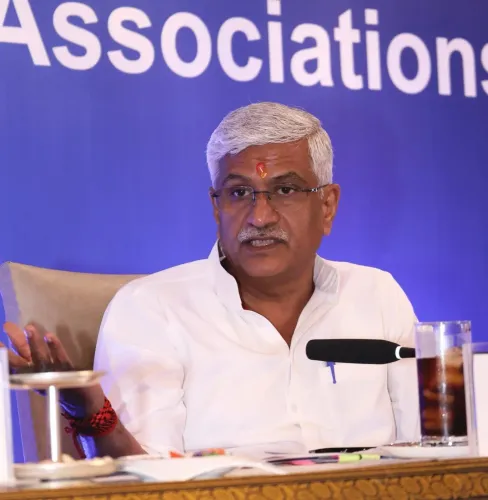
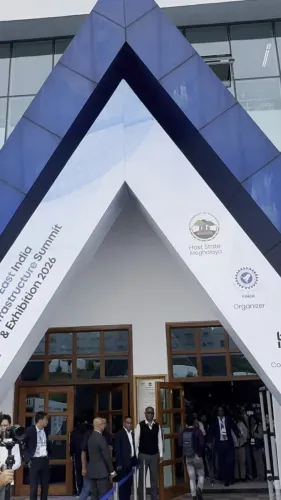
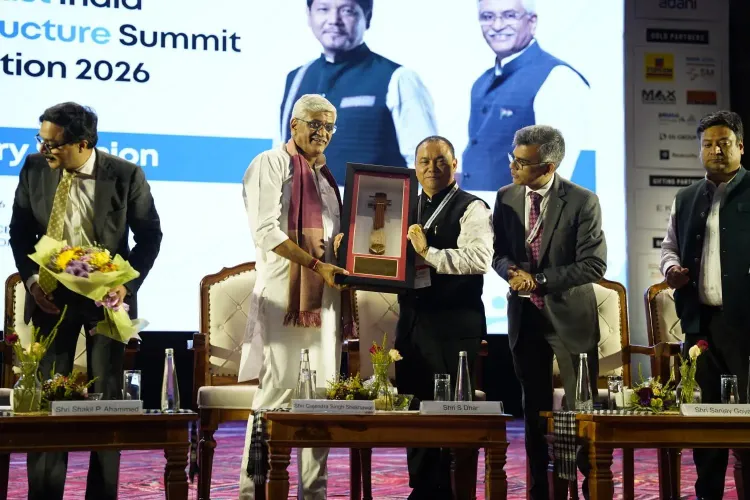
Union Culture and Tourism Minister Gajendra Singh Shekhawat addressed the Valedictory Session of the North East India Infrastructure Summit and Exhibition 2026 in Shillong on June 16, calling the region a rising hub of connectivity, commerce and tourism under PM Modi's leadership.
Key Takeaways
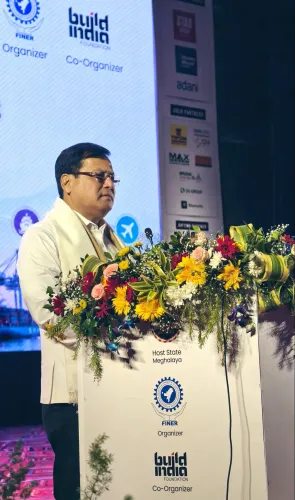
Gajendra Singh Shekhawat addressed the Valedictory Session of the North East India Infrastructure Summit and Exhibition 2026 in Shillong, Meghalaya on June 16, 2026 .
The minister described infrastructure as a tool for 'creating opportunities, connecting communities, empowering enterprises and improving lives.' He credited the Northeast's transformation to PM Narendra Modi 's leadership and the Centre's sustained focus on connectivity and inclusive development.
The Northeast was positioned as an emerging hub of connectivity, commerce, tourism and innovation.
Policy backing includes the Act East Policy (2014), Bharatmala Pariyojana (2015) and the PM-DevINE scheme (2022), all targeting Northeast infrastructure.
Upcoming 2026-27 budget outlays and state tourism data will be watched to assess on-ground delivery of summit commitments.
Union Culture and Tourism Minister Gajendra Singh Shekhawat addressed the Valedictory Session of the North East India Infrastructure Summit and Exhibition 2026 in Shillong, Meghalaya, on Tuesday, June 16, 2026, underscoring the region's growing role in India's national development story.
Context
Speaking at the summit's closing session, Shekhawat framed infrastructure not as a construction exercise but as a force multiplier for communities and commerce. 'Infrastructure is not merely about building assets; it is about creating opportunities, connecting communities, empowering enterprises and improving lives,' he said. He credited the transformation of the Northeast to the 'visionary leadership' of Prime Minister Narendra Modi and the Government of India's sustained policy focus on the region.
The minister described the North East as now emerging as a 'vibrant hub of connectivity, commerce, tourism and innovation,' positioning it as an increasingly important contributor to India's broader growth trajectory.
Policy Backdrop
The remarks come against a long arc of Central government investment in the eight-state northeastern region, which was historically viewed as geographically and economically peripheral. The rebranding of the Look East Policy to the Act East Policy in 2014 marked a strategic pivot, routing ASEAN connectivity ambitions through Northeast infrastructure corridors linking India to Myanmar, Thailand and Bangladesh.
Flagship programmes including Bharatmala Pariyojana (launched 2015) and the PM-DevINE scheme (launched 2022) earmarked dedicated funding for highways, bridges and tourism assets across the region. Roads, rail links and new airport expansions have been the primary delivery vehicles, with tourism and services now framed as the next growth layer once physical connectivity matures.
Stakeholders and Impact
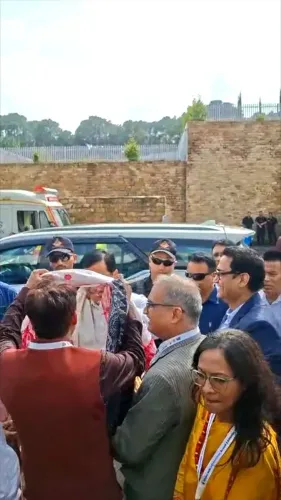
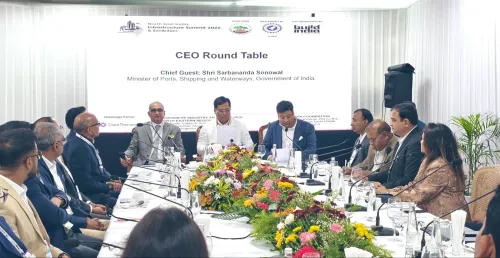
The summit in Shillong — the capital of Meghalaya — brought together stakeholders from across the northeastern states, including local traders, tourism enterprises and community representatives who stand to benefit most directly from improved connectivity. For Shekhawat, whose ministerial remit spans culture and tourism, the summit offered a platform to link infrastructure investment directly to tourism potential, a sector the government has consistently highlighted as a driver of local employment and income.
North Eastern communities have historically faced higher logistics costs and limited market access due to difficult terrain and inadequate road and rail networks. Improved connectivity is expected to reduce those barriers and open new channels for commerce and enterprise.
What's Next
Attention will now turn to 2026-27 budget outlays for ongoing Northeast corridor projects and to state-level tourism arrival data as new airports and highways become operational. Parliamentary scrutiny of expenditure timelines and project completion rates will be a key indicator of whether the summit's ambitions translate into on-ground outcomes. The minister's address signals that the Centre intends to keep the Northeast's development narrative prominent in its political and policy communications ahead of the coming legislative cycle.
Point of View
Deploying a senior Cabinet minister to lend political weight to what is also a regional investment pitch. The framing of infrastructure as 'opportunity creation' rather than mere asset-building reflects a deliberate messaging shift designed to appeal to local communities and potential investors simultaneously. For the BJP, visible ministerial engagement in the Northeast serves dual purposes: reinforcing the Act East Policy legacy and consolidating political ground in a region where the party has expanded its footprint since 2014. Whether the rhetoric translates into accelerated project delivery will be the real test that stakeholders — and opposition benches — will scrutinise in the months ahead.
NationPress
15 Sept 2026
Frequently Asked Questions
What is the North East India Infrastructure Summit and Exhibition 2026?
The North East India Infrastructure Summit and Exhibition 2026 is a regional conclave held in Shillong, Meghalaya, focused on infrastructure investment, connectivity and development in India's eight northeastern states.
Why did Gajendra Singh Shekhawat attend an infrastructure summit if he is the Culture and Tourism Minister?
Shekhawat's tourism portfolio directly intersects with infrastructure development, as improved roads, airports and connectivity in the Northeast are critical to unlocking the region's tourism potential and driving local economic growth.
What is the Act East Policy and how does it relate to Northeast India?
The Act East Policy, launched in 2014, rebranded the earlier Look East Policy to prioritise physical and economic connectivity between Northeast India and Southeast Asian nations including Myanmar, Thailand and Bangladesh.
What government schemes fund Northeast India infrastructure?
Key schemes include Bharatmala Pariyojana (2015), which funds national highway development, and PM-DevINE (2022), a dedicated scheme for infrastructure and social development across the northeastern states.
What will be watched after the North East India Infrastructure Summit 2026?
Analysts and parliamentarians will track the 2026-27 Union Budget allocations for Northeast corridors, project completion timelines and state-level tourism arrival figures as indicators of real progress on summit commitments.