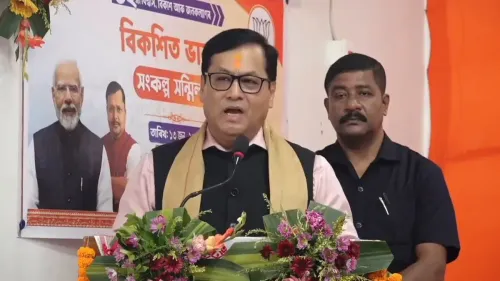
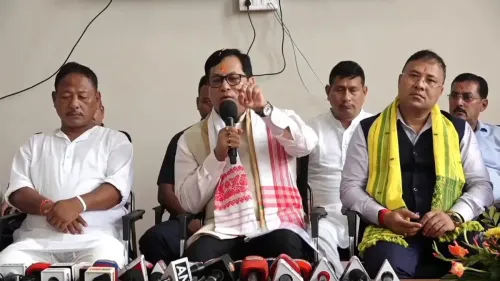
Sonowal addresses NE India Infrastructure Summit in Shillong
Synopsis
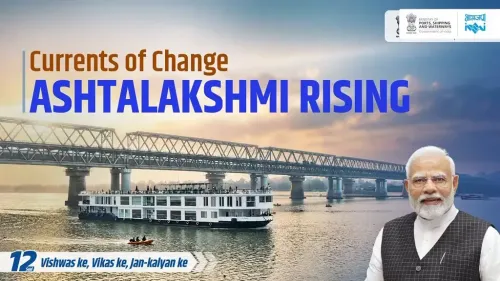
Union Minister Sarbananda Sonowal addressed the North East India Infrastructure Summit & Exhibition 2026 in Shillong on June 15, calling the Northeast India's fulcrum for the Act East Policy and a gateway to Southeast Asia, and invoking PM Modi's Ashtalakshmi vision for the region's inclusive growth.
Key Takeaways
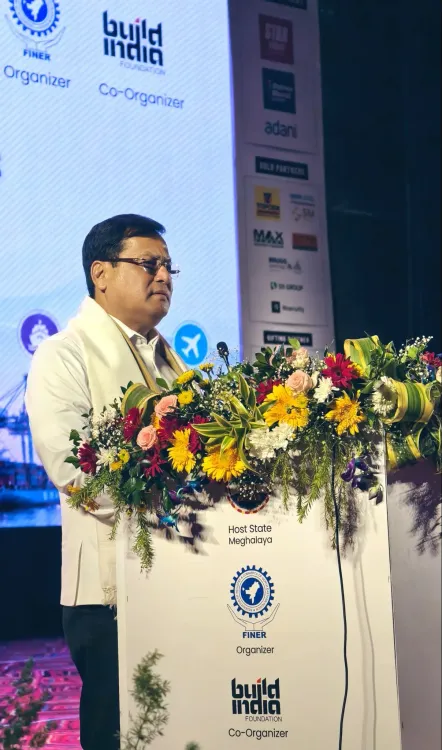
Sarbananda Sonowal addressed the North East India Infrastructure Summit & Exhibition 2026 in Shillong on June 15, 2026 .
He described the Northeast as 'the fulcrum of India's Act East Policy and a vibrant gateway to Southeast Asia.' The Ashtalakshmi framework — referencing the eight northeastern states as engines of prosperity — was cited as a guiding vision for inclusive, sustainable growth.
India's Act East Policy , launched in 2014 , shifted focus from the earlier Look East approach to physical multimodal connectivity through the Northeast toward ASEAN .
Key cross-border projects such as the Kaladan Multi-Modal Transit Transport Project and the India-Myanmar-Thailand Trilateral Highway underpin the gateway strategy.
Upcoming 2026-27 Union Budget allocations and project delivery timelines will be closely watched as indicators of follow-through.
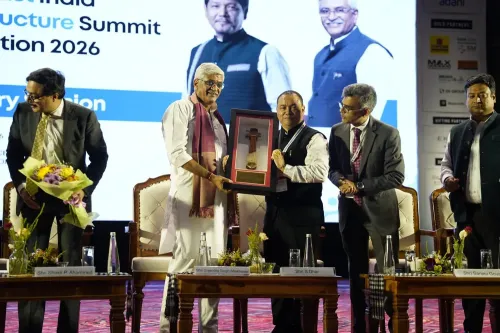
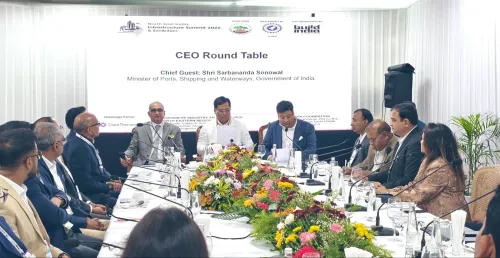
Union Minister of Ports, Shipping and Waterways Sarbananda Sonowal addressed the North East India Infrastructure Summit & Exhibition 2026 in Shillong on Monday, June 15, 2026, highlighting what he described as a sweeping transformation of the Northeast over the past twelve years under Prime Minister Narendra Modi.
Context
Speaking at the summit, Sonowal said the Northeast has 'truly become the fulcrum of India's Act East Policy and a vibrant gateway to Southeast Asia.' He invoked the Ashtalakshmi framework — a symbolic reference to the eight northeastern states as engines of collective prosperity — saying the story is 'unfolding at an accelerated pace, driving an inclusive, sustainable, and globally competitive future.'
The summit, held in Shillong, the capital of Meghalaya, brought together infrastructure developers, state governments, and policy stakeholders to assess the region's development trajectory and map the road ahead.
Policy Backdrop
India's Act East Policy was formally articulated in 2014, replacing the earlier Look East framework with a sharper emphasis on physical connectivity through the Northeast as the primary corridor to ASEAN nations. The Ministry of Development of North Eastern Region and NITI Aayog subsequently launched coordinated infrastructure roadmaps, including components of Bharatmala and inland waterways expansion.
A landmark moment came in 2016 when PM Modi chaired the first North Eastern Council meeting outside Delhi, signalling sustained high-level political attention to the region. Since then, the policy emphasis has shifted from isolated projects to integrated multimodal corridors — roads, waterways, and airports — designed to reduce transit times to ASEAN markets and deepen trade linkages.
Sonowal's own portfolio in Ports, Shipping and Waterways is directly relevant: inland waterway development along rivers such as the Brahmaputra forms a critical plank of Northeast connectivity strategy, linking the hinterland to the coast and, eventually, to maritime trade routes serving Southeast Asia.
Stakeholders and Impact
The eight northeastern states — Assam, Arunachal Pradesh, Manipur, Meghalaya, Mizoram, Nagaland, Sikkim, and Tripura — stand as the primary beneficiaries of accelerated infrastructure investment. Better road, rail, and waterway connectivity is expected to reduce logistics costs, open new export corridors, and attract private capital that has historically bypassed the region.
ASEAN trade partners, particularly Myanmar, Thailand, and Vietnam, are key external stakeholders. Flagship cross-border projects such as the Kaladan Multi-Modal Transit Transport Project and the India-Myanmar-Thailand Trilateral Highway are intended to make the Northeast a functional land bridge between South Asia and Southeast Asia. Progress on these corridors will determine how quickly the gateway vision translates into measurable trade flows.
What's Next
Observers will watch for concrete funding commitments for the Northeast in the 2026-27 Union Budget, as well as updates on the timelines of cross-border connectivity projects that have faced construction and diplomatic delays. The summit itself is expected to generate project proposals and investment pledges that will be tracked against delivery in the months ahead.
With the central government continuing to frame the Northeast as both a domestic equity priority and a foreign-policy instrument to deepen India's footprint in the Bay of Bengal and Mekong sub-regions, ministerial-level participation in forums such as this summit signals that political ownership of the agenda remains high going into the second half of 2026.
Point of View
He connects infrastructure spending to a larger civilisational and geopolitical narrative — one that frames the Northeast not as a peripheral concern but as India's strategic frontier. The ministerial presence also underscores the ports and waterways portfolio's growing centrality to Northeast connectivity, particularly as inland waterway projects on the Brahmaputra gain momentum. Whether the summit translates into bankable project commitments or remains at the level of aspirational framing will be the real test of its significance.
NationPress
14 Sept 2026
Frequently Asked Questions
What is the North East India Infrastructure Summit 2026?
The North East India Infrastructure Summit & Exhibition 2026 is a policy and investment forum held in Shillong, Meghalaya, bringing together central and state government officials, infrastructure developers, and stakeholders to assess and advance connectivity and development projects across the eight northeastern states.
What is India's Act East Policy and how does the Northeast fit in?
India's Act East Policy, formalised in 2014, is a foreign policy framework aimed at deepening economic, connectivity, and security ties with ASEAN nations. The northeastern states serve as the primary land corridor for this outreach, making their infrastructure development both a domestic priority and a geopolitical instrument.
What is the Ashtalakshmi concept Sonowal referred to?
Ashtalakshmi is a symbolic reference to the eight northeastern states — Assam, Arunachal Pradesh, Manipur, Meghalaya, Mizoram, Nagaland, Sikkim, and Tripura — framed as eight sources of prosperity and inclusive growth, mirroring the eight forms of the goddess Lakshmi.
What major cross-border projects are linked to Northeast connectivity?
Key projects include the Kaladan Multi-Modal Transit Transport Project connecting India to Myanmar's Sittwe port, and the India-Myanmar-Thailand Trilateral Highway, both designed to create functional land and waterway corridors between South Asia and Southeast Asia through the Northeast.
Why is Sarbananda Sonowal's ministry relevant to Northeast infrastructure?
As Union Minister of Ports, Shipping and Waterways, Sonowal oversees inland waterway development, including projects on the Brahmaputra river system, which are a critical component of Northeast connectivity strategy linking the landlocked region to maritime trade routes.