Sonowal: Rail Projects in Sikkim, Mizoram Show Northeast Transformation
Synopsis
Union Minister Sarbananda Sonowal on June 12, 2026, invoked PM Modi's 'Transportation-led Transformation' mantra to highlight railway projects in Sikkim and Mizoram as landmark examples of Northeast India's accelerating infrastructure-driven growth under the Ashtalakshmi framework.
Key Takeaways
Union Minister Sarbananda Sonowal posted on June 12, 2026 , highlighting infrastructure progress in Northeast India .
He credited PM Narendra Modi 's 'Transportation-led Transformation' philosophy as the driving force behind the region's connectivity push.
Railway projects in Sikkim and Mizoram were specifically cited as 'shining examples' of the transformation.
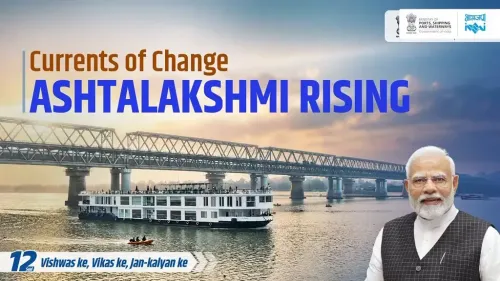
The post was tagged #Ashtalakshmi , the government's branding framework for the eight northeastern states.
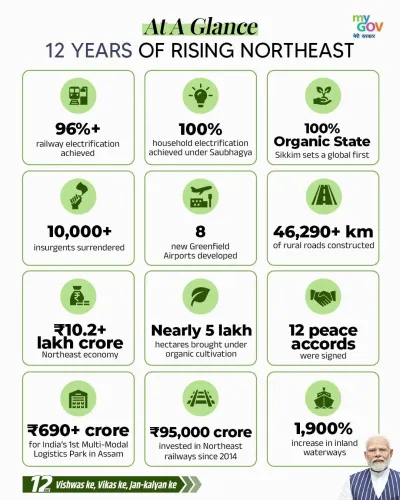
The initiative aligns with the Act East Policy launched in 2014 , which prioritises physical links between the Northeast, the national economy, and Southeast Asia.
Completion and operationalisation timelines for the referenced rail lines remain the key milestones to watch.
Union Ports and Shipping Minister Sarbananda Sonowal on Friday, June 12, 2026, highlighted the rapid infrastructure-led transformation of Northeast India, crediting Prime Minister Narendra Modi's vision of 'Transportation-led Transformation' for bridging the region's long-standing connectivity gaps. Sonowal specifically cited railway projects in Sikkim and Mizoram as emblematic of this shift, framing them under the government's #Ashtalakshmi framework for the eight northeastern states.
Context
In his post, Sonowal wrote that PM Modi's mantra of 'Transportation-led Transformation is rapidly reshaping the Northeast,' adding that 'improved infrastructure is bridging distances, expanding opportunities and accelerating growth.' He described the railway projects in Sikkim and Mizoram as 'shining examples of this transformative journey.' The post was accompanied by a video, underscoring the government's effort to visually document progress in a region that has historically received limited national media attention.
The #Ashtalakshmi tag — a reference to the eight northeastern states collectively framed as goddesses of prosperity — has become a recurring motif in the BJP-led government's communication around the region, signalling a deliberate political and developmental branding exercise.
Policy Backdrop
The push for rail connectivity in the Northeast is rooted in the Act East Policy, launched in 2014, which prioritises physical infrastructure to integrate the region with both the national economy and Southeast Asia. Successive central governments have pursued road, rail, and waterway projects to overcome the Northeast's severe geographic challenges — including difficult terrain, limited road access, and dependence on the narrow Siliguri Corridor.
Sikkim and Mizoram represent two of the most challenging cases for rail connectivity in the country. Sikkim, a landlocked Himalayan state, has long been among the last frontiers for Indian Railways due to its mountainous terrain. Mizoram, similarly, is characterised by steep hills and limited flat land, making rail construction technically demanding and expensive. Investments in both states signal a continuation of the long-term national commitment to physical integration of the region.
Stakeholders and Impact
For residents of Northeast India, improved rail connectivity translates directly into reduced travel time, lower freight costs, and greater access to national markets. Regional businesses — particularly in agriculture, handicrafts, and tourism — stand to benefit from more reliable supply chains and the opening of new trade corridors.
The projects also carry strategic significance. Enhanced connectivity in border states like Sikkim and Mizoram supports faster movement of goods and personnel, reinforcing India's developmental presence in sensitive frontier zones. For the BJP, visible infrastructure milestones in the Northeast also serve as electoral proof points ahead of assembly cycles in the region.
What's Next
Attention will now turn to the completion timelines and operationalisation of the railway lines referenced in Sonowal's post. Any fresh budgetary allocations for Northeast connectivity in upcoming Union Budget statements will be closely watched by state governments and industry stakeholders alike. The government's ability to move these projects from announcement to passenger service will determine how durable the 'Transportation-led Transformation' narrative remains in the region's political discourse.
Point of View
The government is consciously elevating eight states from the periphery of national discourse to a flagship development story. The specific mention of Sikkim and Mizoram — two of the most technically challenging rail frontiers in India — is designed to signal ambition and delivery simultaneously. This pattern of minister-level amplification of infrastructure milestones reflects a coordinated communication strategy aimed at consolidating the BJP's foothold in a region where it has made significant political inroads since 2014.
NationPress
27 Oct 2026
Frequently Asked Questions
What did Sarbananda Sonowal say about Northeast India infrastructure?
Sonowal stated that PM Modi's 'Transportation-led Transformation' is rapidly reshaping the Northeast, with railway projects in Sikkim and Mizoram serving as key examples of this progress.
What is the Ashtalakshmi framework for Northeast India?
Ashtalakshmi is the BJP-led government's branding concept that collectively refers to the eight northeastern states as goddesses of prosperity, used to frame the region's development as a national priority.
What is the Act East Policy and how does it relate to Northeast rail projects?
The Act East Policy, launched in 2014 under PM Modi, prioritises physical infrastructure to connect Northeast India with the national economy and Southeast Asia; rail projects in Sikkim and Mizoram are part of this broader framework.
Why is railway connectivity in Sikkim and Mizoram significant?
Both states present extreme geographic challenges — mountainous terrain in Sikkim and steep hills in Mizoram — making rail construction technically demanding; successful projects there signal a serious national commitment to frontier connectivity.
What should we watch for next on Northeast India railway projects?
The key milestones are the completion and operationalisation dates of the railway lines in Sikkim and Mizoram, along with any new budgetary allocations for Northeast connectivity in upcoming Union Budget announcements.