South Korea GDP grows 1% in Q3 2026, driven by semiconductor exports
Synopsis
South Korea's economy grew 1% in Q3 2026 — more than three times the Bank of Korea's own August forecast — powered by record semiconductor exports of over $60 billion in September alone. With cumulative growth at 3.6% through nine months, Asia's fourth-largest economy is on course for its strongest annual expansion since the pandemic rebound, riding an AI-driven chip supercycle that shows no sign of slowing.
Key Takeaways
South Korea's GDP expanded 1% quarter-on-quarter in Q3 2026 (July–September), beating the Bank of Korea's August forecast of 0.3% .
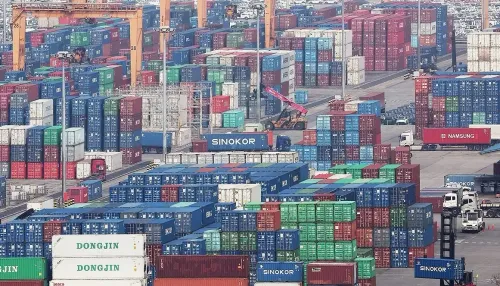
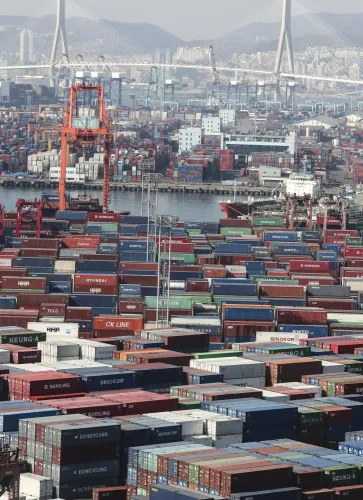
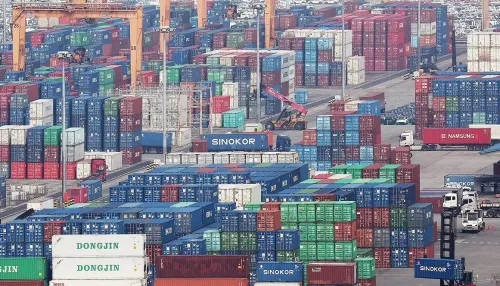
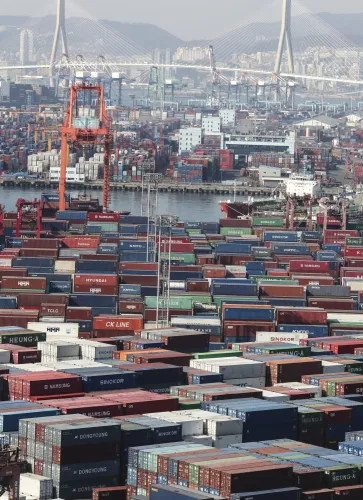
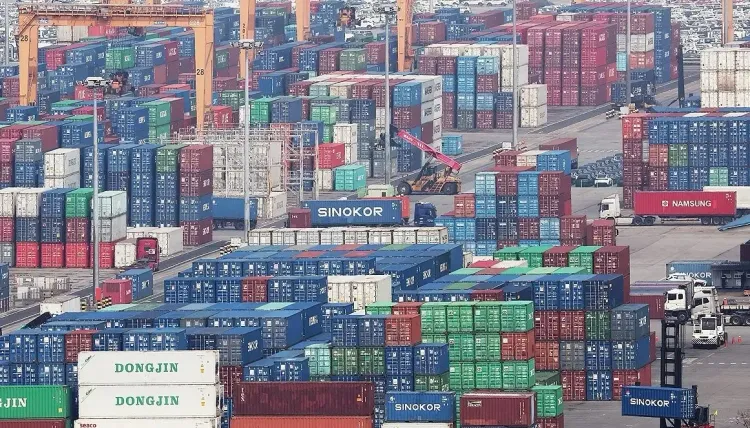
Outbound shipments hit a record US$120.9 billion in September, up 83.5% year-on-year, with semiconductor exports exceeding $60 billion .
Year-on-year growth came in at 3.4% in Q3, slightly down from 3.7% in Q2.
Cumulative growth over the first three quarters of 2026 reached 3.6% ; full-year growth could hit 4% if Q4 expands 1.4% on-quarter.
Private consumption fell 0.2% , highlighting uneven domestic demand despite strong export performance.
Facility investment rose 4.1% and construction investment climbed 0.7% quarter-on-quarter.
South Korea's economy expanded 1 percent in the third quarter of 2026 (July–September) on a quarter-on-quarter basis, surpassing the Bank of Korea's (BOK) earlier forecast of 0.3 percent and accelerating sharply from the previous quarter's 0.6 percent growth, according to advance data released by the central bank on Tuesday, 27 October 2026. The stronger-than-expected performance was fuelled by record semiconductor exports and a rebound in facility investment, putting full-year growth of 3.6 percent within reach.
Key Growth Drivers
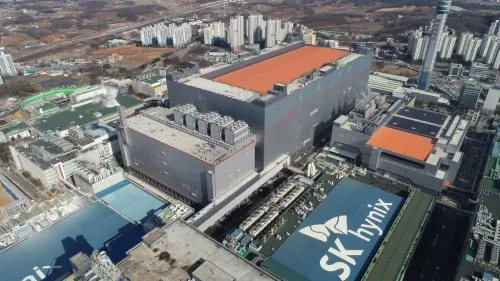
Exports rose 2.3 percent from the prior quarter, with outbound shipments hitting a record US$120.9 billion in September alone — up 83.5 percent from a year earlier. Semiconductor exports alone exceeded $60 billion that month, underscoring how the global artificial intelligence (AI) infrastructure boom has translated into outsized demand for Korean chips. Facility investment climbed 4.1 percent on a quarterly basis, and construction investment added 0.7 percent. Government spending advanced 1.9 percent. Net exports contributed 0.1 percentage point to quarterly growth, while domestic demand added 0.9 percentage point.
What the Numbers Show
On a year-on-year basis, the South Korean economy expanded 3.4 percent in the third quarter, easing slightly from 3.7 percent in the second quarter. The BOK confirmed that cumulative growth over the first three quarters of 2026 stood at 3.6 percent. Notably, the country's Q1 2026 growth of 1.8 percent quarter-on-quarter was the strongest since Q3 2020, when the economy expanded 2.2 percent in the immediate post-pandemic rebound.
BOK's Full-Year Outlook
Lee Dong-won of the BOK's statistics department, speaking at a press conference, said: 'If the economy maintains the on-quarter growth pace in the fourth quarter, GDP will likely grow 3.6 percent for the full year.' He added that if fourth-quarter growth reaches 1.4 percent on-quarter, the annual growth rate could reach 4 percent. This comes after a relatively subdued 2025, when the economy grew just 1 percent for the full year amid weak facility investment and a contraction in construction activity.
Risks and Weak Spots
Despite the headline beat, not all indicators were positive. Private consumption fell 0.2 percent in the quarter, a sign that domestic demand remains uneven even as exports surge. Imports also rose 2.4 percent, reflecting strong industrial input demand tied to semiconductor manufacturing. Analysts note that South Korea's recovery remains heavily concentrated in a single sector, leaving overall growth exposed if global chip demand moderates or AI-related capital expenditure cools in major markets.
Context and Significance
South Korea is Asia's fourth-largest economy, and its semiconductor cycle is closely watched as a leading indicator for global technology spending. The country's export data — often described as an early barometer of global trade trends — now suggests that the AI-driven capex supercycle remains intact heading into the final quarter of 2026. For India and other emerging markets, sustained Korean export strength signals continued global demand for high-technology goods, which could support broader Asian trade flows through the remainder of the year.
Point of View
And last year's full-year growth was a tepid 1%. The concentration risk is real: one sector, driven by one global trend, is carrying an entire national growth narrative. If US hyperscaler spending on AI infrastructure cools even modestly in 2027, Seoul's 4% full-year target could unravel quickly. The BOK's own cautious August forecast of 0.3% — now embarrassingly conservative — also raises questions about how reliably central bank projections are capturing the speed of the AI cycle.
NationPress
27 Oct 2026
Frequently Asked Questions
How much did South Korea's GDP grow in Q3 2026?
South Korea's real GDP expanded 1% quarter-on-quarter in the third quarter of 2026 (July–September), according to advance data from the Bank of Korea. This was significantly higher than the BOK's own August forecast of 0.3% and accelerated from 0.6% growth in Q2 2026.
What drove South Korea's stronger-than-expected GDP growth?
The primary drivers were semiconductor-led exports and facility investment. Outbound shipments reached a record US$120.9 billion in September 2026, up 83.5% year-on-year, with semiconductor exports alone surpassing $60 billion. Global demand tied to the AI infrastructure boom was the key catalyst.
Is South Korea on track for 3.6% full-year growth in 2026?
Yes, according to the Bank of Korea. Cumulative GDP growth over the first three quarters of 2026 has already reached 3.6%. BOK official Lee Dong-won said maintaining the current quarterly pace through Q4 would deliver 3.6% for the full year, and a 1.4% Q4 expansion could push it to 4%.
What are the risks to South Korea's economic outlook?
Private consumption fell 0.2% in Q3, signalling that domestic demand remains weak even as exports surge. The recovery is heavily concentrated in semiconductors, leaving growth vulnerable if AI-related capital spending globally slows or if chip demand moderates in key export markets.
How does South Korea's 2026 growth compare to 2025?
South Korea grew just 1% in full-year 2025, weighed down by weak facility investment and a construction downturn. The 2026 rebound — with 1.8% quarterly growth in Q1 alone, the strongest since Q3 2020 — marks a sharp turnaround driven almost entirely by the global semiconductor upcycle.