Kishan Reddy meets Australia's Resources Minister at IMARC 2026
Synopsis
Union Coal and Mines Minister G. Kishan Reddy held a bilateral meeting with Australia's Resources Minister Madeleine King at IMARC 2026, focusing on critical minerals cooperation, mining technology, and building resilient supply chains to advance India's clean-energy and manufacturing goals.
Key Takeaways
Kishan Reddy met Australia's Minister for Resources Madeleine King on the sidelines of IMARC 2026 on 27 October 2026 .
Talks covered critical minerals cooperation , advanced mining technologies , and building resilient, diversified supply chains .
India and Australia launched a Critical Minerals Investment Partnership in 2022 , with minerals provisions also embedded in the ECTA signed that year.
Australia holds major reserves of lithium, cobalt, and rare earths — essential for India's EV, battery, and renewable-energy sectors.
The meeting is part of a broader pattern of India diversifying critical-mineral sourcing, also anchored in the Quad framework .
Follow-up steps to watch include potential new MoUs , a joint working group, or progress reports under the existing partnership.
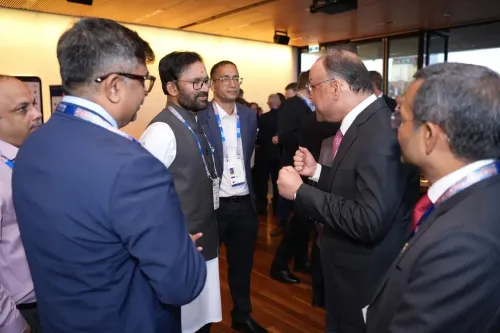
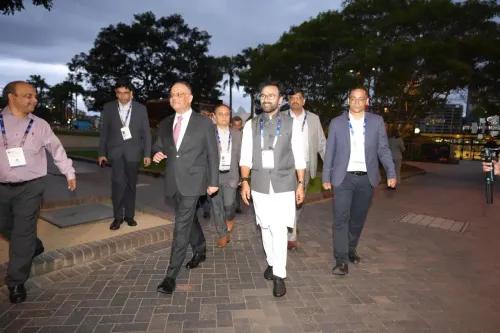
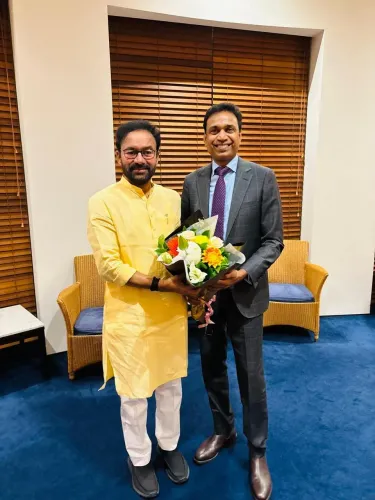
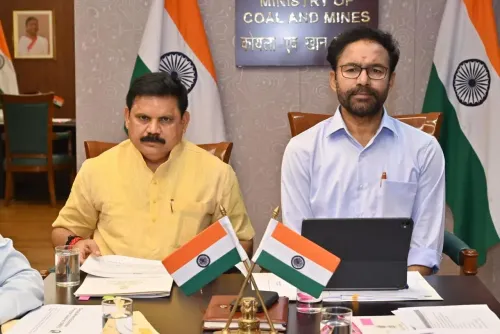
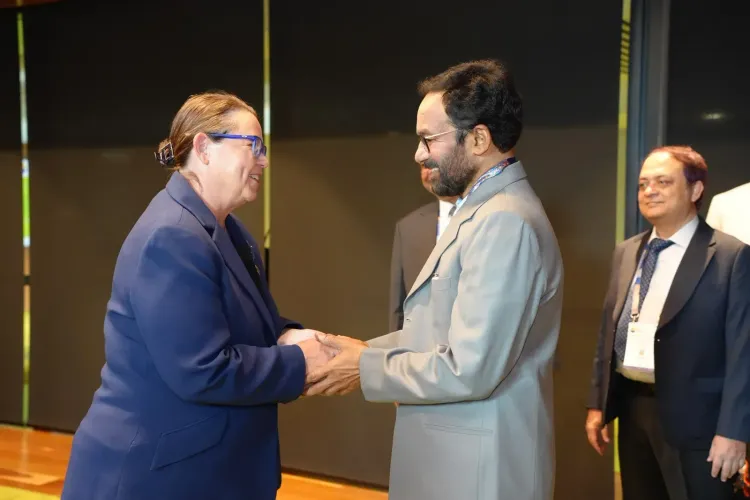
On the sidelines of the world's largest mining industry gathering, Union Coal and Mines Minister G. Kishan Reddy sat down with Australia's Minister for Resources Madeleine King on Tuesday, 27 October 2026, for a bilateral conversation that cuts to the heart of India's most urgent industrial challenge: securing the critical minerals that power the energy transition.
What the IMARC meeting covered
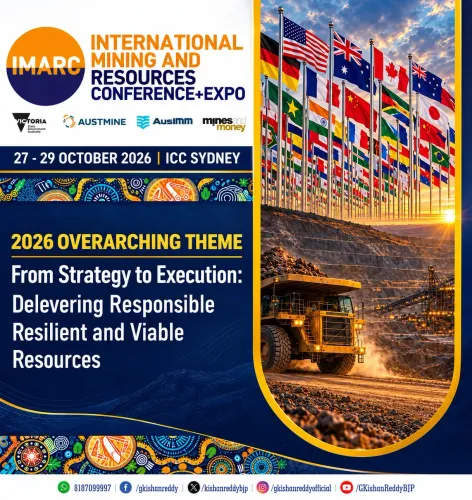
Reddy described the discussions as productive, centering on three specific pillars: critical minerals cooperation, advanced mining technologies, and the construction of resilient and diversified supply chains. The choice of venue was deliberate — the International Mining and Resources Conference (IMARC 2026), held annually in Australia, draws the global mining industry's decision-makers and has become a preferred forum for high-level resource diplomacy between the two countries.
Reddy noted that the talks 'reaffirmed the significant potential to deepen collaboration in the mining and resources sector, guided by shared priorities and mutual interests.' He tagged MEA India, the Consulate General of India in Sydney, and the High Commission of India in Canberra alongside the two ministries — a signal of the diplomatic machinery actively engaged behind this engagement.
India-Australia critical minerals: the partnership already in motion
This meeting did not emerge from a standing start. In 2022, India and Australia launched the Critical Minerals Investment Partnership, designed to fast-track project development and shore up supply-chain security for both nations. That same year, the India-Australia Economic Cooperation and Trade Agreement (ECTA) embedded specific provisions to facilitate minerals trade and investment flows.
Australia holds some of the world's largest reserves of lithium, cobalt, and rare earth elements — the building blocks of EV batteries, solar panels, and advanced electronics. For India, which is racing to scale its renewable-energy capacity and domestic manufacturing under schemes like PLI, diversifying away from concentrated mineral suppliers is not a preference. It is a strategic necessity.
Why India is accelerating this sourcing shift
India's push to reduce dependence on any single supplier of critical minerals sits within a larger geopolitical recalibration. Australia has emerged as a preferred partner not just bilaterally but within the Quad framework, where resource security has grown into a shared priority among India, Australia, the United States, and Japan. Margins of global industry forums — rather than formal summits — have increasingly become the arena where this cooperation is operationalised, deal by quiet deal.
The EV and battery manufacturing sectors, along with India's fast-expanding electronics industry, watch these conversations closely. Stable, diversified supply chains for lithium and cobalt directly determine the cost and feasibility of India's clean-energy ambitions.
What to watch after Sydney
The meeting's language — 'look forward to building on this engagement' — points forward without confirming a specific next step. Watch for any follow-up Memoranda of Understanding, the formation of a joint working group, or progress reports under the existing Critical Minerals Investment Partnership. A next bilateral resources dialogue, either in New Delhi or Canberra, would be the clearest sign that Tuesday's conversation has moved from intent to implementation.
India's minerals diplomacy is accelerating. The question now is whether the frameworks already on paper translate into projects on the ground — and how fast.
Point of View
New Delhi is now focused on converting framework agreements into bankable projects. Australia's role is growing not just as a bilateral supplier but as a Quad partner in a coordinated Western-aligned effort to counter concentrated mineral supply chains. The urgency is real: India's PLI-driven manufacturing push and its renewable-energy targets both run directly through the availability — and affordability — of lithium and rare earths.
NationPress
27 Oct 2026
Frequently Asked Questions
What is IMARC 2026 and why is it significant for India?
IMARC — the International Mining and Resources Conference — is an annual global industry gathering held in Australia. It brings together ministers, executives, and investors from the world's major mining nations, making it a key venue for India to advance bilateral resource diplomacy, including critical minerals partnerships.
What did Kishan Reddy discuss with Australia's Resources Minister at IMARC 2026?
Union Minister G. Kishan Reddy met Australia's Minister for Resources Madeleine King to discuss strengthening cooperation in critical minerals, advancing mining technologies, and building resilient and diversified supply chains between India and Australia.
What is the India-Australia Critical Minerals Investment Partnership?
Launched in 2022, the Critical Minerals Investment Partnership is a bilateral framework designed to accelerate project development and secure supply chains for critical minerals such as lithium, cobalt, and rare earths. It was complemented by the India-Australia Economic Cooperation and Trade Agreement (ECTA) signed the same year.
Why does India need critical minerals from Australia?
India requires lithium, cobalt, and rare earth elements to power its expanding EV and battery manufacturing sectors, renewable-energy projects, and electronics industry. Australia holds significant reserves of these minerals, making it a strategically important partner for India's clean-energy transition.
What are the next steps after Kishan Reddy's meeting with Madeleine King?
No specific outcomes were confirmed from the meeting. Key indicators to watch include any new Memoranda of Understanding, the formation of a joint working group, or progress reports under the existing Critical Minerals Investment Partnership, as well as potential scheduling of a follow-up bilateral resources dialogue.