Sonowal Hails 12 Years of Inland Waterways Revival Under Modi
Synopsis
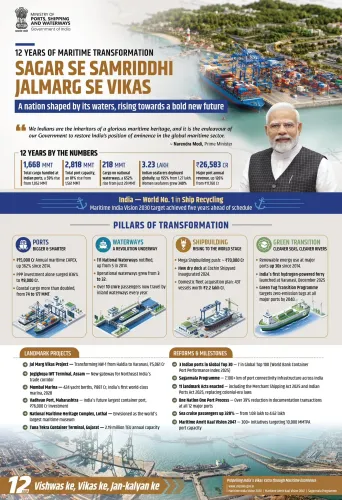
Union Minister Sarbananda Sonowal on July 1, 2026 marked 12 years of inland waterways revival under PM Modi, citing transformation of India's rivers into multimodal logistics corridors through the Jal Marg Vikas Project, Sagarmala Programme and the National Waterways Act, 2016.
Key Takeaways
Union Minister Sarbananda Sonowal posted on July 1, 2026 marking 12 years of inland waterways development under PM Narendra Modi .
The Jal Marg Vikas Project (2015) and Sagarmala Programme (2015) were the foundational policy interventions for the waterways revival.
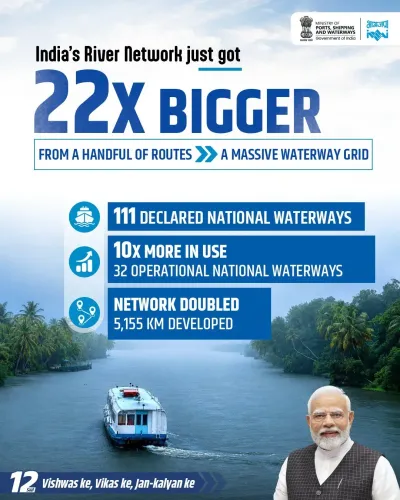
The National Waterways Act, 2016 declared 111 rivers, creeks and canals as national waterways, expanding the mandate significantly.
The PM Gati Shakti National Master Plan (2021) incorporated waterways into a multimodal logistics framework alongside roads, rail and ports.
Active development has concentrated on the Ganga , Brahmaputra and Krishna-Godavari corridors; most of the 111 declared waterways remain at early stages.
The Inland Waterways Authority of India (IWAI) is the statutory body overseeing implementation across all national waterways.
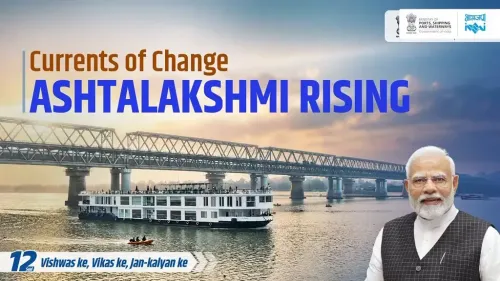
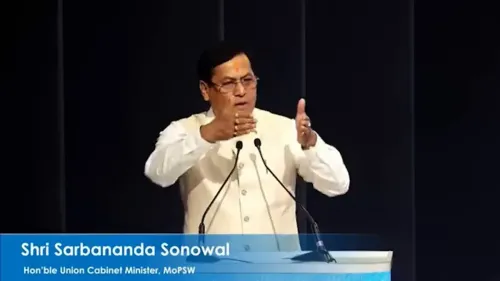
Union Minister of Ports, Shipping and Waterways Sarbananda Sonowal on Wednesday, July 1, 2026, credited Prime Minister Narendra Modi's vision for transforming India's inland waterways from neglected rivers into active corridors of commerce and connectivity over the past 12 years.
Context
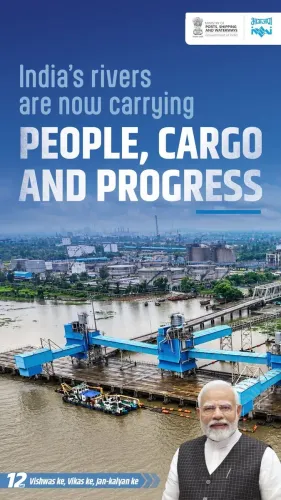
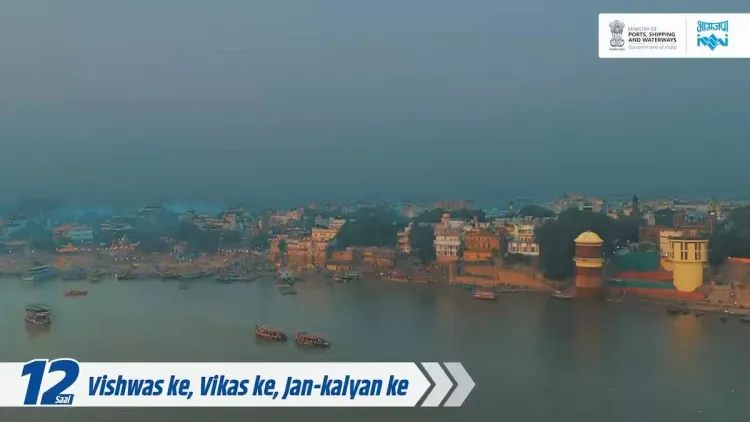
Posting under the hashtag #12YearsOfJalmargSeVikas (12 years of development through waterways), Sonowal wrote that rivers 'once left neglected for decades are roaring back to life' and have become 'routes of prosperity, bustling with activity and vital lifelines for New India.' The post marks a milestone moment in the ruling government's communication around its infrastructure record, timed to the completion of 12 years of the Bharatiya Janata Party-led government's waterways push.
The minister described inland waterways as having transformed into 'a powerful pillar of multimodal logistics, modern infrastructure, sustainability and seamless connectivity,' framing river transport as central to the country's economic architecture rather than a peripheral mode.
Policy Backdrop
The waterways revival rests on a sequence of legislative and programmatic interventions beginning in 2015. The Jal Marg Vikas Project, a World Bank-assisted initiative, was approved that year to develop National Waterway-1 on the Ganga through capital dredging, modern terminals and navigational aids. The Sagarmala Programme, also launched in 2015, integrated coastal shipping and inland waterways with port modernisation into a single framework.
A year later, the National Waterways Act, 2016 declared 111 rivers, creeks and canals as national waterways, formally expanding the policy mandate well beyond the handful of routes that were then operational. The PM Gati Shakti National Master Plan, notified in 2021, subsequently incorporated waterways as a dedicated multimodal logistics layer alongside roads, rail and ports.
The Inland Waterways Authority of India (IWAI), the statutory body under Sonowal's ministry, has been the principal implementing agency across these programmes, responsible for development, regulation and maintenance of national waterways.
Stakeholders and Impact
The policy shift has drawn interest from logistics firms and freight transporters seeking lower-cost, lower-emission alternatives to road and rail movement. Riverine states along the Ganga, Brahmaputra and Krishna-Godavari systems have been the primary beneficiaries of active investment, with development concentrated on a small number of operationalised stretches while the broader pool of 111 declared waterways remains at varying early stages.
For northeastern India in particular, inland waterways carry strategic significance as a connectivity option in terrain where road and rail expansion is constrained. The emphasis on the Brahmaputra corridor aligns with both regional economic goals and broader export ambitions tied to the Act East Policy.
What's Next
Attention will now turn to cargo volume data from IWAI and any parliamentary disclosures on the operationalisation of additional national waterways beyond the current active stretches. The government's ability to scale activity across a wider set of the 111 declared waterways will be the clearest measure of whether the transformation Sonowal describes has moved from flagship corridors to a genuinely national network. Analysts and industry stakeholders will also watch for freight-cost benchmarks as the multimodal integration envisioned under PM Gati Shakti matures.
Point of View
Anchoring the BJP's infrastructure narrative to a 12-year milestone rather than a specific project event. By framing rivers as 'routes of prosperity,' the minister is reinforcing a broader political argument that the government has unlocked economic value from assets previous administrations left dormant. The emphasis on multimodal logistics and sustainability also signals an attempt to position waterways within the green-infrastructure discourse that is increasingly central to India's international economic diplomacy. The real test, however, lies in cargo volume data and the pace at which the remaining declared waterways move from paper to operation — metrics the post notably does not cite.
NationPress
30 Sept 2026
Frequently Asked Questions
What is the Jal Marg Vikas Project?
The Jal Marg Vikas Project is a World Bank-assisted initiative approved in 2015 to develop National Waterway-1 on the Ganga through capital dredging, modern terminals and navigational aids for commercial navigation.
How many national waterways does India have?
The National Waterways Act, 2016 declared 111 rivers, creeks and canals as national waterways, though active commercial operations are currently concentrated on a small number of these stretches.
What is the Sagarmala Programme?
The Sagarmala Programme, launched in 2015, is a government initiative that integrates coastal shipping and inland waterways with port modernisation to reduce logistics costs and improve connectivity.
What is IWAI and what does it do?
The Inland Waterways Authority of India (IWAI) is the statutory body under the Ministry of Ports, Shipping and Waterways responsible for the development, regulation and maintenance of national waterways.
How do inland waterways fit into PM Gati Shakti?
The PM Gati Shakti National Master Plan, notified in 2021, incorporated waterways as a dedicated multimodal logistics layer, connecting them with roads, rail and ports to reduce freight costs and improve supply-chain efficiency.