CM Naidu Marks One Year of Sthree Shakti Free Bus Scheme
Synopsis
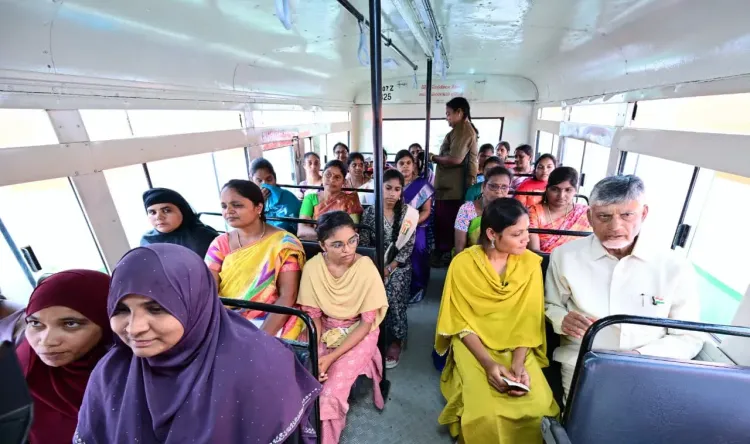
Chief Minister Chandrababu Naidu marked one year of the Sthree Shakti free bus scheme on Independence Day 2026 by riding a Palle Velugu bus with women beneficiaries from Parade Ground to Camp Office, followed by a high-tea interaction, celebrating a year of free APSRTC travel for women across Andhra Pradesh.
Key Takeaways
Sthree Shakti scheme completed one year of providing free bus travel to women on all APSRTC services across Andhra Pradesh.
CM Nara Chandrababu Naidu participated in the anniversary event on Independence Day, August 15, 2026 .
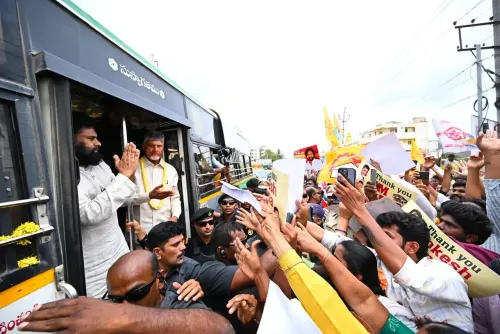
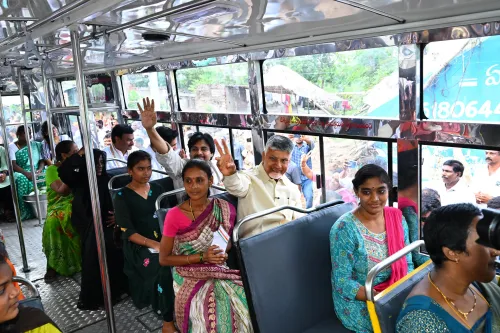
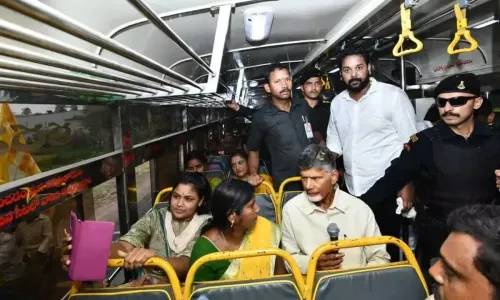
Naidu rode a Palle Velugu rural bus with women passengers from Parade Ground to Camp Office after the Independence Day flag-hoisting.
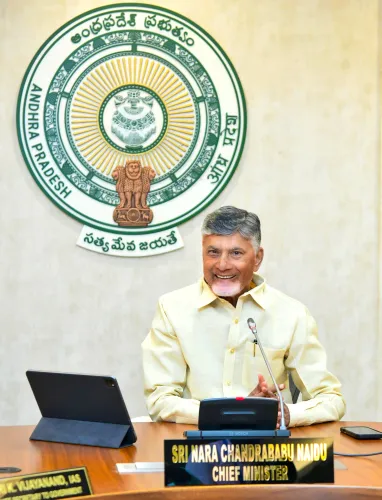
The CM hosted women beneficiaries for high tea following the bus journey.
The scheme is part of a broader national trend of state governments using free public transport as a women's welfare and mobility tool.
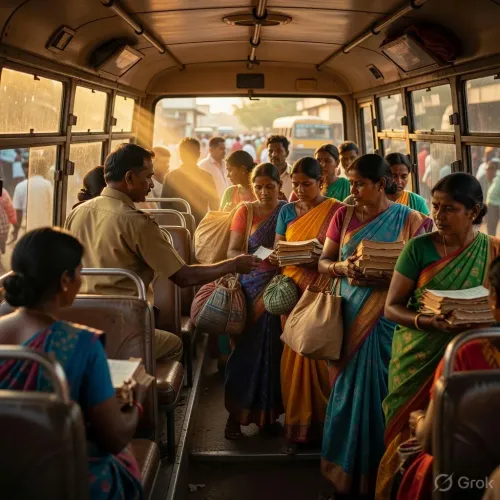
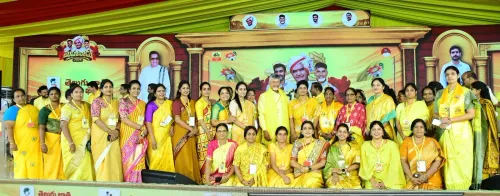
One year after Andhra Pradesh threw open its state buses to women at zero cost, Chief Minister Nara Chandrababu Naidu did something simple and deliberate on Independence Day, August 15, 2026: he boarded a Palle Velugu (rural light) bus with women passengers and rode it from Parade Ground to the Camp Office, then hosted them for high tea. The gesture was the centrepiece of the 'Sthree Shakti ki Samvatsaram — Rettimpayna Aatmagaurav' event, marking one full year of the Sthree Shakti scheme that gives every woman free travel on APSRTC buses across the state.
What the Sthree Shakti scheme delivers
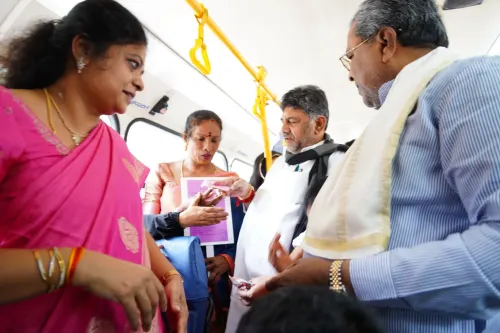
The Sthree Shakti scheme — the name translates to 'women's power' — was launched by the Andhra Pradesh government to provide unrestricted free travel for women on all Andhra Pradesh State Road Transport Corporation services. For rural women in particular, the policy removes a recurring cash barrier to reaching hospitals, markets, colleges, and workplaces. The scheme sits within a wave of similar state-level initiatives across India that have used public transport concessions as a lever for female mobility and economic inclusion.
Independence Day as a stage, Palle Velugu as a symbol
The choice of Independence Day to host the anniversary event was deliberate framing — self-reliance and women's dignity in the same breath. Naidu joined the celebration immediately after the Independence Day flag-hoisting ceremonies, riding the Palle Velugu bus — a service specifically designed for rural connectivity — alongside women beneficiaries before the high-tea interaction. The Chief Minister's Office amplified the event on X under hashtags including #SthreeShakti, #FreeBusForWomenInAP, and #IdhiManchiPrabhutvam ('this is good governance').
The broader push behind free-travel politics in India
Free or deeply subsidised bus travel for women has become one of the most visible welfare instruments in Indian state politics since the late 2010s. States from Tamil Nadu to Punjab and Delhi have used similar schemes to signal gender-focused governance while generating measurable ridership gains. For Andhra Pradesh, now one year in, the next test is data: ridership numbers, route expansion, and whether the scheme is woven into the state's wider women-welfare architecture.
A bus ride on Independence Day is a small thing. The 365 days of free travel it represents — for millions of women across Andhra Pradesh — are not.
Point of View
On the most symbolically loaded day in the Indian calendar. For the Telugu Desam Party, it reinforces a 'good governance' brand that Naidu has leaned on since returning to power, with women-centric schemes serving as both genuine policy and electoral currency. The broader pattern — states competing on female mobility entitlements — suggests these schemes are now a structural feature of Indian state politics, not a passing trend. The real accountability question, however, is ridership and fiscal sustainability data, which the government has yet to place in the public domain.
NationPress
30 Sept 2026
Frequently Asked Questions
What is the Sthree Shakti scheme in Andhra Pradesh?
The Sthree Shakti scheme is an Andhra Pradesh government initiative that provides free bus travel to all women on APSRTC (Andhra Pradesh State Road Transport Corporation) services across the state.
When was the Sthree Shakti free bus scheme launched?
The Sthree Shakti scheme was launched in 2025, and its one-year anniversary was marked on Independence Day, August 15, 2026.
What did CM Chandrababu Naidu do on Sthree Shakti's first anniversary?
CM Naidu rode a Palle Velugu rural bus with women beneficiaries from Parade Ground to Camp Office in Amaravati after Independence Day ceremonies, then hosted the women for high tea.
Who benefits from the free bus travel scheme in Andhra Pradesh?
All women passengers travelling on APSRTC buses across Andhra Pradesh benefit from the scheme, with rural women among the primary target beneficiaries.
Which other Indian states offer free bus travel to women?
Several states including Tamil Nadu, Punjab, and Delhi have introduced free or heavily subsidised bus travel for women, part of a broader national trend of gender-focused public transport policies.