CM Bhajan Lal Sharma hails 12 years of Northeast India growth
Synopsis
Rajasthan CM Bhajan Lal Sharma on 20 June 2026 credited PM Modi's 12-year leadership with transforming Northeast India — the 'Ashtalakshmi' region — through connectivity, infrastructure, investment, and peace, calling it a gateway to a developed India.
Key Takeaways
Rajasthan Chief Minister Bhajan Lal Sharma posted on 20 June 2026 praising 12 years of central government focus on Northeast India .
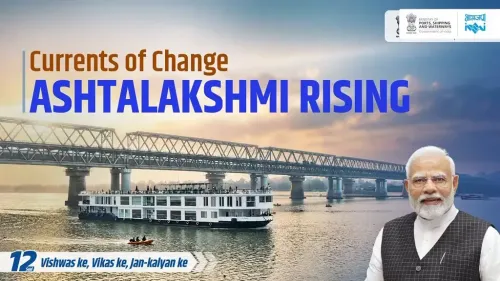
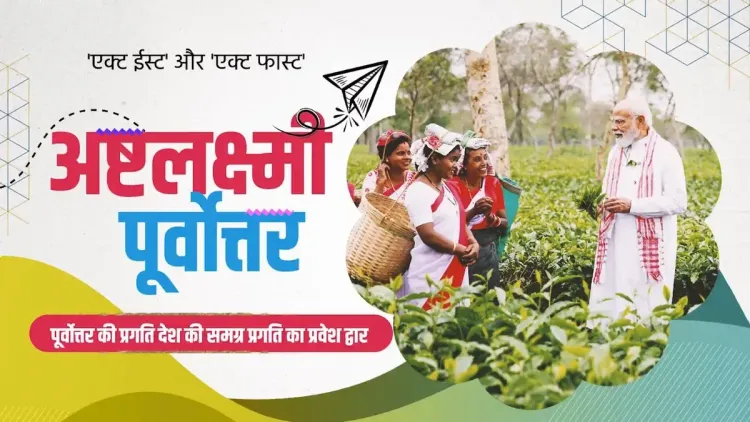
He used the term 'Ashtalakshmi' to collectively describe the eight northeastern states as engines of national prosperity.
The post credited improved connectivity, infrastructure, investment , and a peace environment for the region's rise.
The Act East Policy , launched in 2014 , reframed Northeast India as a strategic gateway to ASEAN economies.
Sharma described the Northeast as 'a powerful gateway to the bright future of a developed India,' aligning with the Viksit Bharat vision.
The post was tagged #12YearsOfRisingNorthEast , part of a wider BJP communication campaign marking the milestone.
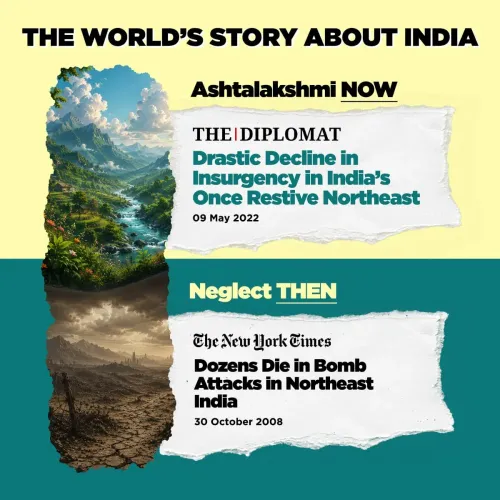
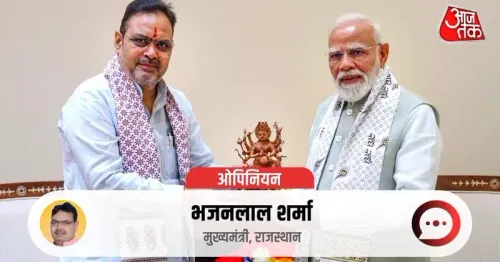
Rajasthan Chief Minister Bhajan Lal Sharma on Saturday, 20 June 2026, credited Prime Minister Narendra Modi's leadership over the past 12 years with transforming Northeast India from a region once seen through the lens of distance and neglect into what he called a new symbol of development and possibility.
Context
Posting in Hindi on X, Sharma wrote: 'जिस पूर्वोत्तर को कभी दूरी के पैमाने से देखा जाता था, आज वही विकास और संभावनाओं की नई पहचान बन चुका है' — 'The Northeast, once measured only by the yardstick of distance, has today become a new identity of development and possibilities.' He invoked the term 'Ashtalakshmi' — the central government's collective reference to the eight northeastern states as drivers of national prosperity — to frame the region's transformation.
The post, tagged #12YearsOfRisingNorthEast, came alongside a video and is part of a broader ruling-party effort to mark what it describes as a decade-plus of sustained policy attention to the region since 2014.
Policy Backdrop
When the Modi government took office in 2014, one of its early foreign-policy and domestic-development moves was to reframe the Look East Policy as the Act East Policy, explicitly positioning Northeast India as the physical gateway linking the country to ASEAN economies. Infrastructure — highways, railways, airports, and border trade facilities — became the operational spine of that ambition.
Parallel security and peace initiatives, including accords with armed groups in several northeastern states, were pursued alongside physical connectivity projects to create what the government described as a stable environment for private investment. Sharma echoed this framing, citing 'better connectivity, stronger infrastructure, growing investment, and an atmosphere of peace' as the pillars that have brought the region into the mainstream of national development.
Stakeholders and Impact
Residents across the eight northeastern states — Arunachal Pradesh, Assam, Manipur, Meghalaya, Mizoram, Nagaland, Sikkim, and Tripura — stand as the primary stakeholders of any infrastructure and investment gains in the region. Improved road and rail links directly affect daily mobility, supply chains, and access to markets for agricultural and horticultural produce.
Private investors, particularly in logistics, tourism, and renewable energy, have been identified by policy planners as the next wave of participants whose entry depends on sustained connectivity and security. Sharma's post positions the region not merely as a geographic boundary but as 'a powerful gateway to the bright future of a developed India' — language that aligns with the government's Viksit Bharat framework.
What's Next
Attention will now turn to whether the political messaging around #12YearsOfRisingNorthEast is backed by fresh announcements — new investment pledges, connectivity corridor milestones, or policy reviews — at forthcoming Northeast-focused summits or planning-body meetings. Progress on flagship infrastructure corridors linking the region to neighbouring countries will be a key metric by which the claims in posts like Sharma's will be assessed on the ground.
As the BJP consolidates its electoral footprint in the Northeast, the region's development narrative is likely to remain central to the party's national communication strategy ahead of state and general election cycles.
Point of View
Not spontaneous commentary. The 12-year marker is politically deliberate: it anchors the Northeast's transformation exclusively to the Modi era, pre-empting opposition claims about continuity from earlier governments. Whether the rhetoric is matched by verifiable on-ground metrics — project completion rates, investment inflows, per-capita income gains — will determine how durable this narrative proves in the states that actually vote on it.
NationPress
18 Sept 2026
Frequently Asked Questions
What did Rajasthan CM Bhajan Lal Sharma say about Northeast India?
Sharma said that Northeast India, once seen only through the lens of distance, has become a new symbol of development and possibilities under PM Modi's 12-year leadership, citing better connectivity, infrastructure, investment, and peace.
What does 'Ashtalakshmi' mean in the context of Northeast India?
'Ashtalakshmi' is a term used by the central government to collectively refer to the eight northeastern states — Arunachal Pradesh, Assam, Manipur, Meghalaya, Mizoram, Nagaland, Sikkim, and Tripura — as drivers of national prosperity.
What is the Act East Policy and how does it relate to Northeast India?
The Act East Policy, launched in 2014, reframed the earlier Look East Policy to position Northeast India as the physical and strategic gateway linking India to ASEAN economies through improved infrastructure and border connectivity.
Why is BJP highlighting 12 years of Northeast India development?
The BJP is marking what it describes as 12 years of sustained policy focus on the Northeast since 2014, using the hashtag #12YearsOfRisingNorthEast to communicate infrastructure and peace gains ahead of future election cycles in the region.
What infrastructure projects have improved Northeast India's connectivity?
Since 2014 the central government has pursued highway expansion, railway extensions, airport upgrades, and border trade infrastructure across the northeastern states as part of its Act East Policy and broader connectivity drive.