Piyush Goyal Hails Northeast as India's Growth Engine
Synopsis
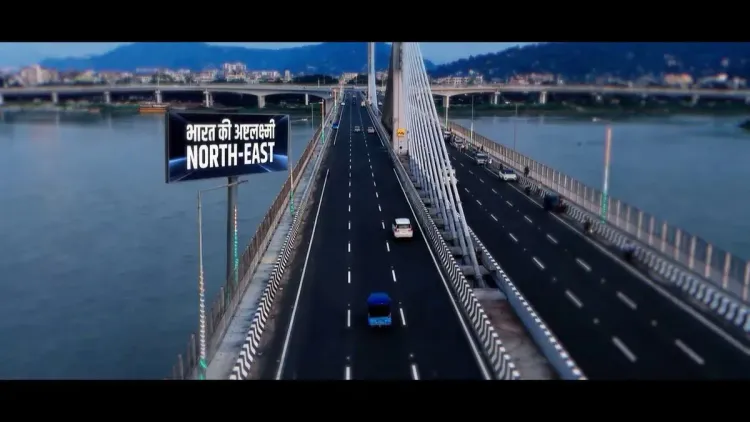
Union Minister Piyush Goyal on 20 June 2026 marked twelve years of NDA governance in the Northeast, declaring the Ashtalakshmi region — once sidelined from mainstream development — is now India's growth engine driven by prosperity, capability and potential.
Key Takeaways
Union Minister Piyush Goyal posted on 20 June 2026 under #12YearsOfRisingNorthEast , marking a 12-year milestone from the NDA's 2014 return to power.
He described the Ashtalakshmi northeastern region as having transformed from the margins of national development into India's 'growth engine.' The post invokes three pillars — prosperity (samṛddhi), capability (sāmarthya) and potential (sambhāvanāen) — consistent with the NDA's established vocabulary on Northeast policy.
The Act East Policy (relaunched 2014) and the PM-DevINE scheme form the core policy architecture behind the transformation narrative.
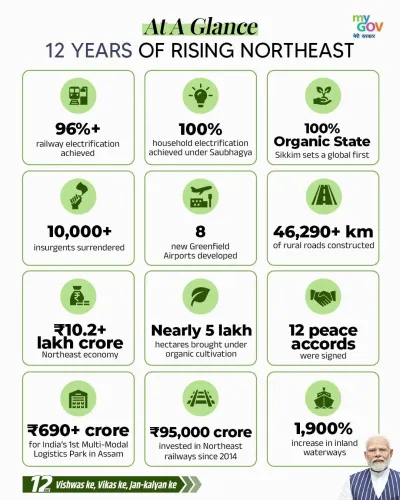
The Ministry of DoNER has received substantially higher Union Budget allocations post-2014, funding roads, railways, airports and power projects across the eight northeastern states .
Future NER outlays in the next Union Budget and announcements at the Northeast Investors Summit will test the 'growth engine' claim with concrete numbers.
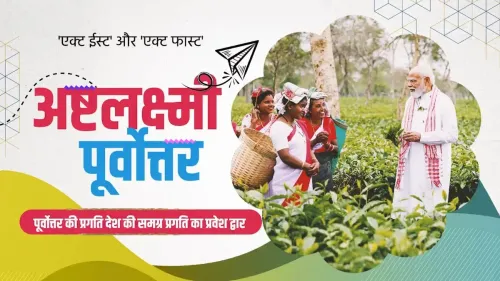
Union Commerce and Industry Minister Piyush Goyal on Saturday, 20 June 2026 celebrated twelve years of accelerated development in India's northeastern region, calling it a transformation from the margins of national progress to the country's foremost growth engine. The minister invoked the region's popular identity as Ashtalakshmi — the eight-state collective named after the goddess of prosperity — to underscore what the ruling dispensation frames as a historic turnaround.
Context
Goyal's post, tagged #12YearsOfRisingNorthEast, marks a symbolic milestone counting from 2014, the year the National Democratic Alliance returned to power under Prime Minister Narendra Modi. The hashtag situates the message squarely within the BJP's broader political narrative of northeastern renaissance. In the post, the minister wrote: 'Ashtalakshmi pūrvottar kshetra kabhī vikās kī mukhyadhārā se dūr thā, āj ye samṛddhi, sāmarthya aur sambhāvanāon ke sāth Bhārat kā growth engine ban rahā hai' — 'The Ashtalakshmi northeastern region was once far from the mainstream of development; today it is becoming India's growth engine, with prosperity, capability and potential.'
Policy Backdrop
The claim draws on a decade-long policy shift anchored in the Act East Policy, formally relaunched in 2014, which repositioned the North Eastern Region (NER) as India's strategic gateway to Southeast Asia and the ASEAN bloc. Successive Union Budgets after 2014 sharply raised allocations to the Ministry of Development of North Eastern Region (DoNER), and dedicated schemes such as PM-DevINE were introduced to fund infrastructure, livelihoods and social-sector gaps specific to the region. The eight northeastern states — long characterised by connectivity deficits, difficult terrain and lower per-capita development indicators — became a declared priority for roads, railways, airports and power projects under this framework.
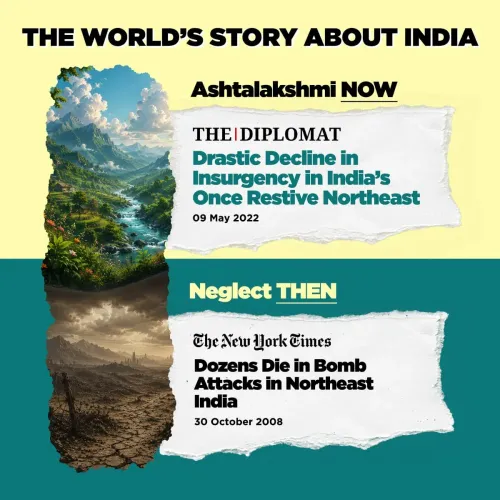
The 'Ashtalakshmi' framing itself has been used by senior BJP leaders, including the Prime Minister, to counter a historical perception that the Northeast was neglected by earlier governments. By invoking samṛddhi (prosperity), sāmarthya (capability) and sambhāvanāen (potential), Goyal's post echoes the three-pillar vocabulary the NDA has consistently deployed to describe its northeastern agenda.
Stakeholders and Impact
The principal beneficiaries of the policy push — and the audiences for messaging of this kind — are the eight northeastern states: Arunachal Pradesh, Assam, Manipur, Meghalaya, Mizoram, Nagaland, Sikkim and Tripura, along with their entrepreneurs, farmers, and infrastructure developers. Enhanced central funding has translated into a measurably expanded project pipeline in connectivity and logistics, positioning the region within national supply chains and cross-border trade corridors with Bangladesh, Myanmar, Bhutan and China. State governments of the NER, most of which are currently led by BJP or BJP-allied administrations, have been active partners in channelling these investments.
For the broader investor community, ministerial-level affirmations of the Northeast's 'growth engine' status ahead of budget cycles or investor summits typically signal continued or increased central outlays and policy attention.
What's Next
Observers will watch the next Union Budget for the NER's headline allocation figure and any fresh project announcements that give concrete weight to the 'growth engine' assertion. The annual Northeast Investors Summit and Parliament's winter session are the other key forums where policy intent traditionally translates into specific commitments. As India deepens its Act East engagement, the Northeast's role as a trade and connectivity corridor — rather than merely a welfare recipient — will be the metric by which the transformation narrative is ultimately tested.
Point of View
Using a hashtag milestone to consolidate the BJP's ownership of the Northeast development narrative ahead of budget season. The 'Ashtalakshmi' framing is not incidental — it has been a consistent rhetorical device to recast eight states from a security and welfare concern into an economic opportunity story. By emphasising prosperity, capability and potential in that order, the minister is also subtly shifting the benchmark from welfare delivery to investment attractiveness. Whether that shift is borne out by the next budget's NER allocation will determine how durable the 'growth engine' label proves to be.
NationPress
19 Sept 2026
Frequently Asked Questions
What is the Ashtalakshmi Northeast region?
'Ashtalakshmi' refers to India's eight northeastern states — Arunachal Pradesh, Assam, Manipur, Meghalaya, Mizoram, Nagaland, Sikkim and Tripura — collectively named after the goddess of prosperity. Senior BJP leaders have used the term since 2014 to frame the region as a zone of economic potential rather than a peripheral concern.
What is the #12YearsOfRisingNorthEast hashtag about?
The hashtag marks twelve years since 2014, when the NDA government under Prime Minister Narendra Modi came to power and relaunched the Act East Policy, making Northeast development a stated strategic priority. BJP leaders use the hashtag to highlight infrastructure and connectivity gains made in the region over this period.
What is the Act East Policy and how does it affect the Northeast?
The Act East Policy, relaunched in 2014, positions India's northeastern states as the country's gateway for trade and connectivity with Southeast Asian and ASEAN nations. It has driven increased central investment in roads, railways, airports and cross-border corridors linking the NER to Bangladesh, Myanmar and Bhutan.
What is PM-DevINE scheme for Northeast India?
PM-DevINE (Prime Minister's Development Initiative for North East Region) is a central scheme introduced after 2014 to fund infrastructure, livelihood projects and social-sector gaps specific to the northeastern states, complementing the broader Act East connectivity agenda.
Why is Piyush Goyal talking about Northeast development?
As a senior BJP leader and Union Minister, Goyal regularly amplifies the party's governance narrative. His 20 June 2026 post coincides with the symbolic twelve-year mark of NDA rule, using the Northeast's progress as evidence of the government's development record ahead of potential budget and investor-summit announcements.