Jaishankar meets UN chief Guterres in New York, discusses West Asia, Ukraine, Sudan
Synopsis
India officially kicked off its campaign for a UNSC non-permanent seat for 2028–2029 in New York, anchored by a six-point 'SHANTI' vision. EAM Jaishankar's meeting with UN chief Guterres — covering West Asia, Ukraine and Sudan — signals that New Delhi is pitching itself not just as a candidate, but as a credible global peace broker.
Key Takeaways
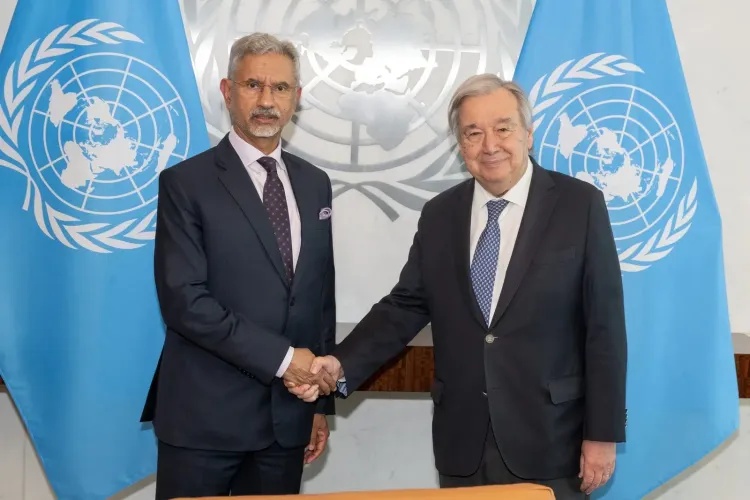
Jaishankar met UN Secretary-General António Guterres in New York on 14 July .
Discussions covered conflicts in West Asia , Ukraine , and Sudan , alongside India-UN cooperation.
India formally launched its campaign for a UNSC non-permanent seat for the 2028–2029 term on the same day.
The campaign is anchored by the SHANTI framework — Securing Holistic Advancement through Norms, Trust and Integrity — with six core priorities.
If elected, it will be India's ninth term as an elected member of the 15-member Security Council .
India is simultaneously pursuing a permanent seat on a reformed UNSC alongside its non-permanent seat bid.
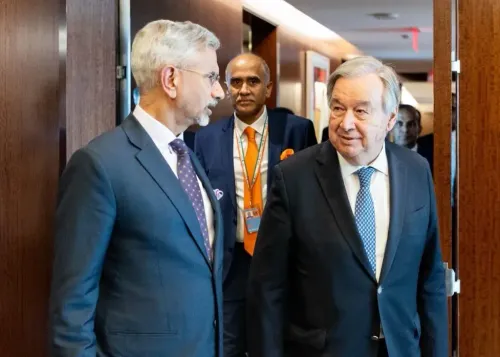
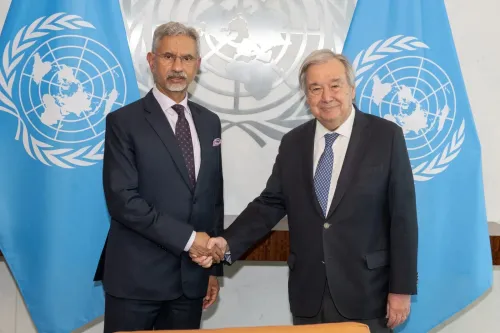
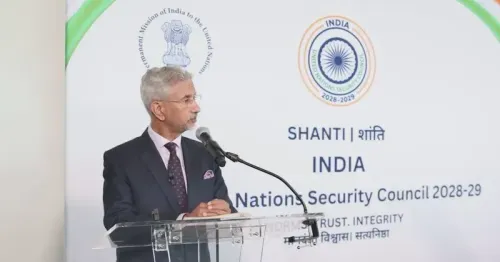
External Affairs Minister S. Jaishankar met United Nations Secretary-General António Guterres in New York on 14 July, holding discussions on pressing global conflicts including those in West Asia, Ukraine, and Sudan. The high-level meeting took place on the sidelines of India's formal launch of its campaign for a non-permanent seat on the United Nations Security Council (UNSC) for the 2028–2029 term.
What Was Discussed
The two leaders reviewed key international crises and took stock of the breadth of India-UN cooperation. Jaishankar shared details of the meeting on X, writing: 'Glad to meet @antonioguterres, Secretary General of the @UN in New York today. Discussed global developments, including of West Asia, Ukraine and Sudan. Also recognised the strength of India-UN cooperation.'
The conversation underscored New Delhi's intent to position itself as an active stakeholder in global peace and security — a message that anchors India's broader UNSC bid.
India's UNSC Campaign Launch
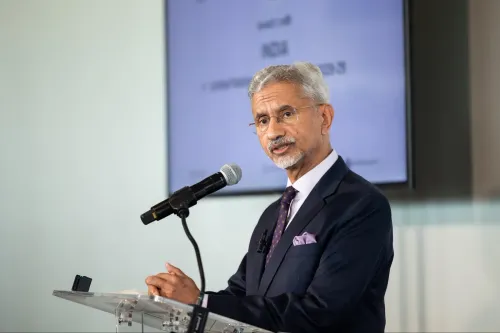
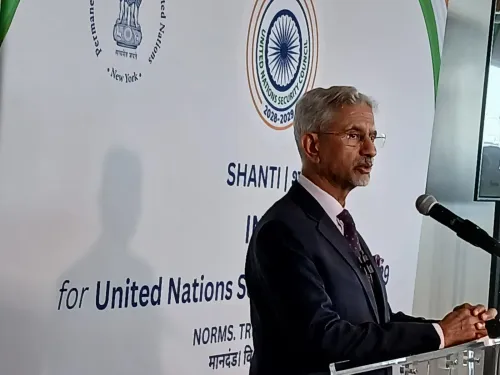
Earlier on the same day, Jaishankar formally unveiled India's candidature for the Asia-Pacific non-permanent seat on the Security Council before diplomats and delegates from across the world at UN Headquarters. The campaign is built around a six-point vision framework called SHANTI — an acronym for Securing Holistic Advancement through Norms, Trust and Integrity.
Jaishankar said India would serve as the voice of the Global South on the Security Council, citing the country's record of supporting developing nations, contributing to UN peacekeeping operations, and working to strengthen multilateral institutions.
The Six Priorities Under SHANTI
India's SHANTI framework outlines six major priorities: strengthening the Global South's voice in international peace and security; advancing a reformed, democratic, and representative multilateral system; building a future-ready peacekeeping architecture equipped with modern technology; promoting a human-centric approach to artificial intelligence; supporting a free, open, and rules-based maritime order under international law; and intensifying global efforts to counter terrorism and terror financing.
Jaishankar also reiterated India's commitment to the Women, Peace and Security agenda and ensuring peacekeeping missions remain focused on their core mandates.
India's UNSC Ambitions: The Bigger Picture
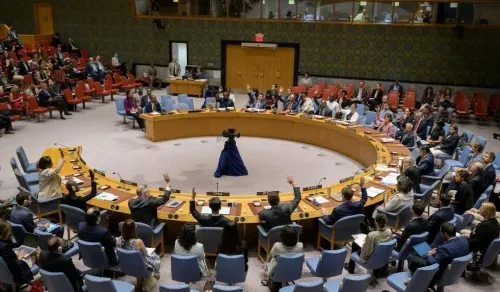
India will contest the election at the UN General Assembly next year for the Asia-Pacific non-permanent seat. If elected, it will mark the country's ninth term as an elected member of the 15-member Council — a milestone that New Delhi is expected to highlight prominently in its diplomatic outreach.
Notably, this campaign runs in parallel with India's long-standing push for a permanent seat on a reformed UNSC — a demand that successive governments have championed but which remains unresolved given the complexity of Charter reform. The dual-track approach reflects New Delhi's pragmatic diplomacy: seek influence through the elected seat now, while keeping the permanent-membership argument alive for the longer term.
This is the beginning of what is expected to be an intensive diplomatic outreach to UN member states ahead of the election, with India's track record in peacekeeping and development cooperation serving as key planks of its pitch.
Point of View
But the real test is whether it translates into votes at the UN General Assembly — a body where transactional diplomacy often outweighs principled positioning. Launching the campaign this early, with the EAM personally meeting the UN Secretary-General, signals that New Delhi is treating this as a high-priority diplomatic exercise, not a routine candidacy. The dual-track approach — seeking a non-permanent seat while pressing for permanent membership — is pragmatic, but it also risks diluting the reform argument: if India is willing to settle for an elected seat, it reduces the urgency for Charter reform that a permanent seat would require. The Global South pitch is India's strongest card, but it is one that Brazil, South Africa, and others are also playing.
NationPress
12 Oct 2026
Frequently Asked Questions
Why did EAM Jaishankar meet UN Secretary-General Guterres in New York?
Jaishankar met Guterres on 14 July on the sidelines of India's formal launch of its UNSC non-permanent seat campaign. The two discussed global conflicts in West Asia, Ukraine, and Sudan, as well as the state of India-UN cooperation.
What is India's SHANTI framework for the UNSC campaign?
SHANTI stands for Securing Holistic Advancement through Norms, Trust and Integrity. It is a six-point vision outlining India's priorities if elected to the Security Council, covering the Global South's voice, multilateral reform, modern peacekeeping, AI governance, maritime order, and counter-terrorism.
Which UNSC seat is India contesting and when is the election?
India is contesting the Asia-Pacific non-permanent seat on the UN Security Council for the 2028–2029 term. The election will be held at the UN General Assembly next year.
How many times has India been a non-permanent member of the UNSC?
India has served eight terms as an elected non-permanent member of the 15-member Security Council. If elected for 2028–2029, it would be the country's ninth term.
Is India also seeking a permanent seat on the UNSC?
Yes. New Delhi is simultaneously pursuing its long-standing demand for a permanent seat on a reformed UNSC, even as it campaigns for the non-permanent seat. The two tracks reflect India's broader push to shape global peace and security discussions.