Jaishankar's Africa tour: India pivots from aid to production-led partnerships
Synopsis
India's External Affairs Minister Jaishankar visited Ghana, Cote d'Ivoire, and Ethiopia in October — and a new analysis argues the real story isn't the agreements signed, but a strategic pivot from aid-giving to co-production. If the three-gateway framework connects, India could embed itself in African manufacturing supply chains for the first time at scale.
Key Takeaways
EAM S Jaishankar visited Ghana, Cote d'Ivoire , and Ethiopia from 6 to 10 October , framing each as a distinct strategic gateway for India in Africa.
Ghana's President John Mahama sought Indian investment in pharmaceuticals and vaccine production to build domestic manufacturing capacity.
Discussions in Ghana covered pharmaceuticals, healthcare, mining, defence, railways , and digital technologies .
Cote d'Ivoire talks included defence and counter-terrorism cooperation amid growing Sahel-linked jihadist violence in coastal West Africa.
In Ethiopia , Jaishankar met Foreign Minister Gedion Timothewos and chaired a regional heads-of-mission conference; India had backed AU's permanent G20 membership in 2023 .
The report argues India's Africa strategy must shift from continental frameworks to country-specific, production-led partnerships to be effective.
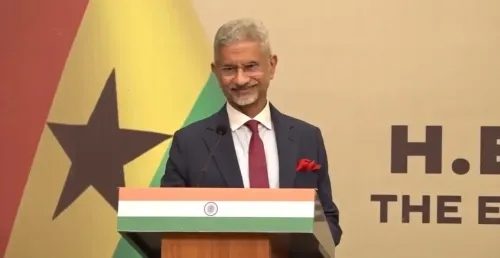
External Affairs Minister S Jaishankar's three-nation Africa tour — covering Ghana, Cote d'Ivoire, and Ethiopia from 6 to 10 October — signals a strategic recalibration in India's engagement with the continent, shifting from development assistance and concessional credit toward production-based partnerships, according to a report by India Narrative. The report argues that the visit's success should be measured not by the count of agreements signed, but by whether these ties build lasting industrial and manufacturing capabilities across Africa.
Three Gateways, Three Distinct Roles
The report frames each destination as a distinct strategic node. Ghana is positioned as a potential production hub for West Africa, Cote d'Ivoire as an entry point into Francophone markets through its standing as the largest economy in the West African Economic and Monetary Union, and Ethiopia as a gateway to the Horn of Africa and the African Union (AU). According to the report, this marks a shift from a generic continental template to differentiated, country-specific partnerships.
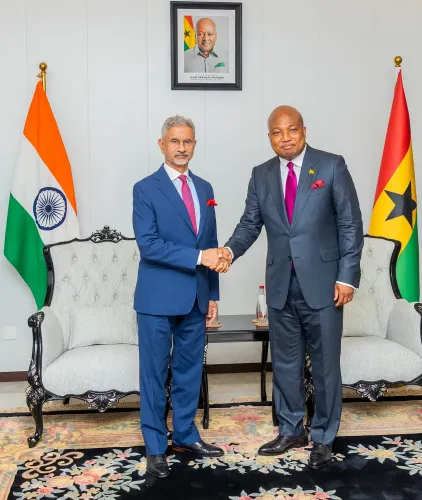
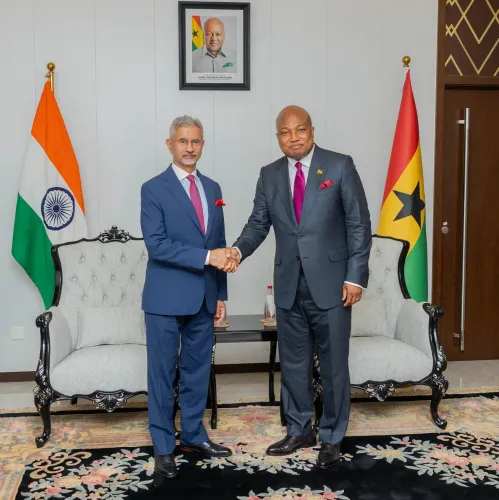
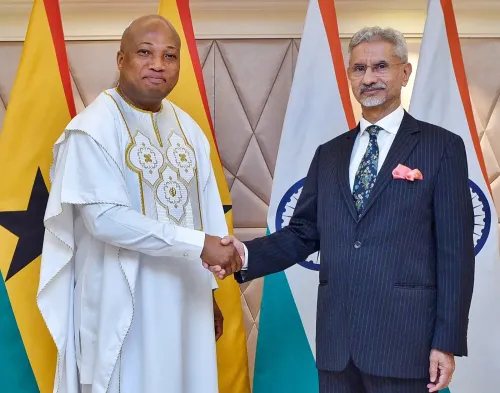
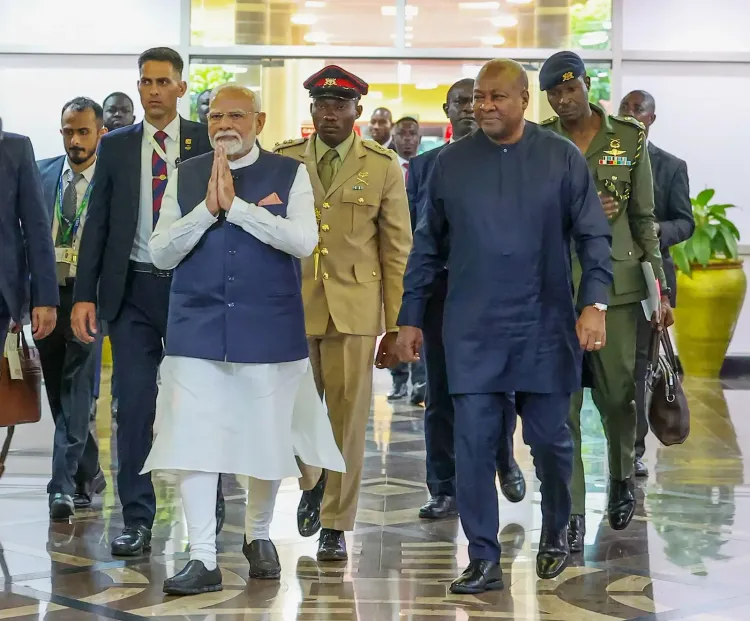
When Ghana's President John Mahama met Jaishankar in Accra on 6 October, he reportedly sought Indian investment in pharmaceuticals and vaccine production to build Ghana's own manufacturing capacity — a request the report describes as emblematic of the visit's broader intent. Indian companies already have a foothold in Ghana across pharmaceuticals, manufacturing, agriculture, and construction.
Production Over Distribution
The report identifies four pillars that would define a genuinely transformative partnership: establishing manufacturing facilities rather than distribution hubs, enabling local processing over raw material exports, linking skill development to employment generation, and building regional supply networks beyond conventional bilateral trade. Ghana's 24-Hour Economy programme, aimed at boosting domestic production and employment, aligns with this framework.
Discussions during Jaishankar's Ghana visit covered pharmaceuticals, healthcare, mining, defence, railways, and digital technologies, building on the groundwork laid during Prime Minister Narendra Modi's visit to the country the previous year. The logic, as the report notes, is mutual: local manufacturing would reduce Ghana's dependence on imported medicines while giving Indian firms a regional production base.
Security and Francophone Access via Cote d'Ivoire
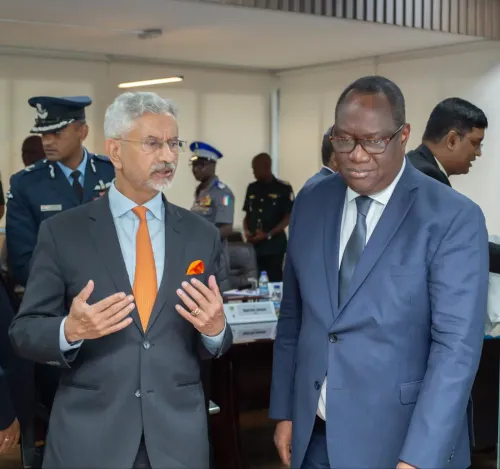
In Cote d'Ivoire, talks extended beyond trade to include defence cooperation and counter-terrorism capacity building. The report flags this as a significant dimension, noting that jihadist violence spreading from the Sahel toward coastal West African states makes security cooperation potentially as consequential as economic ties. Cote d'Ivoire's economic weight within the monetary union also gives India a structural entry point into a cluster of Francophone economies that have historically been harder to access.
Ethiopia and the African Union Dimension
Ethiopia carries the strongest institutional weight of the three stops. As host of the African Union headquarters, Addis Ababa holds special significance in India's Africa diplomacy. Jaishankar's discussions with Ethiopian Foreign Minister Gedion Timothewos covered trade, investment, digitalisation, and the India-AU partnership. Notably, India had championed permanent G20 membership for the AU in 2023.
Jaishankar also chaired a conference of India's regional heads of mission in Addis Ababa during the visit — a signal, according to the report, of Ethiopia's centrality in New Delhi's broader regional diplomatic architecture.
Connecting the Three Nodes into a Strategy
The report cautions that the three gateways constitute a coherent strategy only if they are linked. Pharmaceutical plants in Ghana could supply West Africa; processing operations in Cote d'Ivoire could reach Francophone markets; and manufacturing anchored in Ethiopia could serve the Horn. India's engagement with Africa over the past 20 years has largely operated through continental frameworks — including the India-Africa Forum Summits, concessional lines of credit, and ITEC training programmes — and Prime Minister Modi's ten guiding principles, announced in 2018, had already signalled a shift toward Africa-driven partnership terms. The current tour suggests that shift is now being operationalised at the country level.
Whether New Delhi can convert this strategic framing into on-the-ground manufacturing investment will determine if the October tour marks a genuine inflection point in India-Africa relations.
Point of View
Yet its manufacturing footprint on the continent remains thin. The Jaishankar tour is notable for its country-specific framing — Ghana as a pharma hub, Cote d'Ivoire as a Francophone gateway, Ethiopia as an AU anchor — but differentiated intent and differentiated delivery are different things. The real test is whether Indian firms follow diplomatic groundwork with actual capital, and whether New Delhi builds the connective tissue — logistics, regulatory harmonisation, regional supply chains — that turns three bilateral visits into a continental strategy. Without that, this risks being another well-framed tour that does not move the investment needle.
NationPress
7 Nov 2026
Frequently Asked Questions
What was the purpose of EAM Jaishankar's visit to Ghana, Cote d'Ivoire, and Ethiopia?
The visit, conducted from 6 to 10 October, aimed to explore whether India could move beyond development assistance and establish production-focused partnerships with African nations. Each country was identified as a distinct strategic gateway — Ghana for West African manufacturing, Cote d'Ivoire for Francophone market access, and Ethiopia for engagement with the African Union.
What did Ghana's President John Mahama ask India for during Jaishankar's visit?
President Mahama sought Indian investment in pharmaceuticals and vaccine production to build Ghana's own manufacturing capacity, rather than simply purchasing finished goods. This request, made when Mahama met Jaishankar in Accra on 6 October, is described as representative of the broader shift India is being asked to make across the continent.
Why does Cote d'Ivoire matter to India's Africa strategy?
Cote d'Ivoire is the largest economy in the West African Economic and Monetary Union, giving Indian businesses a structural entry point into Francophone African markets. The visit also covered defence and counter-terrorism cooperation, which analysts say is increasingly important as jihadist violence spreads from the Sahel toward coastal states.
What is the significance of Ethiopia in India's Africa engagement?
Ethiopia hosts the African Union headquarters, making Addis Ababa a key institutional node in India's Africa diplomacy. Jaishankar met Ethiopian Foreign Minister Gedion Timothewos to discuss trade, investment, and digitalisation, and also chaired a conference of India's regional heads of mission — signalling Ethiopia's importance in New Delhi's diplomatic architecture.
How does this tour differ from India's past Africa engagement?
India's Africa engagement over the past 20 years has largely operated through continental frameworks such as the India-Africa Forum Summits, concessional credit lines, and ITEC training. The October tour represents a reported shift toward differentiated, country-specific partnerships built around production, local manufacturing, and regional supply networks rather than a one-size-fits-all continental template.