Mahua Moitra Warns Kolkata Police Over BJP 'Goondas'
Synopsis
TMC MP Mahua Moitra publicly warned Kolkata Police on 7 November 2026 to act against BJP 'goondas', citing what she called a stark contrast in Delhi Police conduct between two political events on October 10 and November 1, and threatening consequences for inaction.
Key Takeaways
Mahua Moitra addressed Kolkata Police directly on 7 November 2026 , warning them to control BJP 'goondas' or 'face the music.' She alleged Delhi Police was passive when TMC workers were attacked on October 10 but cooperative when TMC crowds were larger on November 1 .
Delhi Police operates under the Ministry of Home Affairs , not any elected state government — a structural fault line opposition parties frequently highlight.
Kolkata Police answers to the West Bengal TMC government , making Moitra's warning an internal directive as much as a public statement.
The post continues a pattern of TMC MPs using social media to allege central-agency bias while pressing their own state forces to act.
No official response from either Delhi Police or Kolkata Police has been recorded at the time of publication.
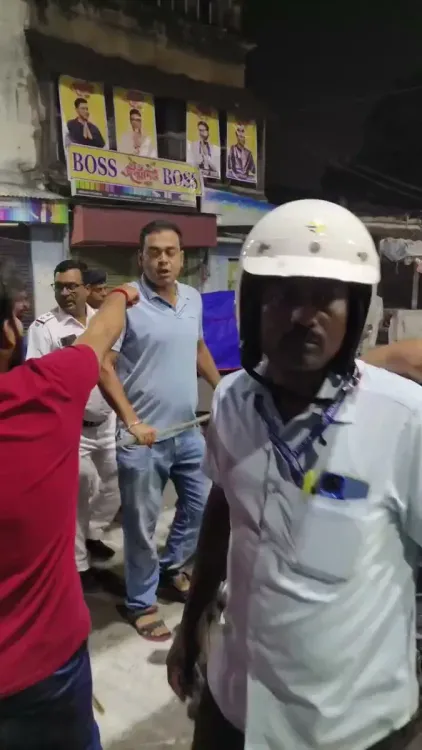
A sharp warning shot fired on social media — and this one travels from Delhi to Kolkata. TMC MP Mahua Moitra on Saturday, 7 November 2026 publicly called out Kolkata Police, urging the force to crack down on what she called BJP 'goondas', and pointedly invoked what she described as a dramatic attitude shift in Delhi Police between two recent political events.
The October 10 and November 1 Contrast Moitra Is Drawing
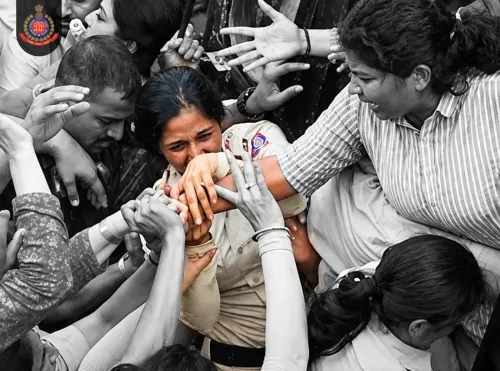
Moitra's post draws a direct line between two dates. She alleges that on October 10, Delhi Police 'sat back' while BJP supporters attacked TMC workers, but by November 1 — when TMC turned out in larger numbers — the same force became, in her words, 'sweet as honey.' The implication is blunt: police behaviour tracked crowd size and political calculus, not law.
The specific incidents on both dates postdate publicly available records and have not been independently verified. But the political framing Moitra deploys is well-worn territory — opposition parties have for years accused Delhi Police, which operates under the Ministry of Home Affairs rather than any elected state government, of differential conduct during clashes involving BJP supporters.
Why She Is Talking to Kolkata Police, Not Delhi Police
Kolkata Police falls under the West Bengal government — a TMC administration. Moitra's warning, then, is less a complaint to an adversary and more a directive to a friendly force: get ahead of this, or face political consequences. The phrase 'face the music very soon' is pointed. It signals that TMC's patience with any perceived inaction on its home turf is running thin.
This is a recurring dynamic in the TMC-BJP interstate rivalry. TMC MPs have consistently used social media to highlight what they frame as central-agency bias, while simultaneously governing West Bengal and controlling its police apparatus. The post sits squarely in that tradition — but the public, direct address to Kolkata Police adds an unusual edge of internal accountability.
The Bigger Pattern: Policing as Political Battleground
India's federal structure creates a structural fault line around policing. State police forces answer to elected state governments; central forces like Delhi Police answer to New Delhi. In politically contested states — and West Bengal is among the most contested — every baton charge, every FIR, every crowd-control decision gets read through a partisan lens.
Moitra's post crystallises that tension in two sentences. Whether Kolkata Police responds formally, whether Delhi Police issues any rebuttal, or whether this escalates into a Lok Sabha privilege motion or parliamentary question will determine how far this particular volley travels.
In Indian politics, a warning posted on a Saturday afternoon has a way of becoming Monday morning's floor debate.
Point of View
Evidence-like quality even without verified incident reports, a social-media tactic opposition politicians have refined over several election cycles. If Kolkata Police acts visibly in response, TMC scores a governance point; if it does not, Moitra retains the moral high ground of having warned them. The real watch-point is whether this migrates from X to the floor of the Lok Sabha, where privilege motions and police-conduct questions can force the Home Ministry onto the record.
NationPress
7 Nov 2026
Frequently Asked Questions
Why did Mahua Moitra warn Kolkata Police?
Mahua Moitra warned Kolkata Police on 7 November 2026 to crack down on what she called BJP 'goondas', citing alleged incidents of violence against TMC workers in Delhi that she claims police failed to prevent.
What happened on October 10 and November 1 that Moitra referred to?
Moitra alleged that on October 10, Delhi Police was passive while BJP supporters attacked TMC workers, but on November 1 — when TMC crowds were larger — the same force was cooperative. The specific incidents have not been independently verified.
Does Delhi Police come under the Delhi government or the central government?
Delhi Police operates under the Ministry of Home Affairs, which is part of the central government, not the elected Delhi state government — a distinction opposition parties frequently cite when alleging partisan conduct.
Who controls Kolkata Police?
Kolkata Police falls under the West Bengal state government, which is currently led by the Trinamool Congress (TMC), making it politically aligned with Mahua Moitra's party.
What could happen next after Moitra's warning to Kolkata Police?
Possible follow-ups include an official response from Delhi or Kolkata Police, parliamentary questions or privilege motions in the Lok Sabha, or further escalation through TMC's political machinery in West Bengal.