Jaishankar Greets Africa on Africa Day, Reaffirms India's Partnership
Synopsis
External Affairs Minister Dr. S. Jaishankar marked Africa Day on 25 May 2026 by reaffirming India's partnership with the African continent, citing shared journeys, mutual respect and common interests — values that underpin decades of structured India-Africa engagement.
Key Takeaways
Africa Day is observed on 25 May each year, marking the founding of the Organization of African Unity in 1963 .
Jaishankar described the India-Africa partnership as rooted in 'shared journeys, mutual respect and common interests.' The India-Africa Forum Summit process, launched in 2008 , is the primary institutional mechanism for bilateral and multilateral engagement.
At the 2015 India-Africa Forum Summit , India pledged $10 billion in concessional credit and 50,000 scholarships to African nations.
India's Africa policy emphasises South-South cooperation , non-conditionality and capacity building, drawing on shared anti-colonial history.
The African Union represents 55 member states and is India's principal continental interlocutor in Africa.
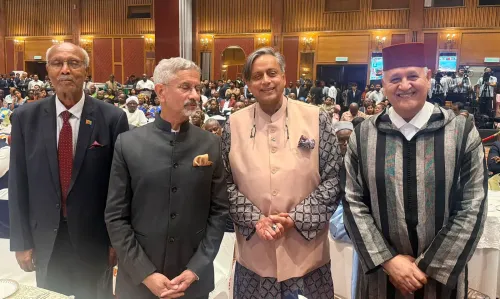
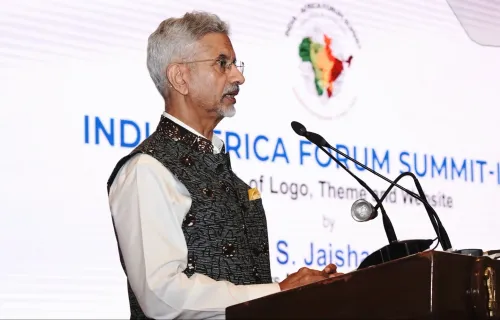
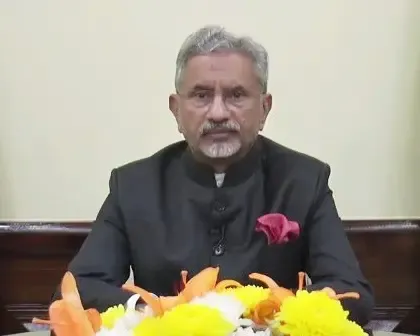
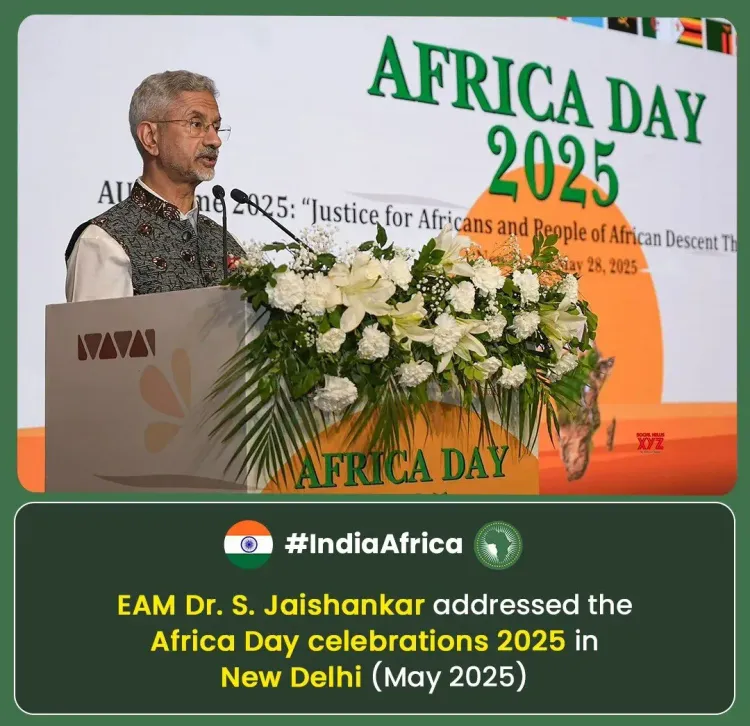
Union External Affairs Minister Dr. S. Jaishankar on Monday, 25 May 2026 extended greetings to India's partners across the African continent on the occasion of Africa Day, reaffirming New Delhi's commitment to solidarity and deeper engagement with African nations.
Context
Africa Day, observed annually on 25 May, commemorates the founding of the Organization of African Unity (OAU) on that date in 1963 — the body that was later succeeded by the African Union (AU). The day is widely marked by governments and international partners to acknowledge the continent's unity, resilience and aspirations. Dr. Jaishankar's message described the India-Africa partnership as being 'based on shared journeys, mutual respect and common interests.'
The post, shared on his official X account, did not announce any specific policy measure but carried diplomatic weight as a formal expression of India's continued orientation toward the African continent.
Policy Backdrop
India's structured engagement with Africa has been built over decades through the India-Africa Forum Summit (IAFS) process, which was launched in 2008 in New Delhi with the adoption of the Delhi Declaration and Framework of Cooperation. The framework set the tone for political dialogue, development assistance and economic cooperation.
At the third India-Africa Forum Summit in 2015, India offered $10 billion in concessional credit lines and 50,000 scholarships to African nations, marking one of the most substantial packages in the relationship's history. Alongside these commitments, India extended duty-free tariff preference schemes to least-developed African countries starting in 2008, reinforcing its trade-oriented approach to the partnership.
India's Africa policy is rooted in the countries' shared anti-colonial histories, common participation in the Non-Aligned Movement, and a broader emphasis on South-South cooperation — principles that Dr. Jaishankar's message echoed through the phrase 'shared journeys.'
Stakeholders and Impact
The African Union, which represents 55 member states, is the principal institutional interlocutor for India's continental engagement. African governments, particularly those in least-developed categories that have benefited from India's concessional credit and scholarship programmes, are the primary stakeholders in this relationship.
Indian businesses operating in sectors such as pharmaceuticals, information technology, infrastructure and agriculture also have a direct stake in the health of India-Africa ties. India's approach — stressing non-conditionality, capacity building and mutual respect — has positioned it as a partner distinct from some other major powers active on the continent.
The message from the External Affairs Minister on Africa Day serves as a diplomatic signal to all 55 African Union member states, reinforcing that New Delhi views the relationship as a long-term strategic priority rather than a transactional engagement.
What's Next
Observers of India-Africa relations will watch for the scheduling and outcomes of the next India-Africa Forum Summit, which serves as the primary vehicle for translating political goodwill into concrete commitments on credit lines, trade facilitation and people-to-people exchanges. Any announcements at multilateral forums — including those under the G20 or United Nations frameworks — on new lines of credit or capacity-building initiatives will be closely tracked.
As India continues to position itself as a leading voice of the Global South, Africa Day messages from senior ministers like Dr. Jaishankar signal that deepening ties with the African continent will remain a cornerstone of New Delhi's foreign policy in the years ahead.
Point of View
While ceremonial in form, fits into a deliberate pattern of diplomatic signalling that India's leadership uses to reinforce its Global South credentials. The language of 'shared journeys' and 'mutual respect' is not incidental — it consciously distinguishes India's partnership model from more transactional or conditional approaches pursued by other major powers on the continent. With the next India-Africa Forum Summit on the horizon, such messaging helps sustain political momentum and goodwill among 55 African Union member states. For New Delhi, Africa is increasingly both a strategic priority and a constituency in multilateral forums, making consistent high-level outreach an investment in long-term influence.
NationPress
20 Sept 2026
Frequently Asked Questions
What is Africa Day and why is it celebrated on 25 May?
Africa Day is observed on 25 May every year to commemorate the founding of the Organization of African Unity (OAU) on that date in 1963 . The OAU was later succeeded by the African Union . The day celebrates the unity, resilience and aspirations of the African continent and its people.
What did Jaishankar say on Africa Day 2026?
Dr. Jaishankar extended greetings to India's partners across the African continent, stating that the partnership is 'based on shared journeys, mutual respect and common interests' and reaffirming India's commitment to 'strengthening solidarity and deepening the partnership.'
What is the India-Africa Forum Summit?
The India-Africa Forum Summit (IAFS) is a series of high-level meetings launched in 2008 in New Delhi to establish structured political, economic and development cooperation between India and African states. The third summit in 2015 saw India offer $10 billion in concessional credit and 50,000 scholarships .
How does India support African countries through trade and development?
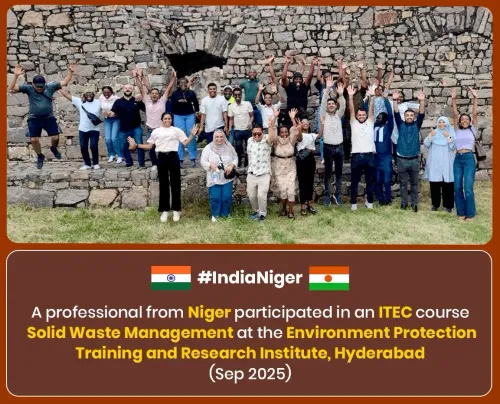
India extended duty-free tariff preference schemes to least-developed African countries from 2008 onward. It has also provided concessional lines of credit, scholarships and capacity-building programmes, with the approach emphasising non-conditionality and South-South cooperation.
What is India's broader strategy toward Africa?
India's Africa policy draws on a shared anti-colonial history and participation in the Non-Aligned Movement . It focuses on South-South cooperation , development assistance, trade facilitation and people-to-people ties, positioning India as a partner that prioritises mutual benefit and non-interference.