Dr. Jitendra Singh visits world-first air pollution lab at IITM Delhi
Synopsis
Union Minister Dr. Jitendra Singh visited AATAL — the world's first integrated atmospheric chemistry and aerosol toxicity lab for Delhi NCR — at IITM New Delhi on 24 October 2026, marking a significant step in India's scientific approach to combating chronic air pollution.
Key Takeaways
AATAL at IITM, New Delhi is described as the world's first integrated facility dedicated to air pollution analysis specifically for Delhi NCR .
The laboratory focuses on atmospheric chemistry and aerosol toxicity — going beyond measuring pollution levels to analysing the chemical composition of pollutants.
IITM , under the Ministry of Earth Sciences , already operates the SAFAR air quality forecasting network, active since 2010 .
India's National Clean Air Programme (NCAP) , launched in 2019 , covers 131 non-attainment cities including Delhi NCR.
AATAL data could sharpen source-attribution of pollution events, helping calibrate policy responses by CPCB and state bodies.
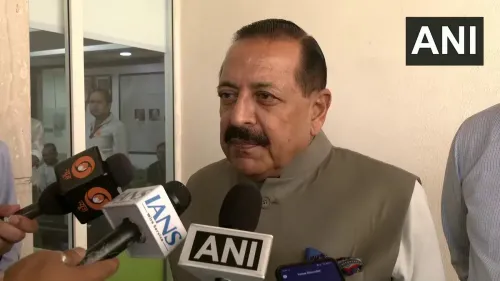
Jitendra Singh called the walkthrough 'not only self-explanatory but also highly educative'.
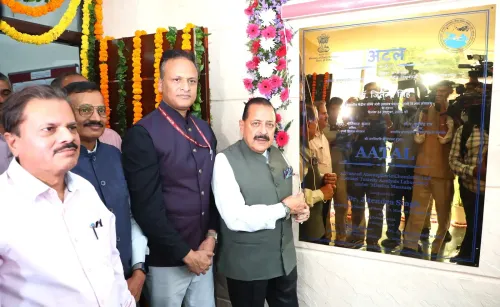
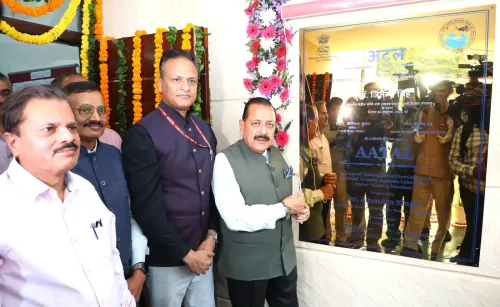
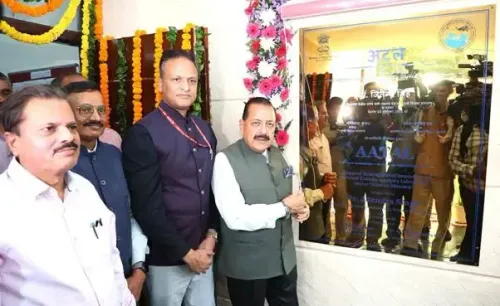
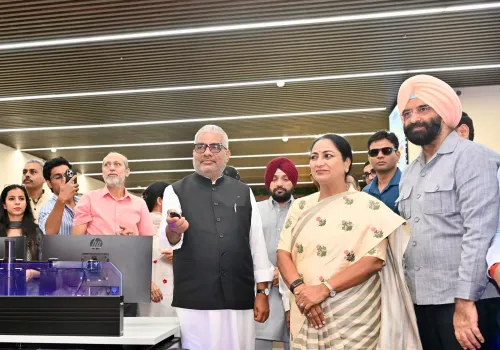
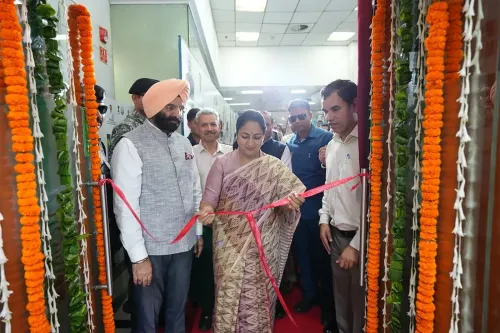
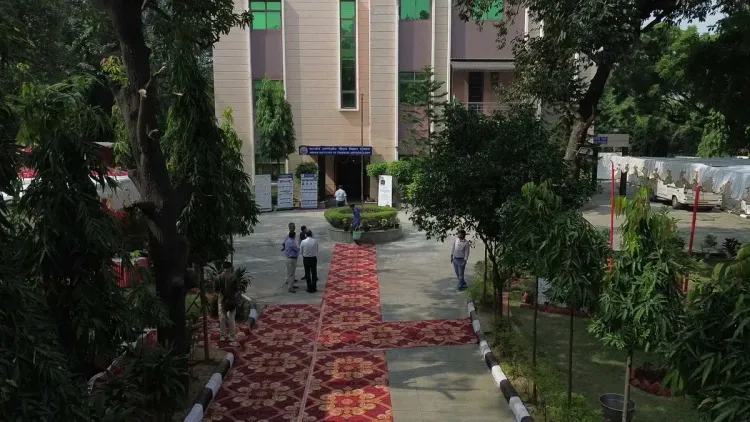
India's war on smog just got a new front-line command centre. Union Science and Technology Minister Dr. Jitendra Singh on Saturday, 24 October 2026 walked through the Integrated Advanced Atmospheric Chemistry And Aerosol Toxicity Analysis Laboratory (AATAL) — billed as the world's first facility of its kind dedicated to air pollution analysis for the Delhi NCR region — installed at the Indian Institute of Tropical Meteorology (IITM), New Delhi, under the Ministry of Earth Sciences (MoES).
What AATAL is and why Delhi NCR needed it
Delhi NCR sits at the heart of the Indo-Gangetic plain, a geography that traps particulate matter and gaseous pollutants in a thick seasonal blanket every winter. Existing monitoring networks have long measured how much pollution exists; AATAL is designed to dissect what exactly that pollution is made of — probing the chemical composition of aerosols and their toxicity at a level of granularity not previously available in a single integrated facility. Dr. Jitendra Singh described the walk-around as 'not only self-explanatory but also highly educative', signalling that the lab's instrumentation speaks for itself.
IITM is no newcomer to this space. The institute, an autonomous body under MoES, developed the SAFAR (System of Air Quality and Weather Forecasting And Research) network — operational since 2010 — which provides real-time air quality forecasts for major Indian cities. AATAL represents the next analytical layer above SAFAR: not just measuring pollution levels, but decoding the chemistry driving them.
From NCAP targets to a molecular-level laboratory
The facility sits within a broader national push. India's National Clean Air Programme (NCAP), launched in 2019, identified 131 non-attainment cities — including Delhi NCR — that consistently breach ambient air quality standards, and mandated city-specific action plans. Data from AATAL could sharpen those plans considerably: knowing whether a toxic aerosol spike originates from vehicular exhaust, crop-residue burning, or industrial emissions changes the regulatory prescription entirely.
MoES-backed research laboratories also complement enforcement work by the Central Pollution Control Board (CPCB) and state pollution control bodies, providing the high-resolution scientific evidence base that pollution-control policy often lacks. An integrated atmospheric chemistry lab at IITM New Delhi fills precisely that analytical gap.
What comes next for the facility
The critical next milestone is publication of the laboratory's initial data outputs and their integration into national air quality models and government advisories. If AATAL's aerosol toxicity findings feed into NCAP reviews or CPCB emergency graded response protocols, the facility could move from a showcase infrastructure to a live policy instrument — one with direct consequences for millions of Delhi NCR residents who breathe some of the most polluted air on the planet.
A minister's walkthrough is a beginning. The real test is whether the science that emerges from this laboratory rewrites the next chapter of India's clean-air story.
Point of View
The visit is also a visible assertion that Earth Sciences investments produce tangible, explainable outcomes for citizens, not just academic papers. The facility's real policy value will hinge on whether its aerosol toxicity data is systematically embedded in NCAP reviews and CPCB emergency protocols — or remains a prestigious but siloed asset. If that integration happens, AATAL could mark the point where India's air quality battle shifted from reactive crisis management to precision-guided intervention.
NationPress
24 Oct 2026
Frequently Asked Questions
What is AATAL and where is it located?
AATAL stands for Integrated Advanced Atmospheric Chemistry And Aerosol Toxicity Analysis Laboratory. It is located at the Indian Institute of Tropical Meteorology (IITM) in New Delhi and is described as the world's first facility of its kind dedicated to air pollution analysis for the Delhi NCR region.
What does AATAL do differently from existing air quality monitors?
While existing monitoring systems measure pollution concentration levels, AATAL is designed to analyse the detailed chemical composition of aerosols and assess their toxicity — helping identify the specific sources and health impacts of air pollutants in Delhi NCR.
What is IITM's role in India's air quality research?
The Indian Institute of Tropical Meteorology (IITM), an autonomous body under the Ministry of Earth Sciences, developed the SAFAR air quality forecasting system operational since 2010. AATAL is a newer, more advanced analytical facility at the same institution.
How does AATAL connect to the National Clean Air Programme?
India's National Clean Air Programme (NCAP), launched in 2019, targets 131 non-attainment cities including Delhi NCR. Data from AATAL on aerosol chemistry could improve source attribution and sharpen city-specific action plans under NCAP.
Who visited AATAL on 24 October 2026?
Union Minister of State (Independent Charge) for Science and Technology and Earth Sciences, Dr. Jitendra Singh, visited the AATAL facility at IITM New Delhi on 24 October 2026 and described the walkthrough as 'highly educative'.