Delhi-NCR gets world's first real-time air pollution source lab AATAL
Synopsis
Delhi-NCR now has the world's first integrated lab capable of identifying air pollution sources in real time — not just measuring how bad the air is, but pinpointing whether the culprit is a stubble fire in Punjab, a diesel truck on Ring Road, or an industrial chimney in Faridabad. If the data drives policy, it could fundamentally change how India fights its worst urban air crisis.
Key Takeaways
The Integrated Atmospheric Chemistry and Aerosol Toxicity Analysis Laboratory (AATAL) was inaugurated on 24 October at IITM's Delhi Branch — described as the world's first of its kind.
The facility can identify and distinguish pollution sources including vehicular emissions , industrial activity , biomass and crop-residue burning , construction dust , and regional transport of pollutants.
AATAL was established under Mission Mausam , announced by Prime Minister Narendra Modi , to provide scientific evidence for air-quality management.
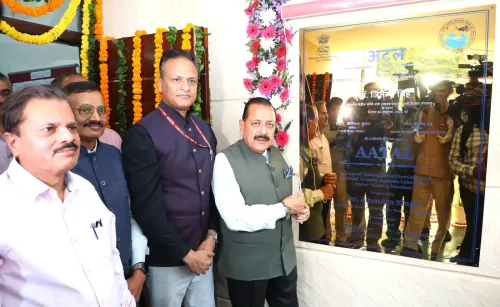
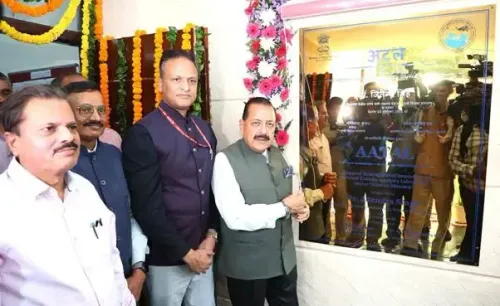
The lab was inaugurated by Minister of State Jitendra Singh in the presence of Ministry of Earth Sciences Secretary T.
Srinivasa Kumar , IITM Director A.
Suryachandra Rao , and IMD Director General Mrutyunjay Mahapatra .
The facility will generate real-time data and advance forecasts to help authorities determine which pollution sources to target and when.
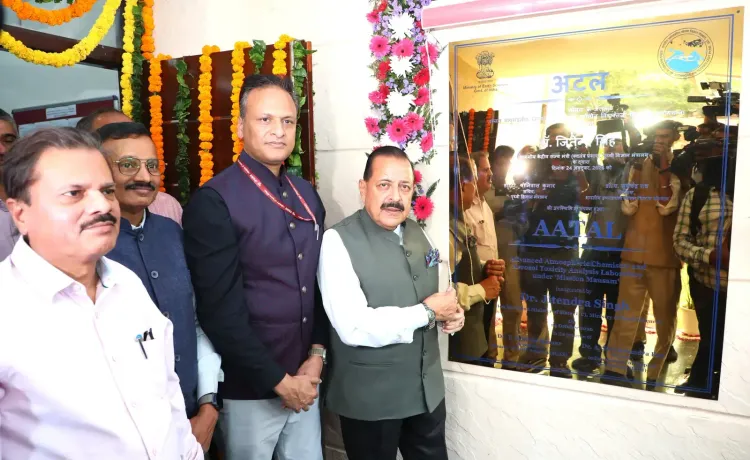
The Integrated Atmospheric Chemistry and Aerosol Toxicity Analysis Laboratory (AATAL) — described as the world's first-of-its-kind integrated air pollution analysis facility — was inaugurated for Delhi-National Capital Region (NCR) on Saturday, 24 October by Minister of State for Science and Technology and Earth Sciences Jitendra Singh. The facility is designed to enable real-time identification of the specific sources driving air pollution across the region, moving well beyond simply measuring pollution levels.
What AATAL Does
The laboratory brings together advanced atmospheric measurement instruments, detailed chemical analysis tools, pollution-source identification systems, and decision-support capabilities within a single integrated framework. According to an official statement, AATAL will help scientists distinguish between vehicular emissions, industrial activity, biomass and crop-residue burning, construction and road dust, and pollutants transported from surrounding regions.
Crucially, the facility is designed to go beyond reporting aggregate pollution indices. It will identify the precise composition of pollutants, their relative contributions from each source, and their potential health implications — while simultaneously generating real-time data and advance forecasts to support timely government intervention.
What the Minister Said
Jitendra Singh stated that Delhi-NCR was selected for this facility given the serious public concern over air quality in the region. He noted that India had made substantial progress over the past 10–12 years in air-quality forecasting but that AATAL represented a qualitative leap forward.
'Earlier, the discussion would largely revolve around whether the pollution level was 100 or 200. This facility will help us understand the composition of pollution as well as the contribution of different sources. This is important for addressing the concerns of the people of Delhi and ensuring that action is based on scientific evidence,' Singh said.
He added that by estimating the relative contribution of different pollution sources, the facility would help authorities identify which activities are driving poor air quality at any given time and where interventions would be most effective.
Mission Mausam and the Broader Context
AATAL has been established under Mission Mausam, announced by Prime Minister Narendra Modi, which aims to strengthen scientific understanding of atmospheric pollution and provide actionable evidence for air-quality management in Delhi-NCR. The initiative signals a shift in official approach — from reactive pollution alerts to evidence-based, source-specific policy action.
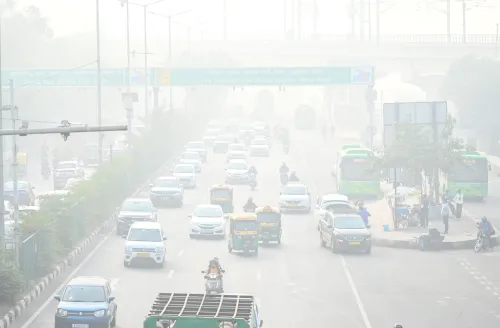
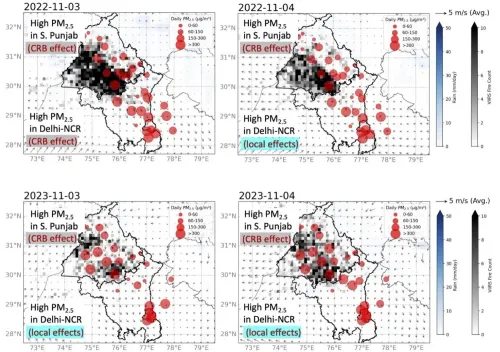
This comes amid recurring winters of hazardous air quality in Delhi-NCR, where debates over the relative contributions of stubble burning, vehicular traffic, and industrial emissions have often been contested without definitive scientific arbitration. AATAL is intended to resolve precisely those disputes with real-time data.
Who Was Present at the Launch
The inauguration took place at the Indian Institute of Tropical Meteorology (IITM)'s Delhi Branch. Senior officials in attendance included T. Srinivasa Kumar, Secretary of the Ministry of Earth Sciences; A. Suryachandra Rao, Director of IITM; and Mrutyunjay Mahapatra, Director General of the India Meteorological Department (IMD).
What Comes Next
With real-time source attribution now operationally possible, policymakers and pollution-control bodies in Delhi-NCR will have a scientific basis to prioritise interventions — whether targeting traffic corridors, industrial clusters, or agricultural burning — rather than relying on seasonal assumptions. How swiftly that data translates into on-ground regulatory action will determine the facility's real-world impact.
Point of View
Source-specific data that could settle the perennial blame game between states over stubble burning versus local traffic versus industry. The facility's scientific credibility will depend on how transparently its findings are published and whether pollution-control authorities are actually compelled to act on them. India has no shortage of air-quality monitoring infrastructure; what it has lacked is the political will to apply findings against powerful emitters. AATAL is a necessary condition for evidence-based air policy — but not a sufficient one.
NationPress
24 Oct 2026
Frequently Asked Questions
What is the AATAL facility launched in Delhi?
AATAL — the Integrated Atmospheric Chemistry and Aerosol Toxicity Analysis Laboratory — is described as the world's first integrated facility capable of identifying the specific sources of air pollution in real time. Launched at IITM's Delhi Branch on 24 October, it can distinguish between vehicular emissions, industrial activity, crop-residue burning, construction dust, and pollutants transported from surrounding regions.
Who launched the AATAL air pollution lab?
The facility was inaugurated by Minister of State for Science and Technology and Earth Sciences Jitendra Singh on 24 October. Senior officials including Ministry of Earth Sciences Secretary T. Srinivasa Kumar, IITM Director A. Suryachandra Rao, and IMD Director General Mrutyunjay Mahapatra were also present.
How is AATAL different from existing air quality monitoring systems?
Existing systems primarily report aggregate pollution levels such as AQI or PM2.5 concentrations. AATAL goes further by identifying the composition of pollutants, their specific sources, their relative contributions at any given time, and their potential health implications — while also generating advance forecasts to guide intervention.
What is Mission Mausam and how does AATAL relate to it?
Mission Mausam is an initiative announced by Prime Minister Narendra Modi aimed at strengthening India's scientific understanding of atmospheric conditions, including pollution. AATAL has been established as part of this mission to provide actionable, evidence-based support for air-quality management in Delhi-NCR.
Why was Delhi-NCR chosen for this facility?
According to Minister Jitendra Singh, Delhi-NCR was selected because of serious and sustained public concern over air pollution in the region. The area regularly records some of the world's worst air quality, particularly during winter months, making it a priority location for advanced source-attribution research.