Delhi-NCR gets first real-time air pollution source lab under Mission Mausam
Synopsis
Delhi-NCR just got its first facility that doesn't just measure how bad the air is — it identifies exactly what's in it and where it came from. AATAL, inaugurated on 24 October under Mission Mausam, can distinguish crop-burning from vehicular emissions in real time, giving policymakers the scientific evidence they have long lacked to enforce targeted action before winter smog peaks.
Key Takeaways
AATAL (Integrated Atmospheric Chemistry and Aerosol Toxicity Analysis Laboratory) was inaugurated on 24 October 2026 at IITM's Delhi Branch .
The facility identifies real-time sources of air pollution including vehicular emissions , crop-residue burning , industrial activity , construction dust , and regional transport .
It analyses PM2.5 , metals, toxic elements, and aerosol chemical composition using advanced instruments.
AATAL is established under Mission Mausam , announced by Prime Minister Narendra Modi .
Union Minister Dr Jitendra Singh said the lab shifts the focus from pollution levels to pollution composition and source attribution .
The inauguration was attended by senior officials from the Ministry of Earth Sciences , IITM , and IMD .
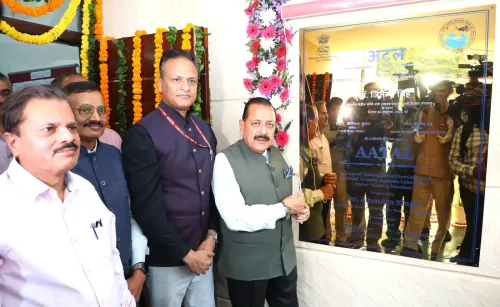
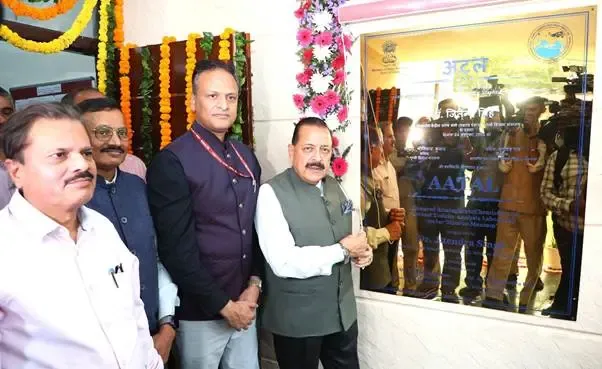
Union Minister of State (Independent Charge) for Science and Technology Dr Jitendra Singh on Saturday, 24 October 2026, inaugurated a first-of-its-kind air pollution analysis facility for the Delhi-NCR region, marking a significant shift from merely measuring pollution levels to identifying their precise sources in real time. The facility, called the Integrated Atmospheric Chemistry and Aerosol Toxicity Analysis Laboratory (AATAL), was launched at the Indian Institute of Tropical Meteorology (IITM)'s Delhi Branch.
What AATAL Is and What It Does
AATAL is designed to go well beyond conventional air-quality monitoring. The laboratory is equipped with advanced instruments for analysing the chemical composition of atmospheric gases and aerosols, including fine particulate matter (PM2.5), metals, toxic elements, and other components. Crucially, it can distinguish between different pollution sources — vehicular emissions, industrial activity, biomass and crop-residue burning, construction and road dust, and pollutants transported from surrounding regions.
By estimating the relative contribution of each source, the facility will allow authorities to pinpoint which activities are driving poor air quality at a given time and where interventions will be most effective. It also provides real-time information and advance forecasts to support timely policy action.
The Mission Mausam Connection
AATAL has been established under Mission Mausam, announced by Prime Minister Narendra Modi, to strengthen the scientific understanding of atmospheric pollution and deliver actionable evidence for air-quality management across Delhi-NCR. The initiative reflects a broader national push to upgrade meteorological and environmental science infrastructure.
The inauguration was attended by Dr T. Srinivasa Kumar, Secretary, Ministry of Earth Sciences; Dr A. Suryachandra Rao, Director, IITM; and Director General of the India Meteorological Department (IMD) Dr Mahapatra.
What the Minister Said
Dr Singh said Delhi-NCR was chosen in view of serious public concern over air pollution, and noted that India had made substantial progress in air-quality forecasting over the past 10–12 years. He stressed that the new facility represented a qualitative leap because it establishes not only how much pollution is present, but also what it consists of and where it originates.
'Earlier, the discussion would largely revolve around whether the pollution level was 100 or 200. This facility will help us understand the composition of pollution as well as the contribution of different sources. This is important for addressing the concerns of the people of Delhi and ensuring that action is based on scientific evidence,' Dr Singh said.
Why This Matters for Delhi's Air Crisis
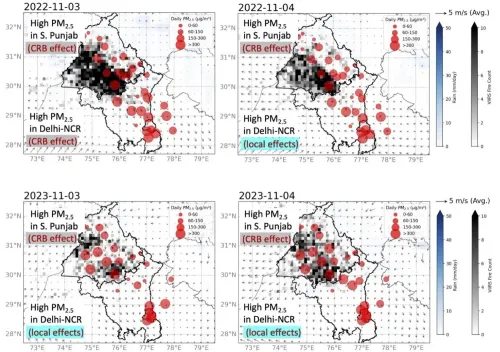
Delhi-NCR routinely records some of the worst air-quality indices in the world during the winter months, with debates over the relative contribution of stubble burning, vehicular exhaust, and industrial emissions often proving inconclusive for lack of granular, real-time data. AATAL is positioned to resolve precisely this ambiguity, providing a scientific basis for targeted interventions rather than blanket restrictions. Notably, this is the first integrated facility of its kind in the region, combining atmospheric measurement, chemical analysis, source identification, and decision-support capabilities within a single framework.
With winter smog season approaching, the commissioning of AATAL comes at a critical juncture for policymakers and pollution-control authorities in the National Capital Region.
Point of View
Delhi's air-quality debate has been paralysed by competing claims — is it stubble smoke, diesel trucks, or construction dust? Without source-attribution data, every agency could deflect responsibility. AATAL's real value is not in its instrumentation but in making evasion harder: when it can quantify that crop burning contributed, say, 35% on a given night, blanket denials become untenable. The risk is that the data becomes another input into the same slow-moving regulatory machinery that has failed Delhi's winters repeatedly. The lab is a necessary condition for better policy — but not, by itself, a sufficient one.
NationPress
24 Oct 2026
Frequently Asked Questions
What is AATAL and what does it do?
AATAL stands for Integrated Atmospheric Chemistry and Aerosol Toxicity Analysis Laboratory, inaugurated in New Delhi on 24 October 2026. It identifies the real-time sources of air pollution in Delhi-NCR — such as vehicular emissions, crop-residue burning, industrial activity, and construction dust — and analyses the chemical composition of PM2.5 and other aerosols.
Where is the AATAL facility located?
The facility is located at the Indian Institute of Tropical Meteorology (IITM)'s Delhi Branch. It was inaugurated in the presence of senior officials from the Ministry of Earth Sciences, IITM, and the India Meteorological Department.
What is Mission Mausam and how does AATAL fit into it?
Mission Mausam is an initiative announced by Prime Minister Narendra Modi to strengthen India's scientific understanding of atmospheric conditions. AATAL has been established under this mission specifically to provide evidence-based, real-time data for air-quality management in Delhi-NCR.
Why was Delhi-NCR chosen for this facility?
Union Minister Dr Jitendra Singh said Delhi-NCR was selected because of the serious and sustained public concern over air pollution in the region. The area consistently records among the worst air-quality indices in the country, particularly during winter months.
How is AATAL different from existing pollution monitoring systems?
Existing systems primarily report pollution levels, such as the Air Quality Index. AATAL goes further by identifying what pollutants are present, in what chemical form, and which specific sources — vehicles, industries, crop burning, or dust — are contributing and by how much at any given time, enabling targeted rather than blanket interventions.