MoES launches world-first air pollution lab for Delhi-NCR
Synopsis
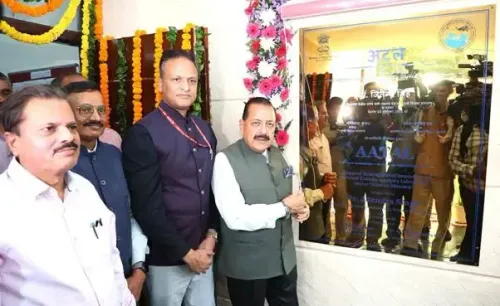
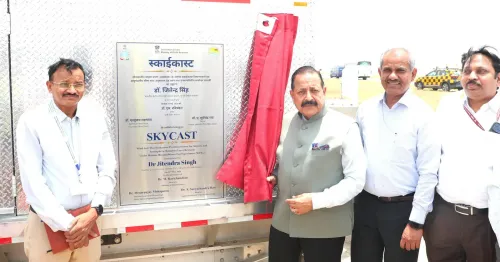
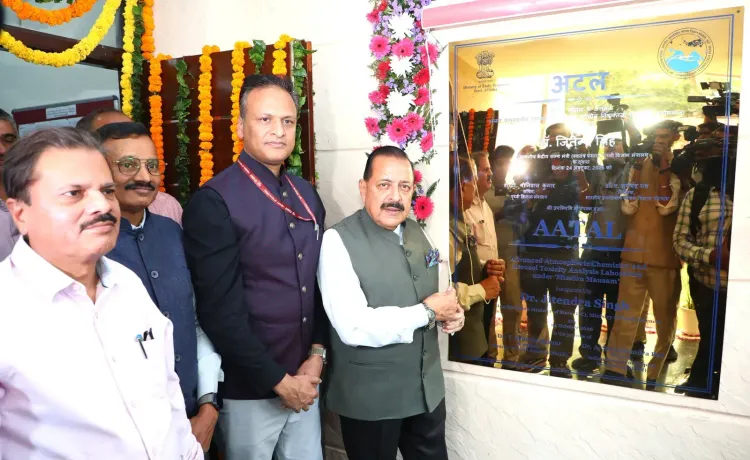
Union Minister Dr. Jitendra Singh inaugurated AATAL, the world's first integrated air pollution source-attribution laboratory, at IITM New Delhi on 24 October 2026. The Rs 80 crore facility under Mission Mausam will identify pollutant composition, sources, and health implications in real time, moving Delhi-NCR's air-quality management beyond AQI numbers to evidence-based action.
Key Takeaways
AATAL — Integrated Atmospheric Chemistry and Aerosol Toxicity Analysis Laboratory — inaugurated at IITM, New Delhi on 24 October 2026 .
Billed as the world's first-of-its-kind air pollution analysis facility, capable of real-time source attribution and aerosol toxicity assessment.
Established at a cost of Rs 80 crore under Mission Mausam , launched by Prime Minister Narendra Modi.
Tracks six source categories: vehicular emissions, industrial activity, biomass and crop-residue burning, construction dust, road dust, and trans-boundary pollutants .
Outputs designed to support GRAP decisions and other regulatory interventions with evidence-based, source-specific data.
Hosted by the Ministry of Earth Sciences at IITM , India's premier tropical meteorology research institution.
Delhi's air-quality battle just got a powerful new weapon — and this one does not just measure how bad the smog is; it tells you exactly why. Union Science and Technology Minister Dr. Jitendra Singh on Saturday, 24 October 2026, inaugurated the Integrated Atmospheric Chemistry and Aerosol Toxicity Analysis Laboratory (AATAL) at the Indian Institute of Tropical Meteorology (IITM), New Delhi, billing it as the world's first-of-its-kind 'Air Pollution Analysis' facility.
What AATAL does that no facility has done before
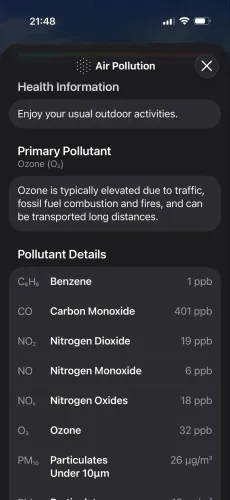
The shift is fundamental. Until now, the public conversation around Delhi's air zeroed in on a single number — an AQI reading of 100, 200, 300 — without ever unpacking what that number is made of. AATAL changes the terms of the debate entirely.
The laboratory is equipped to identify the composition of pollutants in real time, trace them back to their specific sources — vehicular emissions, industrial activity, biomass and crop-residue burning, construction and road dust, and trans-boundary pollutants drifting in from surrounding regions — and calculate the relative contribution of each. It can also assess the potential health implications of specific aerosol mixtures, a capability that goes well beyond any existing monitoring network in the country. Real-time data feeds and advance forecasts will support authorities in timing their interventions with precision.
Rs 80 crore and Mission Mausam's atmospheric ambition
The facility has been established at a cost of Rs 80 crore under Mission Mausam, the national atmospheric services initiative launched by Prime Minister Narendra Modi. Mission Mausam was designed to strengthen India's end-to-end weather, climate, and atmospheric science infrastructure — and AATAL now anchors its air-quality wing in the national capital region.
IITM, the host institute under the Ministry of Earth Sciences (MoES), is India's premier tropical meteorology research body and the same institution that runs the SAFAR (System of Air Quality and Weather Forecasting And Research) network. Embedding AATAL within IITM's existing data ecosystem means source-apportionment findings can be layered directly onto forecasts that already feed into regulatory decisions.
From GRAP triggers to evidence-based action
The policy implications are immediate. The Graded Response Action Plan (GRAP) — the NCR's tiered pollution-emergency framework — currently triggers restrictions based on AQI thresholds alone. With AATAL's source-attribution outputs, authorities will, for the first time, have the scientific evidence to act against the right source at the right moment, rather than applying blanket bans that may penalise sectors contributing little to that day's spike.
India's National Clean Air Programme (NCAP), launched in 2019 with a mandate to cut particulate concentrations in 131 non-attainment cities, and the Commission for Air Quality Management in NCR and Adjoining Areas, established by Act of Parliament in 2021, both identified the absence of robust source-apportionment data as a critical gap. AATAL is a direct answer to that gap — at least for Delhi-NCR.
The open question now is replication. Whether similar facilities will be commissioned for other severely polluted non-attainment cities — Patna, Lucknow, Ahmedabad, Kanpur — will determine whether AATAL marks the start of a national shift or remains a single flagship installation in the capital.
Point of View
Shifting the policy conversation from concentration thresholds to causal, source-level accountability — a transition that pollution-control frameworks like GRAP and NCAP have long needed. By embedding source-apportionment and toxicity data within a forecasting institution like IITM, the government is, in effect, pre-empting the perennial monsoon-to-winter political scramble over stubble burning versus industrial emissions versus vehicular pollution. The Rs 80 crore price tag under Mission Mausam also signals that atmospheric science is being treated as infrastructure, not an afterthought. The real test, however, is whether AATAL's findings will be formally integrated into GRAP trigger criteria and whether the model scales to other non-attainment cities beyond the national capital.
NationPress
24 Oct 2026
Frequently Asked Questions
What is AATAL and where is it located?
AATAL stands for Integrated Atmospheric Chemistry and Aerosol Toxicity Analysis Laboratory. It is located at the Indian Institute of Tropical Meteorology (IITM) in New Delhi and was inaugurated on 24 October 2026 by Union Minister Dr. Jitendra Singh.
What makes AATAL different from existing air quality monitors in Delhi?
Unlike existing monitors that report pollution concentration levels (AQI numbers), AATAL identifies the chemical composition of pollutants, traces them to specific sources such as vehicular emissions or crop-residue burning, estimates each source's relative contribution, and assesses potential health implications — all in real time.
How much did AATAL cost and who funded it?
AATAL was established at a cost of Rs 80 crore under Mission Mausam, a national atmospheric services initiative launched by Prime Minister Narendra Modi and implemented by the Ministry of Earth Sciences.
What pollution sources can AATAL identify?
AATAL is designed to distinguish between vehicular emissions, industrial activity, biomass and crop-residue burning, construction dust, road dust, and pollutants transported from surrounding regions outside Delhi-NCR.
Will AATAL data be used for GRAP or pollution emergency decisions?
The facility is designed to provide real-time source attribution and advance forecasts that can support authorities in making more targeted interventions under frameworks such as the Graded Response Action Plan (GRAP), though formal integration into GRAP trigger criteria is a step to watch.