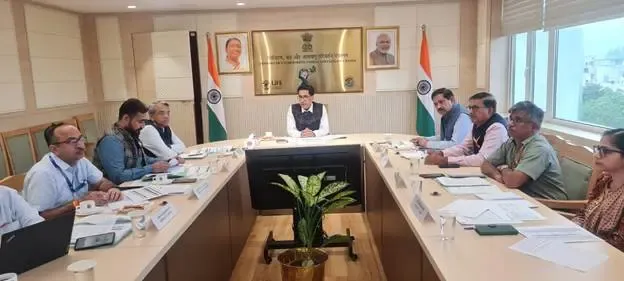
Environment Secretary Narendra Bhooshan reviews UP's air pollution plan for Delhi-NCR
Synopsis
With winter air quality emergencies now a near-annual crisis, Union Environment Secretary Narendra Bhooshan sat down with UP officials to stress-test 11 anti-pollution initiatives spanning EV deployment, stubble management, and waste processing — while a CAQM team was simultaneously in Punjab checking whether thermal power plants are actually co-firing paddy straw as directed.
Key Takeaways
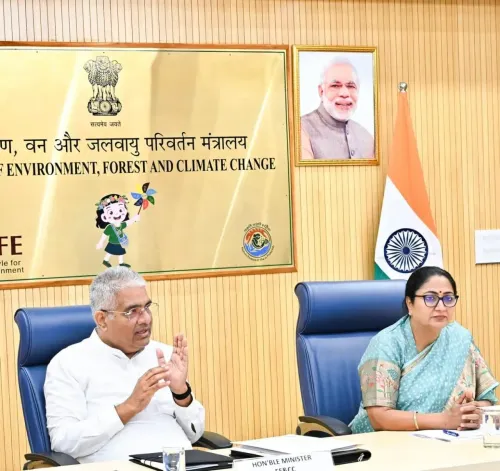
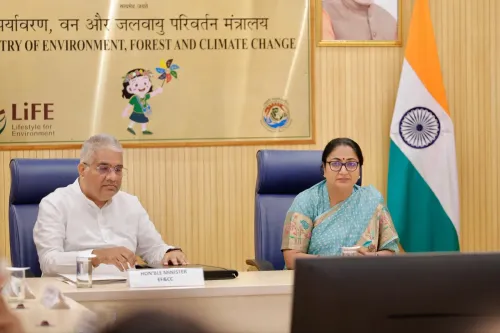
Union Environment Secretary Narendra Bhooshan reviewed UP's air pollution action plans for Delhi-NCR on 23 October .
The UP government presented 11 key initiatives covering road dust, construction waste, stubble burning, vehicular pollution, and industrial emissions.
Measures include deployment of electric buses , EV charging infrastructure , and solid waste processing capable of handling 100% of waste generated.
A CAQM team simultaneously visited Ropar , Hoshiyarpur , and Amritsar in Punjab to review paddy straw management and co-firing compliance at thermal power plants.
The reviews target winter preparedness ahead of the November–January period when Delhi-NCR air quality historically turns hazardous.
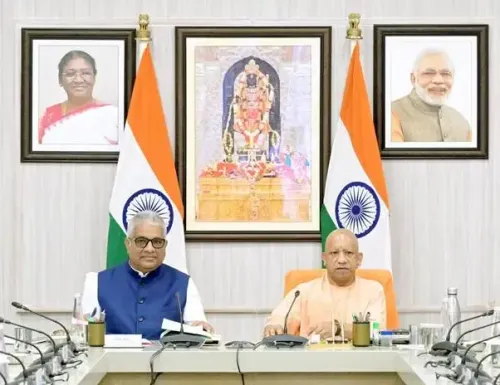
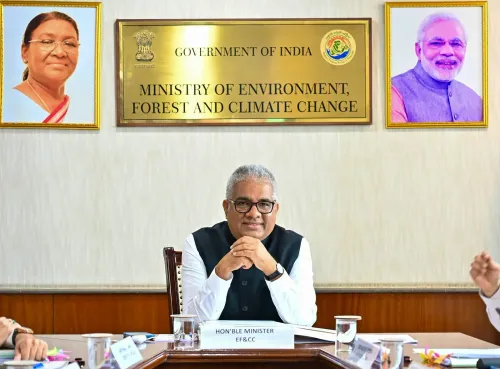
Union Environment Secretary Narendra Bhooshan on Friday, 23 October reviewed the action plans of the Uttar Pradesh government and urban local bodies to curb air pollution across Delhi-NCR ahead of the winter season — a period when the region routinely records hazardous air quality levels.
Key Interventions on the Table
The UP government presented 11 key initiatives already undertaken, along with a roadmap to achieve saturation of air quality improvement measures. The interventions span multiple pollution sources: road dust, construction and demolition (C&D) activities, open biomass burning, vehicular emissions, traffic decongestion, industrial pollution, greening drives, and paddy stubble management.
Among the interventions reviewed were the redevelopment of roads, decongestion measures at identified hotspots, and the deployment of electric buses and EV charging infrastructure — steps officials say have already achieved 'considerable progress', according to an official statement.
Waste Processing and Enforcement in Focus
Bhooshan also assessed measures for establishing solid waste processing facilities capable of handling 100 per cent of solid waste generation. The review covered remediation of legacy waste dump sites, C&D waste processing facilities, secondary collection centres, and monitoring and enforcement of pollution control norms at construction sites and industrial units.
CAQM Team Visits Punjab for Stubble Management Review
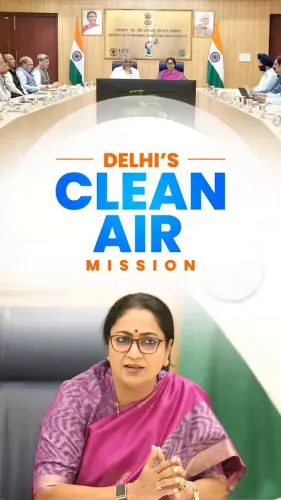
The review in Delhi came on the same day a team led by the Chairperson of the Commission for Air Quality Management (CAQM) in NCR and Adjoining Areas undertook field visits to thermal power plants, compressed biogas (CBG) plants, a Krishi Vigyan Kendra (KVK), farm fields, and a biomass plant across Ropar, Hoshiyarpur, and Amritsar in Punjab.
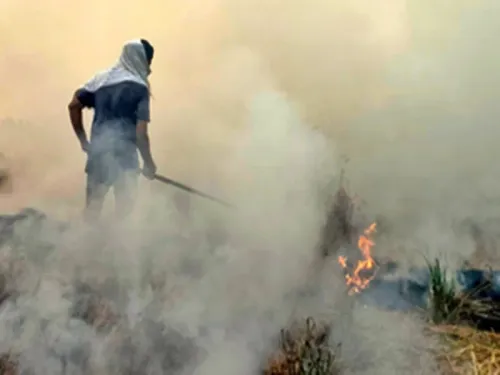
The team took stock of both in-situ and ex-situ measures being implemented for effective paddy straw management during the ongoing harvesting season — the window when stubble burning incidents spike and contribute significantly to Delhi's air quality crisis.
CAQM Directives and Machinery Assessment
The CAQM directed state authorities to achieve co-firing targets in thermal power plants, with a specific emphasis on compliance with emission norms. During the KVK visit, the team witnessed live demonstrations of machinery for in-situ and ex-situ straw management and evaluated the adequacy of equipment available to farmers. The team also reviewed arrangements for maximum utilisation of paddy straw in thermal power and biomass plants under ex-situ management protocols.
This comes amid growing pressure on both the Centre and state governments to demonstrate measurable winter preparedness, with Delhi's air quality index historically breaching the 'severe' category between November and January. Whether this round of reviews translates into enforcement on the ground will be closely watched.
Point of View
But the structural problem — paddy stubble burning driven by agronomic economics, not just enforcement gaps — resists top-down review cycles. The simultaneous CAQM field visit to Punjab's thermal plants signals some recognition that co-firing targets need ground-truth verification, not just ministerial sign-off. Until independent, real-time monitoring of stubble incidents and industrial compliance is publicly accessible, the gap between reviewed plans and breathable air will persist.
NationPress
23 Oct 2026
Frequently Asked Questions
What did Environment Secretary Narendra Bhooshan review on 23 October?
Narendra Bhooshan reviewed the Uttar Pradesh government's action plans and urban local body measures to combat air pollution in Delhi-NCR and prepare for the winter season. The review covered 11 key initiatives addressing road dust, construction waste, vehicular pollution, stubble burning, and industrial emissions.
What are UP's 11 key air pollution initiatives for Delhi-NCR?
The UP government presented 11 initiatives targeting multiple pollution sources, including road redevelopment, traffic decongestion at hotspots, electric bus deployment, EV charging infrastructure, solid waste processing, C&D waste management, and paddy stubble management. Officials stated that several measures have already achieved considerable progress.
What is the CAQM doing about stubble burning in Punjab?
A team led by the CAQM Chairperson visited thermal power plants, CBG plants, a Krishi Vigyan Kendra, farm fields, and a biomass plant in Ropar, Hoshiyarpur, and Amritsar on 23 October. The team reviewed in-situ and ex-situ paddy straw management measures and directed state authorities to meet co-firing targets in thermal power plants with strict emission norm compliance.
Why does Delhi-NCR air quality worsen in winter?
Delhi-NCR routinely records hazardous air quality between November and January due to a combination of factors: paddy stubble burning in Punjab and Haryana, temperature inversions that trap pollutants, vehicular and industrial emissions, and construction dust. The Centre and state governments conduct pre-winter reviews each year to try to limit the seasonal deterioration.
Who is responsible for overseeing air quality in the Delhi-NCR region?
The Commission for Air Quality Management (CAQM) in NCR and Adjoining Areas is the apex statutory body overseeing pollution control measures across Delhi-NCR and neighbouring states. The Union Ministry of Environment, Forest and Climate Change also coordinates with state governments and urban local bodies through the Environment Secretary's office.