Piyush Goyal Meets Siemens Healthineers CEO on MedTech Push
Synopsis
Commerce Minister Piyush Goyal met Siemens Healthineers AG CEO Bernd Montag on October 23, 2026, to explore deepening the German MedTech giant's India presence through AI-driven diagnostics, digitalisation, and affordable healthcare solutions aligned with India's PLI and digital health frameworks.
Key Takeaways
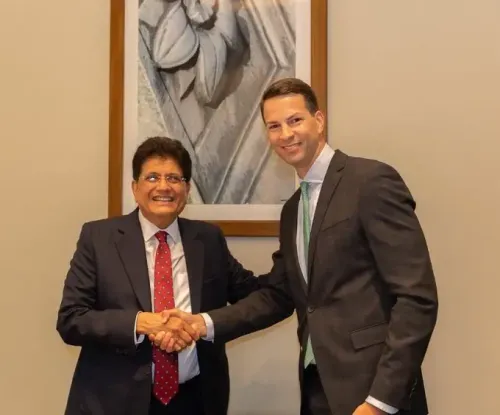
Union Commerce Minister Piyush Goyal held a focused meeting with Bernd Montag , CEO of Siemens Healthineers AG , on October 23, 2026 .
The discussion centred on strengthening Siemens Healthineers' India presence in MedTech, digitalisation, and AI-driven healthcare solutions .
India's PLI scheme for medical devices (notified 2020) aims to reduce import dependence and boost domestic manufacturing — a key policy backdrop.
The National Digital Health Mission (launched 2020) provides the infrastructure architecture that a global MedTech partner could plug into.
No formal MoU or investment figure was announced; follow-up commitments could emerge in trade policy reviews or the next Union Budget.
The minister framed India's expanding infrastructure and accessible-care focus as 'immense opportunities' for advancing medical technology and AI diagnostics.
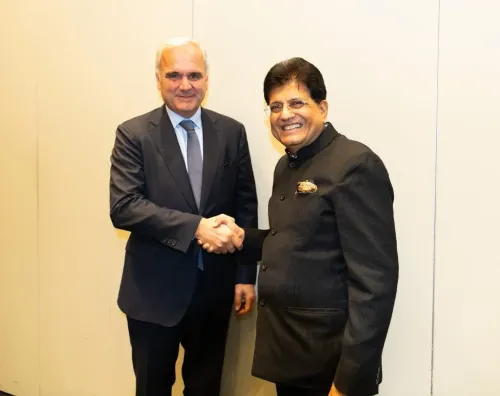
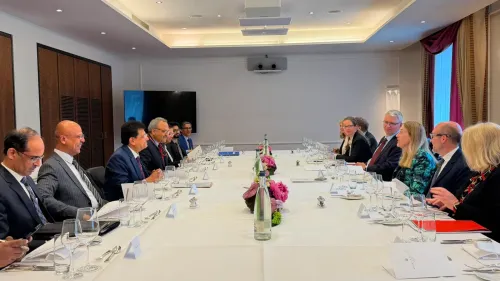
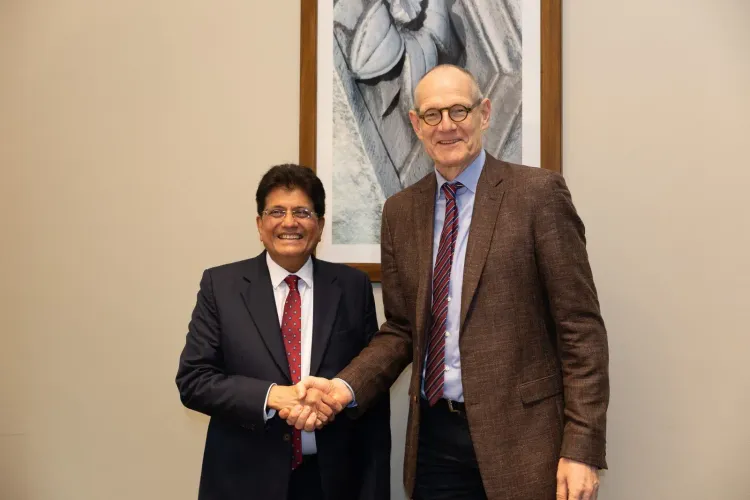
India's healthcare ambitions landed on a global stage on Friday, October 23, 2026, when Union Commerce and Industry Minister Piyush Goyal held a focused discussion with Bernd Montag, CEO of Siemens Healthineers AG, on deepening the German MedTech giant's footprint in India and co-creating solutions in medical technology, digitalisation, and AI-driven care.
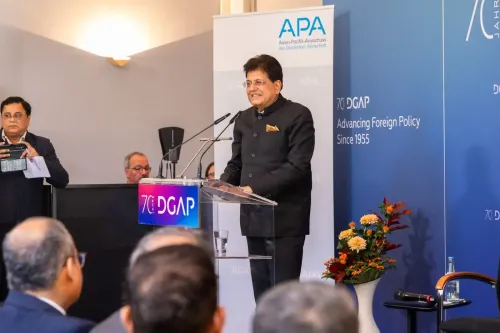
Goyal described the meeting as 'engaging,' flagging India's expanding healthcare sector, growing infrastructure, and commitment to accessible care as the pillars that make the country 'an immense opportunity' for advancing MedTech innovation. The conversation zeroed in on bringing quality healthcare closer to every Indian — a framing that signals interest in reaching tier-2 and tier-3 cities, not just metro hospitals.
Why Siemens Healthineers Is a Strategic Fit
Siemens Healthineers AG, headquartered in Erlangen, Germany, is a global frontrunner in AI-enabled medical imaging, laboratory diagnostics, and digital health platforms. Its product stack — from advanced MRI systems to point-of-care testing — maps almost perfectly onto the gaps India's public health system is working to close. A deeper partnership would mean more than equipment sales; it would entail co-development, localised manufacturing, and technology transfer.
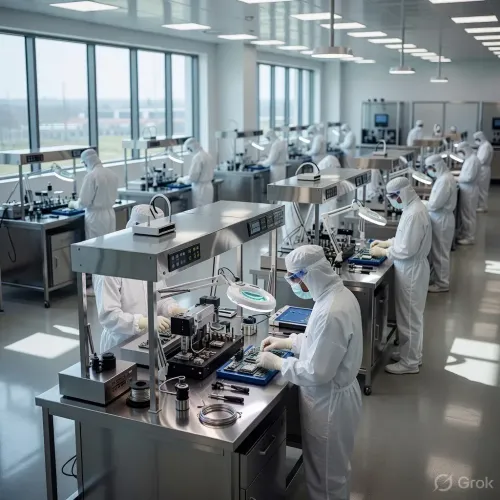
That manufacturing angle matters enormously. India's Production Linked Incentive (PLI) scheme for medical devices, notified in 2020, was designed precisely to reduce the country's heavy dependence on imported diagnostics and imaging equipment — a vulnerability the pandemic exposed sharply. An expanded Siemens Healthineers presence could dovetail with PLI targets and generate domestic supply-chain depth.
Digital Health and AI: The Bigger Architecture
The discussion's emphasis on 'digitalisation and AI-driven solutions' points to a second policy track: the National Digital Health Mission, also launched in 2020, which is building unified digital infrastructure for electronic health records and telemedicine. A global MedTech leader plugging into that architecture could accelerate the mission's reach — particularly in remote districts where trained radiologists are scarce and AI-assisted diagnostics can substitute for specialist scarcity.
India has been methodically courting FDI in healthcare manufacturing and services since the pandemic rewired global supply chains. Successive governments have tied expanded health infrastructure to digitalisation as an explicit access strategy. Goyal's meeting with Montag fits cleanly into that arc — a Commerce Minister pitching not just market size but policy readiness.
What the Meeting Could Yield
No formal MoU or investment figure was announced. But ministerial-level engagement at this specificity — a CEO, a Commerce Minister, a defined agenda around MedTech and AI — is rarely the opening move. The conversation sets the stage for follow-up commitments that could surface in a foreign trade policy review or in the next Union Budget, where MedTech incentives have been a recurring ask from the industry.
For India's healthcare ambition, the logic is straightforward: world-class diagnostics and imaging, made affordable and made in India, is the difference between a health system that catches disease early and one that manages crisis late. Goyal is evidently looking to close that gap — one CEO meeting at a time.
Point of View
New Delhi signals it wants technology transfer and domestic capacity, not just market access for foreign firms. The timing is significant: with the PLI scheme for medical devices maturing and the National Digital Health Mission scaling, a marquee partner like Siemens Healthineers would validate both schemes simultaneously. Watch whether this translates into a formal investment pledge before the next Union Budget — that would be the real proof of momentum.
NationPress
23 Oct 2026
Frequently Asked Questions
Who is Bernd Montag and why did Piyush Goyal meet him?
Bernd Montag is the CEO of Siemens Healthineers AG, a German multinational that leads in AI-enabled medical imaging, diagnostics, and digital health. Goyal met him on October 23, 2026, to discuss expanding the company's India footprint in MedTech and affordable healthcare.
What is the PLI scheme for medical devices in India?
The Production Linked Incentive scheme for medical devices was notified in 2020 to incentivise domestic manufacturing of critical healthcare equipment and reduce India's dependence on imports, particularly after supply vulnerabilities exposed by the COVID-19 pandemic.
What is India's National Digital Health Mission?
Launched in 2020, the National Digital Health Mission aims to build a unified digital health infrastructure in India, enabling electronic health records, telemedicine, and interoperability across healthcare providers.
What did India and Siemens Healthineers agree on at the meeting?
No formal MoU or specific investment figure was announced following the discussion; the meeting focused on exploring opportunities in MedTech innovation, digitalisation, and AI-driven solutions for India's growing healthcare sector.
How is India attracting FDI in the healthcare sector?
India has pursued a combination of PLI incentives for medical device manufacturing, digital health infrastructure development, and high-level ministerial engagement with global MedTech leaders to attract foreign direct investment and technology partnerships in healthcare.