Piyush Goyal meets Bayer Pharma chief on India expansion
Synopsis
Commerce Minister Piyush Goyal met Bayer Pharmaceuticals Division President Stefan Oelrich on October 23, 2026, to explore the German multinational's expansion into India's healthcare ecosystem through investment, innovation, and collaboration — aligning with India's PLI and Make in India pharma strategy.
Key Takeaways
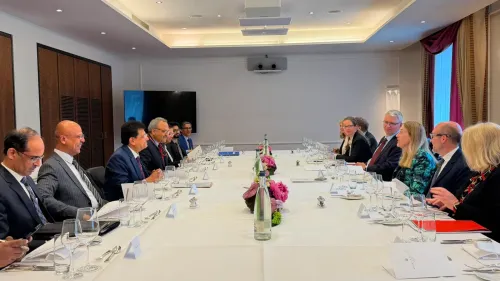
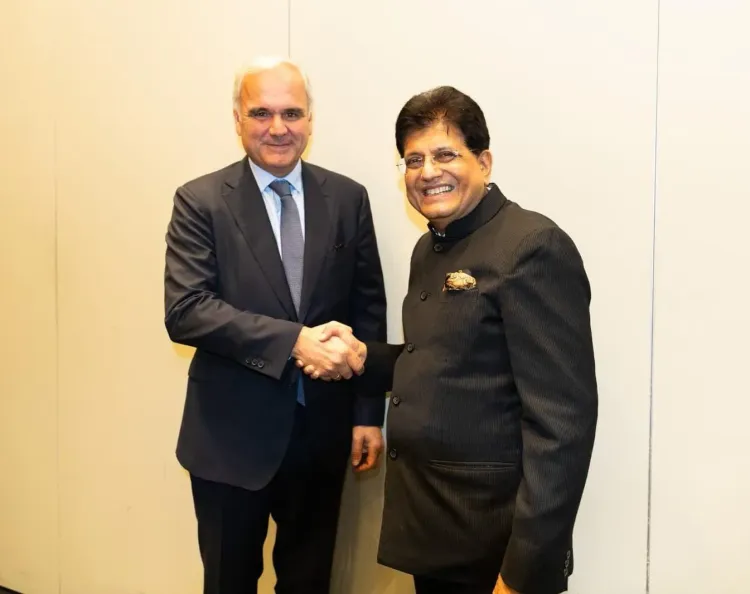
Commerce Minister Piyush Goyal met Stefan Oelrich , President of Bayer 's Pharmaceuticals Division, on October 23, 2026 .
Discussions centred on Bayer's expansion plans in India and opportunities for greater investment, innovation, and collaboration in the healthcare ecosystem.
Bayer already has long-standing operations in India across pharmaceuticals, consumer health, and crop science.
India's PLI scheme for pharmaceuticals , launched in 2020 , forms the policy backbone for attracting multinational pharma investment of this kind.
The meeting reflects India's broader Make in India drive to position the country as a global pharma manufacturing and innovation hub, not just a generics exporter.
No specific investment figures or timelines were publicly disclosed from the meeting.
India's pharmaceutical ambitions got a high-profile interlocutor on Friday, October 23, 2026, when Union Commerce and Industry Minister Piyush Goyal sat down with Stefan Oelrich, President of the Pharmaceuticals Division at Bayer, to explore the German giant's deeper footprint in the country's fast-growing healthcare economy.
What was on the table at the Bayer meeting
Goyal described the conversation as covering 'Bayer's expansion plans in India and opportunities to deepen its engagement in our robust healthcare ecosystem through greater investment, innovation and collaboration.' The framing — investment, innovation, collaboration — tracks the three pillars India has consistently deployed when courting multinational pharma capital, and it positions Bayer as a potential anchor investor rather than a peripheral supplier.
Oelrich leads all global pharmaceutical operations for Bayer, a multinational that already has long-standing operations in India spanning pharmaceuticals, consumer health, and crop science. His presence at a bilateral meeting with a Cabinet minister signals that any expansion discussions are happening at the highest decision-making level of the organisation.
India's PLI push and the Make in India pharma play
The meeting sits squarely inside a broader policy drive. India launched the Production Linked Incentive (PLI) scheme for pharmaceuticals in 2020, offering financial incentives to attract large-scale manufacturing investments and upgrade the sector's innovation quotient. The scheme is a cornerstone of the Make in India framework, which seeks to turn the country into a global manufacturing and research hub — not just the world's generic-drug dispensary.
Foreign direct investment from established multinationals like Bayer carries a specific premium in this strategy: it brings proprietary technology, clinical-research infrastructure, and supply-chain credibility that domestic PLI incentives alone cannot manufacture. A commitment from a firm of Bayer's scale would reinforce India's pitch that it can absorb and reward sophisticated, innovation-led capital — not just cost-arbitrage plays.
What a Bayer deepening would mean for India's healthcare ecosystem
India is already the world's largest supplier of generic medicines by volume. The next frontier — which both government and industry insist on — is becoming a hub for original research, high-value biologics, and next-generation drug development. Bayer's global pharma portfolio spans oncology, cardiology, and women's health, areas where India's growing patient population and expanding private-insurance base create a compelling commercial case alongside the policy incentives.
No specific investment figures or timelines emerged from the meeting as disclosed publicly, and Goyal's post did not specify a location for the talks. But the ministerial-level engagement itself is a signal — deals of this nature typically begin exactly here, in a room where a Cabinet minister and a global divisional president agree the conversation is worth continuing.
Watch for a follow-up announcement: when Bayer's board cycle meets and India's FDI and PLI guidelines are next reviewed, this meeting may well have planted the seed of the headline that follows.
Point of View
Landing a deeper Bayer commitment would validate the PLI scheme's ambition to graduate beyond generic-drug incentives toward innovation-led FDI. The timing also matters — as global pharma supply chains are being actively restructured away from single-country dependence, India's pitch to multinationals is sharper than it has been in a decade. The real test will be whether this meeting generates a binding investment announcement, or remains one of many exploratory engagements that populate a minister's calendar.
NationPress
23 Oct 2026
Frequently Asked Questions
Why did Piyush Goyal meet Bayer's pharma chief?
Commerce Minister Piyush Goyal met Stefan Oelrich , President of Bayer's Pharmaceuticals Division, on October 23, 2026 , to discuss Bayer's expansion plans in India and explore deeper investment, innovation, and collaboration in the country's healthcare ecosystem.
What is Bayer's current presence in India?
Bayer is a German multinational with long-standing operations in India across three segments: pharmaceuticals, consumer health, and crop science.
How does India's PLI scheme relate to this meeting?
India's Production Linked Incentive (PLI) scheme for pharmaceuticals , launched in 2020 , offers financial incentives to attract large-scale manufacturing investment and innovation. Meetings like this with global firms such as Bayer are part of the government's effort to leverage the scheme to draw in multinational capital and technology.
Did Bayer announce any investment in India at this meeting?
No specific investment figures or timelines were publicly disclosed from the meeting. The talks focused on exploring expansion opportunities and were described as a discussion of future engagement.
What sectors is Bayer's pharma division active in globally?
Bayer's global pharmaceuticals portfolio spans areas including oncology, cardiology, and women's health, making it a significant potential partner for India's ambitions in high-value drug development and biologics.