Goyal Hails India's Pharma Industry as Global Health Pillar
Synopsis
Union Commerce Minister Piyush Goyal on June 8, 2026, lauded India's pharmaceutical industry for its resilience, innovation, and commitment to global health, reinforcing government backing for a sector that underpins both economic growth and India's soft power as the world's leading supplier of affordable generic medicines.
Key Takeaways
Union Commerce and Industry Minister Piyush Goyal publicly praised India's pharma sector on June 8, 2026 for resilience, innovation, and global health commitment.
India is a leading global supplier of affordable generic medicines, often called the 'pharmacy of the world.' The Production Linked Incentive (PLI) scheme for pharmaceuticals , notified in 2020 , has been a key driver of domestic manufacturing expansion.
The sector has grown under Make in India and Atmanirbhar Bharat frameworks, with exports reaching North America , Europe , and Africa .
Upcoming PLI performance reviews and bilateral trade agreements with pharma market-access clauses are the next major policy milestones to watch.
Union Commerce and Industry Minister Piyush Goyal on Monday, June 8, 2026, praised India's pharmaceutical sector for its resilience, innovation, and contribution to global health, reaffirming the government's recognition of the industry as a strategic national asset.
Context
In his post on X, Goyal stated that 'India's pharmaceutical industry continues to make the nation proud through its resilience, innovation, and commitment to global health.' The message underscores the sector's dual role as both an economic engine and a vehicle for India's soft power on the world stage. The minister's remarks come as the industry maintains its position as a leading global supplier of affordable generic medicines.
Policy Backdrop
India's pharma sector has grown significantly under the Make in India and Atmanirbhar Bharat frameworks, which have prioritised domestic manufacturing capacity and reduced import dependence. The Production Linked Incentive (PLI) scheme for pharmaceuticals, notified in 2020, has been a cornerstone of this push, offering financial incentives to manufacturers who scale up output and meet quality benchmarks. Successive governments have also pursued regulatory reforms aligned with international standards to strengthen the sector's credibility in export markets.
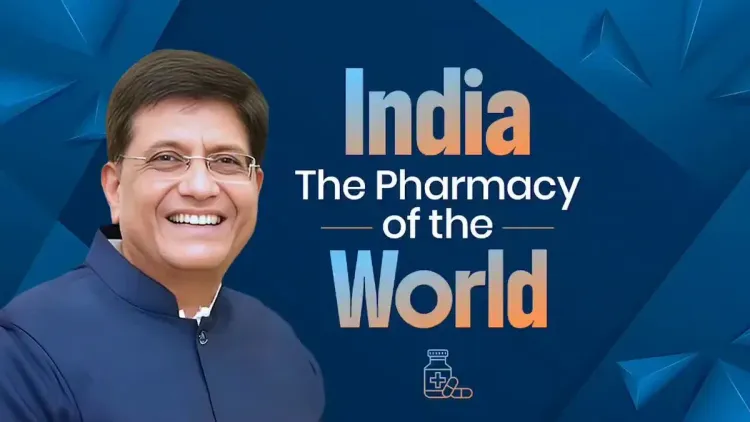
India is widely recognised as the 'pharmacy of the world,' supplying generic medicines to developing nations and playing a critical role in global health supply chains. Export incentive programmes and quality-upgrade initiatives have further reinforced the sector's competitive edge in regulated markets across North America, Europe, and Africa.
Stakeholders and Impact
Generic manufacturers and pharma exporters stand at the centre of this narrative, benefiting from policy support while bearing the responsibility of meeting stringent international quality norms. For developing countries, India's affordable medicines remain a lifeline, making the sector's health a matter of global concern. Domestic consumers also benefit from a robust manufacturing base that keeps medicine prices competitive within India.
The minister's public affirmation signals continued political backing for the industry, which is important for investor confidence and for companies navigating complex regulatory environments abroad. Industry bodies and exporters are likely to view the statement as an endorsement ahead of upcoming PLI performance reviews and ongoing trade negotiations that include pharmaceutical market-access provisions.
What's Next
The next round of PLI scheme performance reviews will be closely watched by manufacturers seeking to assess disbursements and compliance timelines. Bilateral trade agreements currently under negotiation that carry pharmaceutical market-access clauses could significantly expand India's export footprint in the near term. The government's sustained emphasis on the sector suggests that further policy measures — whether in the form of export facilitation or research-and-development incentives — remain on the table as India looks to consolidate its position in global health supply chains.
Point of View
Though brief, is a deliberate signal of political capital invested in the pharmaceutical sector at a time when global supply-chain realignments are creating both opportunities and pressures for Indian exporters. It fits a consistent pattern of senior government figures using public platforms to reinforce the 'pharmacy of the world' brand, which serves both trade diplomacy and domestic industrial-policy goals. The timing ahead of PLI reviews and ongoing trade negotiations suggests the statement is as much a message to industry stakeholders as it is to a general audience. For the BJP, championing pharma aligns neatly with the Atmanirbhar Bharat narrative of self-reliance translating into global leadership.
NationPress
22 Oct 2026
Frequently Asked Questions
Why did Piyush Goyal praise the Indian pharmaceutical industry?
Goyal praised the sector for its resilience, innovation, and commitment to global health, reflecting the government's ongoing policy emphasis on pharma as a strategic export and soft-power asset under frameworks like Make in India and Atmanirbhar Bharat.
What is India's role in the global pharmaceutical industry?
India is one of the world's largest suppliers of affordable generic medicines, often described as the 'pharmacy of the world,' exporting to developing and developed nations across Africa, North America, and Europe.
What is the PLI scheme for pharmaceuticals in India?
The Production Linked Incentive scheme for pharmaceuticals was notified in 2020 to boost domestic manufacturing capacity, reduce import dependence, and incentivise companies to scale up production and meet international quality standards.
How does India's pharma sector contribute to the economy?
The pharmaceutical sector is a major export earner and employer, benefiting from government incentives, regulatory reforms, and growing global demand for affordable generic medicines, all of which contribute to India's industrial and trade growth.
What are the next steps for India's pharmaceutical policy?
Key upcoming developments include the next round of PLI scheme performance reviews and bilateral trade agreement negotiations that include pharmaceutical market-access provisions, both of which could shape the sector's growth trajectory.