Piyush Goyal invites global pharma firms to partner India's $60 bn innovation push
Synopsis
India's $60 billion pharmaceutical industry could double in five years — that's Commerce Minister Piyush Goyal's pitch to global pharma at GDRC 2026's curtain-raiser. With the world's largest count of US FDA-approved plants outside America and 65–70% of WHO vaccine supply, India is no longer just the world's pharmacy; it's angling to be its innovation partner.
Key Takeaways
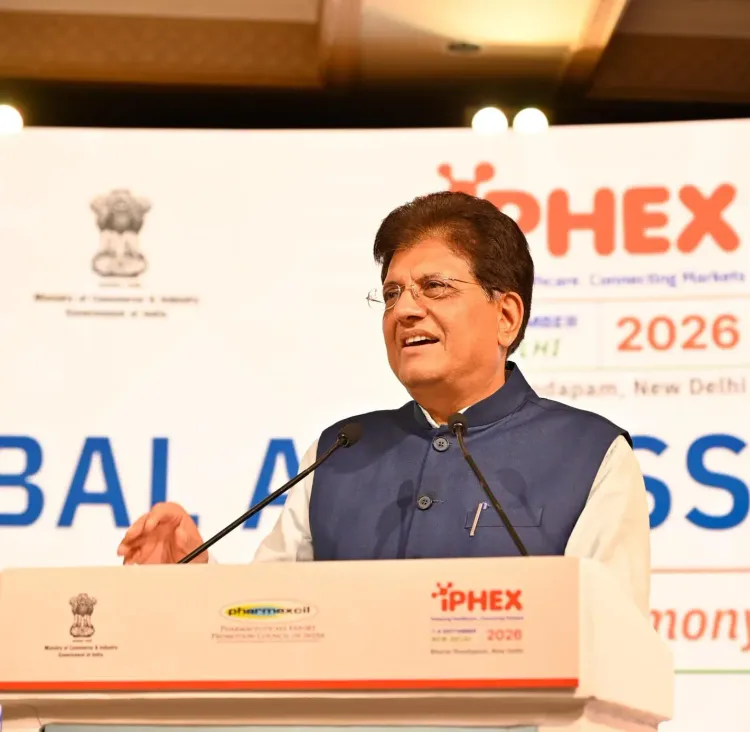
Commerce Minister Piyush Goyal invited global pharma firms to partner India at the GDRC 2026 and IPHEX 2026 curtain-raiser in New Delhi on Monday .
India's pharmaceutical industry is currently valued at around $60 billion and could double over the next five years , according to Goyal.
India holds the highest number of US FDA -approved pharma manufacturing plants outside the United States and supplies 65–70% of WHO vaccine requirements.
India's patent filings have risen by nearly 100 per cent in recent years, signalling a shift toward innovation.
India has signed nine Free Trade Agreements covering more than 50 countries , with zero-duty access for many pharma products.
India's economy grew 7.7 per cent at constant prices in the year ended March 2026 , remaining the world's fastest-growing large economy.
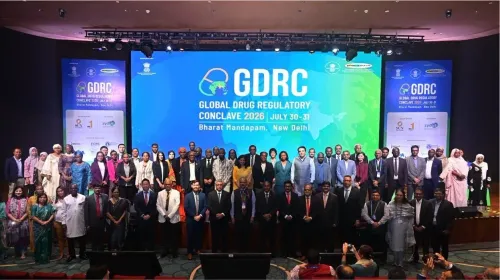
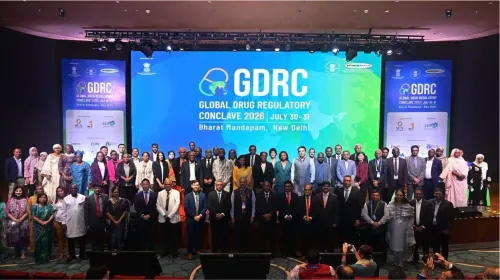
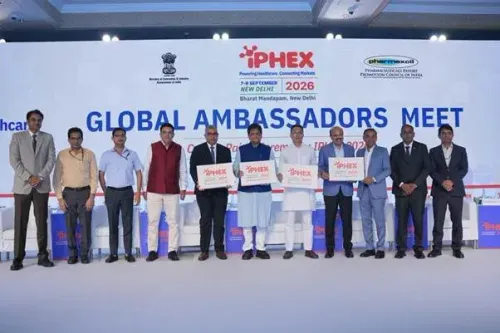
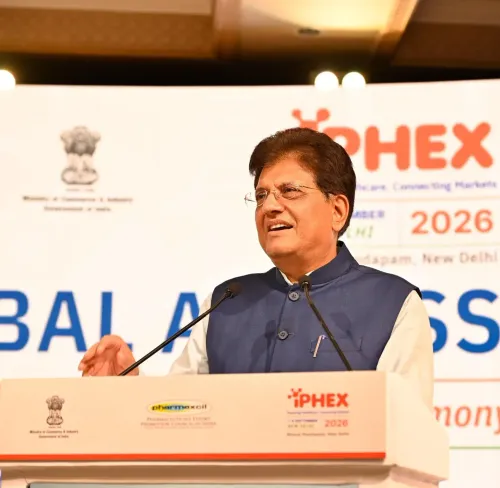
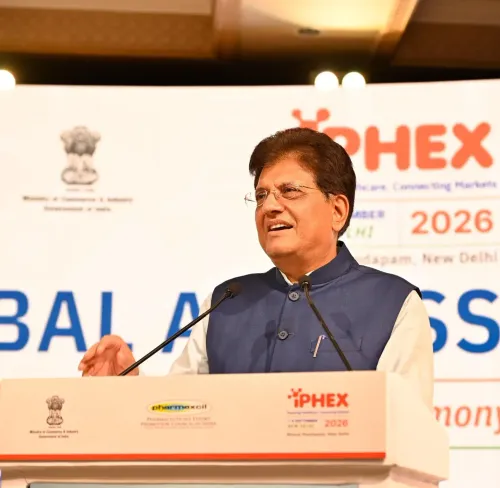
Commerce Minister Piyush Goyal on Monday called on global pharmaceutical companies to partner with India as the country pivots from generic medicine manufacturing toward innovation-driven healthcare, stating that India's pharmaceutical industry — currently valued at around $60 billion — has the potential to double in size over the next five years. He made the remarks at the Global Ambassador Meet on Pharmaceutical Sector and the curtain-raiser ceremony for GDRC (Global Drug Regulatory Conclave) 2026 and IPHEX (International Pharmaceuticals and Healthcare Exhibition) 2026 in New Delhi.
India's Pharma Ambition: Beyond Generics
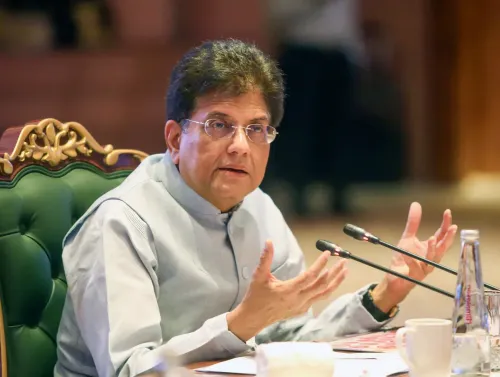
Goyal said India sees itself as an integral part of global pharmaceutical supply chains — not merely as a supplier of affordable generics, but as a trusted partner in innovation, technology, clinical trials, and manufacturing. He underlined that India is prepared to provide market access to high-quality innovative pharmaceutical products from partner countries in return.
On the significance of generics, Goyal noted that while generic medicines account for 80–90 per cent of the volume of medicines sold in the United States, they represent only about 10–15 per cent of the value — a statistic he used to underscore the affordability and societal contribution of Indian pharma to global healthcare.
Manufacturing Credentials and Global Standing
India's pharmaceutical manufacturing base carries considerable global weight. Approximately 65–70 per cent of World Health Organisation (WHO) vaccine requirements are sourced from India, and 10 of the world's 25 largest generic pharmaceutical companies operate from Indian soil. Notably, India holds the highest number of US FDA-approved pharmaceutical manufacturing plants outside the United States.
Goyal also said India has aligned its Good Manufacturing Practices (GMP) framework with global benchmarks, strengthening its case as a reliable partner for regulated markets worldwide.
Innovation Push: Patents and Trade Access
On the innovation front, the minister pointed out that India's patent filings have increased by nearly 100 per cent in recent years. He added that under Prime Minister Narendra Modi's leadership over the past 12 years, expanding India's international industrial footprint has been a stated priority.
India has entered into nine Free Trade Agreements in recent years, with trade agreements now covering more than 50 countries and preferential market access — including zero-duty access for many pharmaceutical products — available across most of the developed world. This comes amid global headwinds, including conflicts in Ukraine and West Asia and the imposition of 50 per cent tariffs by the United States.
Economic Context
Goyal situated the pharma push within India's broader economic trajectory, noting that India's economy grew by 7.7 per cent at constant prices during the year ended March 2026, making it the world's fastest-growing large economy even amid global turbulence.
With the GDRC 2026 and IPHEX 2026 events on the horizon, the minister's address signals that India intends to use these platforms to deepen regulatory cooperation and attract pharmaceutical investment at scale.
Point of View
But the leap from generic volume to innovation value is harder than a patent-filing metric suggests. A near-100% rise in patent filings sounds impressive, but the quality, commercialisation rate, and revenue contribution of those patents remain unquantified. The real test of India's innovation ambition will be whether domestic R&D spending rises to match global peers, or whether 'innovation-led' remains a diplomatic talking point layered over a generics-dominant reality.
NationPress
26 Oct 2026
Frequently Asked Questions
What did Commerce Minister Piyush Goyal announce for India's pharmaceutical sector?
Goyal invited global pharmaceutical companies to partner with India as it moves from generics toward innovation-driven healthcare, stating the industry — currently worth around $60 billion — can double in five years. He spoke at the Global Ambassador Meet ahead of GDRC 2026 and IPHEX 2026 in New Delhi.
Why is India considered a global pharmaceutical hub?
India holds the highest number of US FDA-approved pharmaceutical manufacturing plants outside the United States and supplies 65–70 per cent of WHO vaccine requirements. Ten of the world's 25 largest generic pharmaceutical companies operate from India.
How has India's trade access benefited its pharma sector?
India has signed nine Free Trade Agreements covering more than 50 countries, securing preferential and zero-duty access for many pharmaceutical products across most of the developed world. This gives Indian pharma firms a structural cost and access advantage in major regulated markets.
What is India's innovation record in pharmaceuticals?
India's patent filings have increased by nearly 100 per cent in recent years, according to Goyal. The government has also aligned its Good Manufacturing Practices framework with global benchmarks to strengthen India's standing as an innovation and manufacturing partner.
What are GDRC 2026 and IPHEX 2026?
GDRC stands for Global Drug Regulatory Conclave and IPHEX is the International Pharmaceuticals and Healthcare Exhibition — both scheduled for 2026. The Global Ambassador Meet in New Delhi served as their curtain-raiser event, where Goyal addressed diplomats and industry representatives.