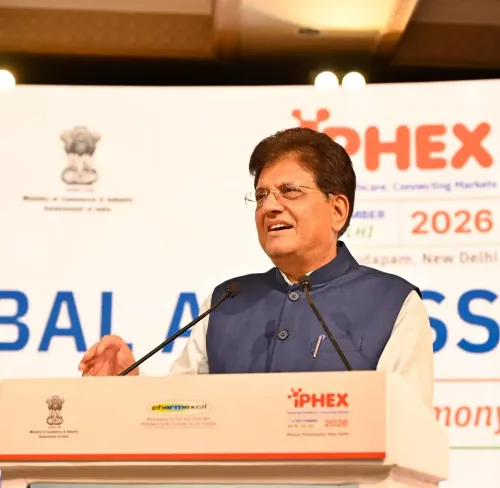
Goyal hails Global Drug Regulatory Conclave 2026 at Bharat Mandapam
Synopsis
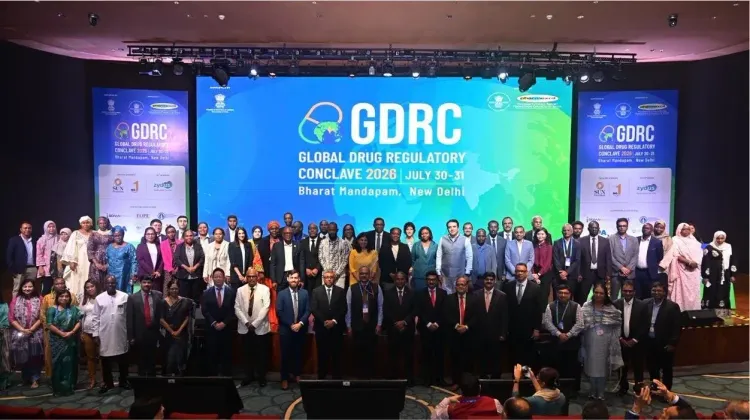
The Global Drug Regulatory Conclave 2026 opened at Bharat Mandapam in New Delhi, bringing together heads of national drug regulatory authorities worldwide. Commerce Minister Piyush Goyal highlighted India's push for regulatory convergence, faster patient access to affordable medicines, and stronger pharmaceutical trade links through its expanding treaty network.
Key Takeaways
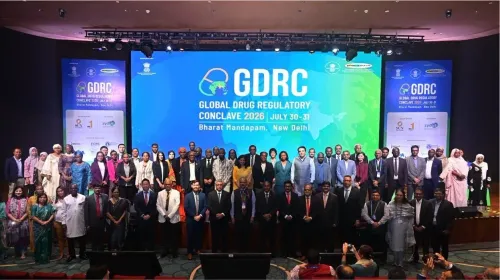
The Global Drug Regulatory Conclave 2026 commenced on July 30 at Bharat Mandapam, New Delhi , running over two days.
The forum brings together heads and senior officials of national drug regulatory authorities from across the world.
CDSCO (Central Drugs Standard Control Organisation) is India's apex drug regulator and a key participant in the conclave.
India is linking regulatory cooperation to its expanding network of trade agreements, with pharmaceutical chapters as an active component.
Pharmexcil and the Department of Commerce are co-stakeholders, underscoring the trade dimension of the forum.
Key outcomes to watch include MOUs, joint statements, and work plans on inspection standards, data sharing, and harmonised approval pathways.
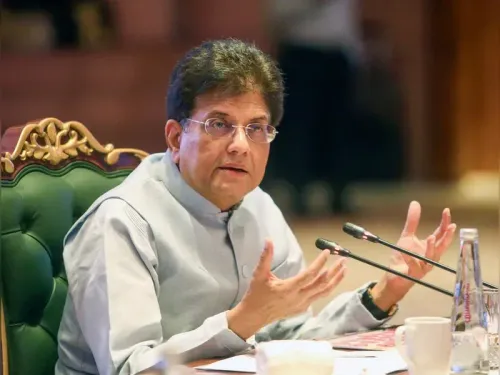
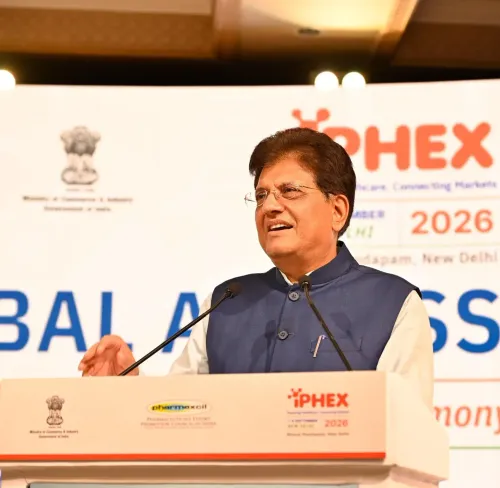
A two-day summit that could quietly reshape how medicines reach patients across the world opened its doors in New Delhi — and Union Commerce and Industry Minister Piyush Goyal wants every stakeholder to take notice.
The Global Drug Regulatory Conclave 2026 commenced on Thursday, July 30 at Bharat Mandapam, India's premier convention centre in the capital. The forum, which Goyal described as India's flagship international platform on pharmaceutical regulatory cooperation, brings together the heads and senior officials of national drug regulatory authorities from across the world under one roof.
What the conclave is designed to do
The core ambition is regulatory convergence — closing the gap between how different countries approve, inspect, and share data on medicines. India's apex drug regulator, the Central Drugs Standard Control Organisation (CDSCO), has for years engaged with global bodies and pursued bilateral dialogues to align standards. The conclave formalises that push at scale, giving regulators from multiple markets a shared table. Goyal framed the forum explicitly around patient outcomes: faster access to high-quality, affordable medicines for patients worldwide. That framing matters. India supplies a significant share of the world's generic medicines, and regulatory friction — differing inspection regimes, divergent approval pathways, inconsistent data-sharing norms — is one of the biggest barriers to getting those medicines into more markets more quickly.Trade agreements as the regulatory bridge
Goyal tied the conclave directly to India's expanding network of trade agreements, signalling that pharmaceutical regulatory chapters are now a live component of those negotiations. The Pharmaceutical Export Promotion Council of India (Pharmexcil) and the Department of Commerce are co-stakeholders in the effort, reflecting that this is as much a trade story as a health story. For India's pharmaceutical industry — a sector that has built its global standing on affordable generics — deeper regulatory alignment with major markets translates into reduced compliance costs, smoother market entry, and stronger positioning as a hub for pharmaceutical innovation. The conclave is, in that sense, where manufacturing muscle meets regulatory diplomacy.What to watch as the conclave concludes
The real measure of the forum's success will be what comes out on paper: joint statements, memoranda of understanding, or agreed work plans on inspection standards, data sharing, or harmonised approval pathways. Any such outcomes linked to ongoing trade negotiations would mark a concrete step forward. Regulatory forums of this kind often set the agenda for years of follow-up dialogue — the headlines are made in the room, but the change lands in the fine print. If the conclave delivers even a handful of bilateral commitments on regulatory alignment, India's ambition to convert its pharmaceutical manufacturing scale into lasting global regulatory influence will have moved measurably closer to reality.Point of View
The Commerce Ministry is effectively making market access contingent on mutual recognition of standards, a lever that larger economies have long used. For Goyal, championing this forum reinforces the BJP government's 'Atmanirbhar Bharat' narrative on a global stage: India not merely as a supplier of cheap generics, but as a rule-shaper in global medicine governance. The test will be whether the conclave produces binding commitments or remains a high-visibility dialogue event.
NationPress
14 Sept 2026
Frequently Asked Questions
What is the Global Drug Regulatory Conclave 2026?
The Global Drug Regulatory Conclave 2026 is India's flagship international forum on pharmaceutical regulatory cooperation and convergence, held at Bharat Mandapam in New Delhi. It brings together the heads and senior officials of national drug regulatory authorities from around the world to discuss harmonising medicine approval and inspection standards.
Where is the Global Drug Regulatory Conclave 2026 being held?
The conclave is being held at Bharat Mandapam, a major convention and exhibition centre in New Delhi used for high-profile international events hosted by the Government of India.
What is CDSCO and what is its role in the conclave?
CDSCO, or the Central Drugs Standard Control Organisation, is India's apex national drug regulatory authority under the Ministry of Health. It is a key institutional participant in the conclave, representing India in regulatory dialogues with counterpart agencies from other countries.
How does the conclave connect to India's trade agreements?
Commerce Minister Piyush Goyal has explicitly linked the conclave to India's expanding network of trade agreements, indicating that pharmaceutical regulatory chapters — covering areas like inspection standards and approval pathways — are being negotiated as part of those deals.
What outcomes should be expected from the Global Drug Regulatory Conclave 2026?
Key outcomes to watch include joint statements, memoranda of understanding, or agreed work plans on inspection standards, data sharing, and harmonised drug approval pathways between India and participating countries.