Goyal Backs iPHEX as India's Pharma Export Showcase

Synopsis
Union Commerce Minister Piyush Goyal on June 8, 2026 invoked the Sanskrit ideal of universal well-being to champion iPHEX, the international pharma exhibition run by Pharmexcil, reaffirming India's commitment to affordable medicines and global pharma export leadership.
Key Takeaways
Union Commerce and Industry Minister Piyush Goyal endorsed iPHEX on June 8, 2026 , framing it through the Sanskrit ideal 'सर्वे सन्तु निरामयाः' — 'may all be free from disease.' iPHEX is organised by Pharmexcil , the Pharmaceuticals Export Promotion Council of India, which operates under the Ministry of Commerce and Industry .
India's pharma export policy lineage includes Pharma Vision 2020 (2011–12) and the Make in India initiative launched in 2014 , both of which listed pharmaceuticals as a priority sector.
Key beneficiaries include Indian generic drug manufacturers seeking access to regulated markets through USFDA and EU GMP compliance frameworks.
The minister's endorsement signals potential for fresh export incentives or market-access announcements at or following the exhibition.
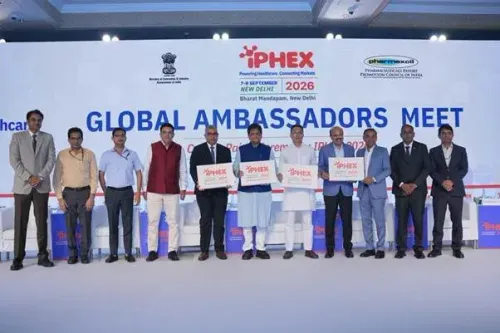
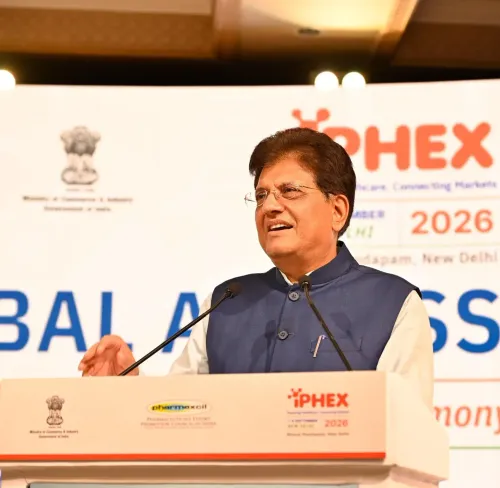
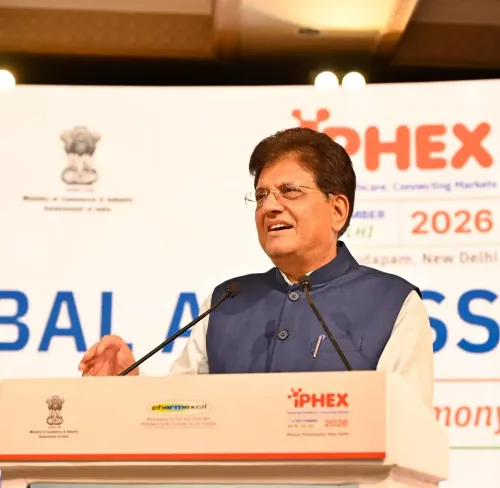
Union Commerce and Industry Minister Piyush Goyal on Monday, June 8, 2026, invoked the ancient Sanskrit ideal of universal well-being to frame India's ambitions in global pharmaceuticals, lending his endorsement to the International Pharmaceutical Exhibition (iPHEX) and positioning it as an expression of the country's civilisational commitment to affordable healthcare.
Context
Posting on X, Minister Goyal quoted the Sanskrit phrase 'सर्वे सन्तु निरामयाः' ('may all be free from disease') to describe the philosophy underpinning iPHEX. The invocation signals that the government views the exhibition not merely as a trade event but as an embodiment of India's broader mission to supply affordable medicines to the world. iPHEX is organised by Pharmexcil, the Pharmaceuticals Export Promotion Council of India, an autonomous body that functions under the Ministry of Commerce and Industry.
The minister's public endorsement at this level underscores the strategic importance the current administration places on pharmaceutical exports as a pillar of India's trade identity.
Policy Backdrop
India's push to become a global pharmacy hub has deep policy roots. The Pharma Vision 2020 document, released in 2011–12, first articulated the goal of positioning India as a world leader in affordable medicines. The Make in India initiative, launched in 2014, subsequently listed pharmaceuticals as one of its key focus sectors for manufacturing growth and export expansion.
Successive commerce ministers have used trade exhibitions such as iPHEX to highlight regulatory reforms, quality-standards upgrades, and new export incentive frameworks. The exhibitions serve as a direct interface between Indian drug manufacturers and international buyers, particularly from developing markets in Africa, Southeast Asia, and Latin America.
Stakeholders and Impact
Pharmexcil represents thousands of Indian pharmaceutical exporters who collectively make India one of the largest suppliers of generic medicines globally. For these exporters, ministerial endorsement of iPHEX translates into greater visibility, stronger government facilitation at the event, and a signal that fresh policy support — such as export incentives or compliance assistance — may be forthcoming.
Indian drug manufacturers, particularly those working toward USFDA and EU GMP compliance, stand to benefit from the platform that iPHEX provides for showcasing quality credentials to regulated markets. The broader public benefit lies in India's ability to keep global medicine prices competitive, a direct consequence of robust pharma export activity.
What's Next
Attention will now turn to the specific outcomes of the current iPHEX edition — including any new export incentive schemes, regulatory partnership announcements, or market-access agreements that may be unveiled at the event. Industry watchers will also monitor the upcoming Foreign Trade Policy review cycle for fresh measures targeting pharmaceutical competitiveness. Minister Goyal's framing of iPHEX in civilisational terms suggests the government intends to keep India's pharma export story at the centre of its trade diplomacy narrative in the months ahead.
Point of View
Ministerial visibility at this level is currency that can be spent in negotiations over incentives and regulatory facilitation. The move also keeps pharmaceutical exports politically salient ahead of any Foreign Trade Policy revision, making it harder for finance ministries to pare back sector-specific support.
NationPress
24 Oct 2026
Frequently Asked Questions
What is iPHEX and who organises it?
iPHEX, the International Pharmaceutical Exhibition, is organised by Pharmexcil — the Pharmaceuticals Export Promotion Council of India — an autonomous body under the Ministry of Commerce and Industry. It is designed to promote Indian pharma manufacturing and exports to global markets.
What did Piyush Goyal say about iPHEX?
Minister Piyush Goyal invoked the Sanskrit phrase 'सर्वे सन्तु निरामयाः' ('may all be free from disease') to describe what iPHEX stands for, positioning the exhibition as an expression of India's ethos of universal well-being through affordable medicines.
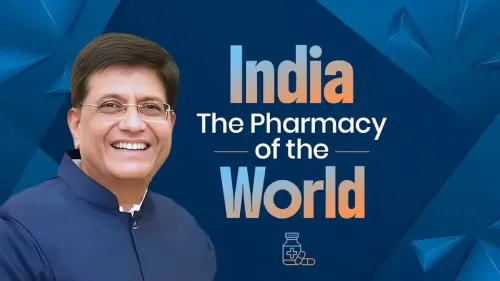
Why is India called the pharmacy of the world?
India is called the pharmacy of the world because it is one of the largest producers and exporters of generic medicines, supplying affordable drugs to developing nations across Africa, Southeast Asia, and Latin America. Policy frameworks like Pharma Vision 2020 and Make in India have reinforced this role.
What is Pharmexcil's role in Indian pharma exports?
Pharmexcil, the Pharmaceuticals Export Promotion Council of India, functions under the Ministry of Commerce and Industry and represents Indian pharmaceutical exporters. It facilitates market access, organises trade events like iPHEX, and works to improve the global competitiveness of Indian drug manufacturers.
What policies support India's pharmaceutical export sector?
Key policies include the Pharma Vision 2020 document released in 2011–12 and the Make in India initiative launched in 2014, both of which identified pharmaceuticals as a priority sector. The annual Foreign Trade Policy review also periodically introduces fresh export incentives and compliance-support schemes for the sector.