Piyush Goyal sets Dec 2029 deadline to make India drug-free
Synopsis
Union Commerce Minister Piyush Goyal has pledged to make India drug-free by December 31, 2029, using police forces nationwide. The declaration aligns with the Nasha Mukt Bharat Abhiyaan but sets a new hard deadline without specifying new legislation or budgetary measures.
Key Takeaways
Piyush Goyal set a public deadline of December 31, 2029 to make India free from drug abuse.
The pledge specifically names police forces across all states as the primary instrument of the mission.
India's Nasha Mukt Bharat Abhiyaan , launched in August 2020 , forms the existing policy backbone for drug demand reduction.
Enforcement powers for narcotics flow from the NDPS Act , under which state police are the frontline agency.
No new legislative measures, budget allocations, or task force structures were announced alongside the pledge.
Follow-up action is expected from the Ministry of Home Affairs and Ministry of Social Justice and Empowerment to operationalise the target.
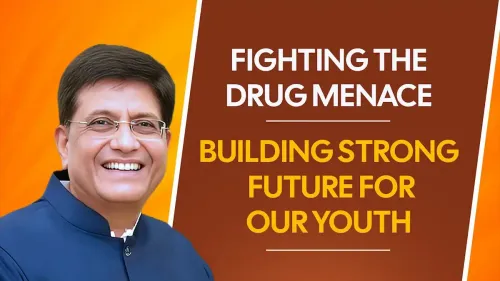
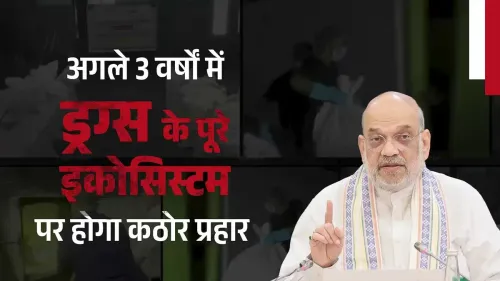
A deadline. A date. And a pledge that puts every police force in the country on notice. Union Commerce and Industry Minister Piyush Goyal on Wednesday, October 21, 2026, declared that India will be freed from the shadow of drugs by December 31, 2029 — with the nation's police forces as the primary instrument of that mission.
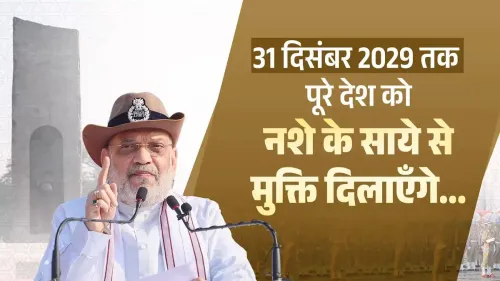
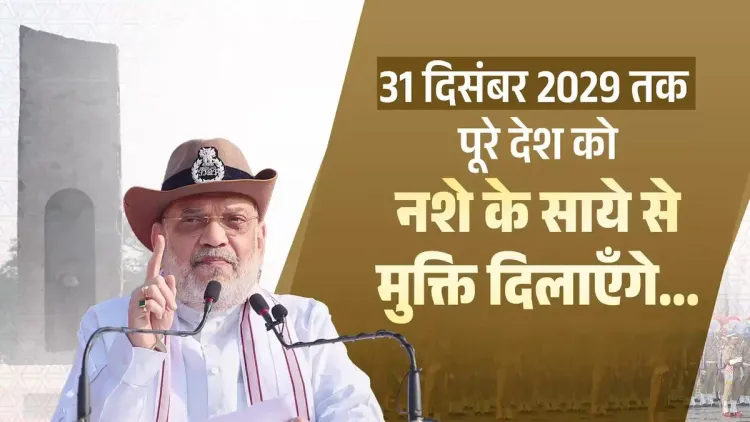
Posting in Hindi, Goyal stated: 'देशभर की पुलिस की मदद से 31 दिसंबर 2029 तक पूरे देश को नशे के साये से मुक्त करेंगे' — 'With the help of police forces across the country, we will free the entire nation from the shadow of addiction by December 31, 2029.'
Where this pledge fits in India's anti-drug arc
The statement lands against a well-established policy backdrop. The Nasha Mukt Bharat Abhiyaan, launched in August 2020 by the Ministry of Social Justice and Empowerment, has been the flagship framework for demand reduction and community awareness across states. That programme built the vocabulary; Goyal's post now attaches a hard end-date to the ambition.
India's primary enforcement architecture for narcotics sits under the Narcotic Drugs and Psychotropic Substances (NDPS) Act, which governs seizure, prosecution, and inter-agency coordination. State police forces are the first line of enforcement under that framework — making them the logical vehicle for any nationwide sweep the Centre envisions.
Why a Commerce Minister is speaking on drug eradication
The pledge is notable for its source. Drug policy formally sits with the Ministry of Home Affairs and the Ministry of Social Justice and Empowerment — not Commerce. Goyal's statement reflects the broader pattern of senior BJP leaders, regardless of portfolio, amplifying the party's governance narrative on social issues. As Leader of the House in the Rajya Sabha, Goyal is among the government's most visible communicators — his words carry weight well beyond his formal ministerial brief.
What the post does not specify: new legislation, fresh budget allocations, a dedicated task force, or a formal inter-ministerial coordination mechanism. Watchers will look to the Home Ministry and Social Justice Ministry for operational follow-through — including any state-level police coordination meetings or ring-fenced anti-narcotics funding that gives the 2029 target institutional muscle.
The clock is now public. Three years and two months remain.
Point of View
Rather than the Narcotics Control Bureau or a new central agency, signals reliance on cooperative federalism, which historically produces uneven results across states. For the pledge to graduate from rhetoric to roadmap, the Home Ministry and Social Justice Ministry will need to translate the 2029 horizon into measurable annual benchmarks, ring-fenced funding, and accountability structures — none of which have yet been made public.
NationPress
21 Oct 2026
Frequently Asked Questions
What did Piyush Goyal say about making India drug-free?
Piyush Goyal posted on October 21, 2026 that with the help of police forces across the country, the entire nation will be freed from the shadow of drugs by December 31, 2029.
What is the Nasha Mukt Bharat Abhiyaan?
Nasha Mukt Bharat Abhiyaan is a national programme launched in August 2020 by the Ministry of Social Justice and Empowerment to reduce drug demand and create awareness about addiction across Indian states.
Which ministry is responsible for drug eradication in India?
Drug enforcement primarily falls under the Ministry of Home Affairs and the Narcotics Control Bureau, while demand reduction and awareness programmes are led by the Ministry of Social Justice and Empowerment.
What is the NDPS Act and how does it relate to India's drug policy?
The Narcotic Drugs and Psychotropic Substances (NDPS) Act is the central law governing drug seizure, prosecution, and inter-agency coordination in India. State police forces operate as the frontline enforcement agency under this framework.
Has India set a deadline for becoming drug-free before?
The Nasha Mukt Bharat Abhiyaan set broad awareness and reduction goals since 2020, but a specific hard deadline of December 31, 2029 attached to police-led eradication has not been part of prior official programme targets.