Bhupender Yadav, CM Yogi review Delhi-NCR air pollution plan ahead of winter
Synopsis
With winter and its toxic smog season weeks away, Union Minister Bhupender Yadav flew to Lucknow to press CM Yogi Adityanath on real-time accountability — geo-tagged road sweepers, electric bus rollout, and scrapping of end-of-life vehicles. The urgency signals that last year's gridlock over jurisdictional blame-sharing may finally be giving way to coordinated action.
Key Takeaways
Bhupender Yadav and CM Yogi Adityanath held a pollution review meeting in Lucknow on 18 September 2026 .
Yadav called for pollution control in 'mission mode' before the winter season worsens Delhi-NCR air quality.
All Mechanical Road Sweeping Machines (MRSMs) are to be geo-tagged for real-time monitoring and accountability.
Deployment of electric buses and EV charging stations across NCR municipal areas in UP is to be expedited.
Authorities urged to fast-track NOCs for End-of-Life vehicle transfers out of the NCR and promote scientific scrapping.
CM Yogi directed all state officials to act promptly on every measure discussed in the meeting.
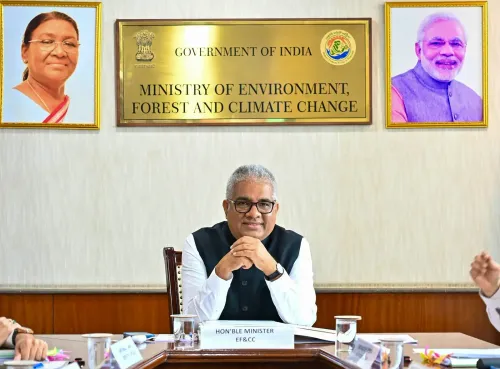
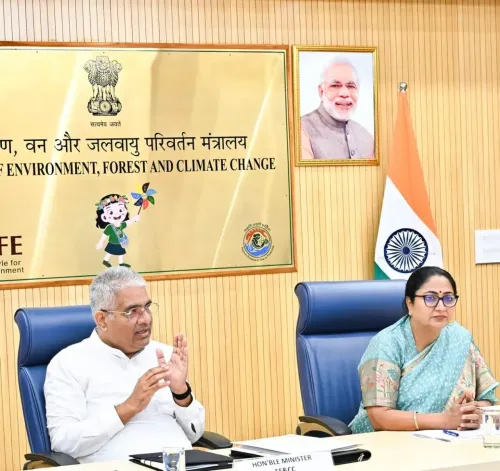
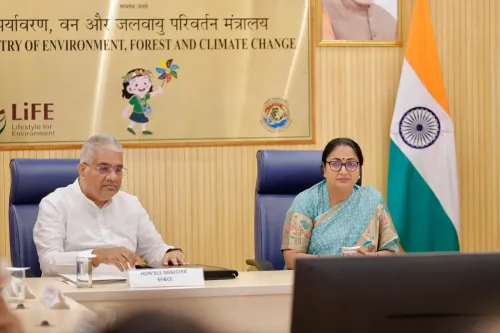
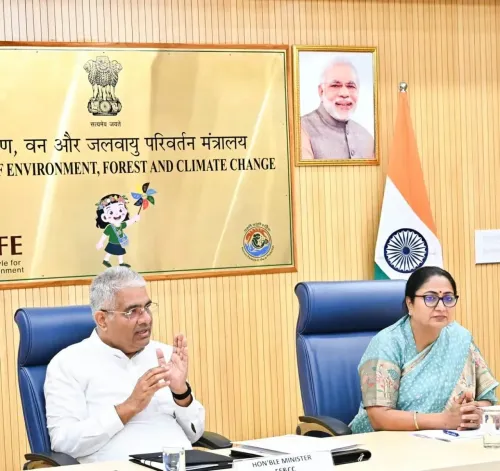
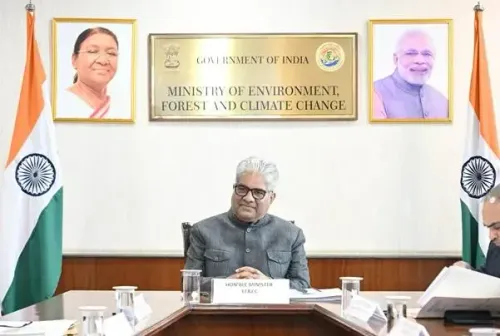
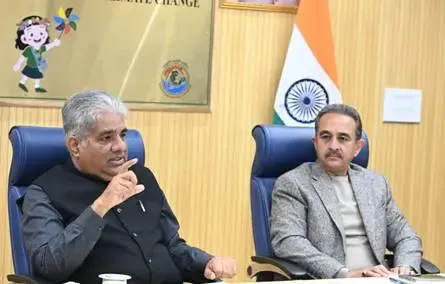
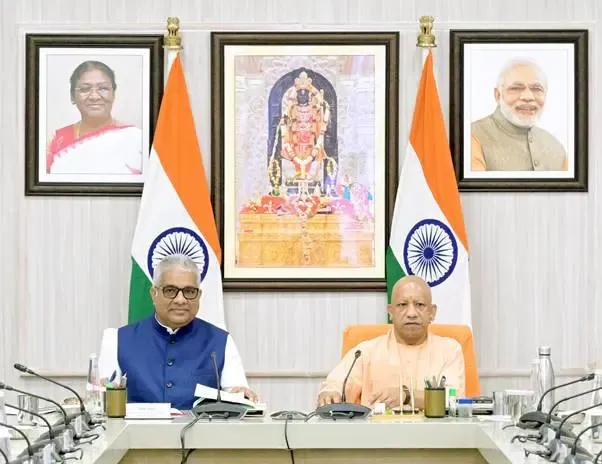
Union Minister for Environment, Forest and Climate Change Bhupender Yadav on Friday, 18 September convened a high-level review meeting in Lucknow with Uttar Pradesh Chief Minister Yogi Adityanath to evaluate the state's progress on air quality improvement measures for the Delhi-NCR region. The meeting comes ahead of winter months, which historically see a sharp deterioration in air quality across the National Capital Region.
Urgency Before Winter Sets In
Yadav underscored the critical window available before the onset of winter, calling for pollution control measures to be executed in 'mission mode.' He said, 'The window before the winter season must be fully utilised to implement pollution control measures in mission mode. Timely execution, effective coordination and strict enforcement will be critical to achieving visible improvements in Delhi-NCR's air quality.'
He emphasised the need for accelerated implementation, stronger inter-agency coordination and strict enforcement to ensure a substantial reduction in pollution levels before temperatures drop and conditions worsen.
Road Dust, Sweeping Machines and Green Cover
A significant portion of the review focused on curbing road dust, one of the major contributors to particulate pollution in the NCR. Yadav called for end-to-end paving and greening of roads using local-species shrubs and grasses, with priority given to pothole repair, construction of footpaths and pavements, roadside greening, and deep cleaning of roads.
He also directed that all gaps in the deployment of Mechanical Road Sweeping Machines (MRSMs) be addressed immediately, and recommended that all MRSMs be geo-tagged to enable real-time monitoring of road-cleaning operations and improve accountability on the ground.
Electric Mobility and End-of-Life Vehicles
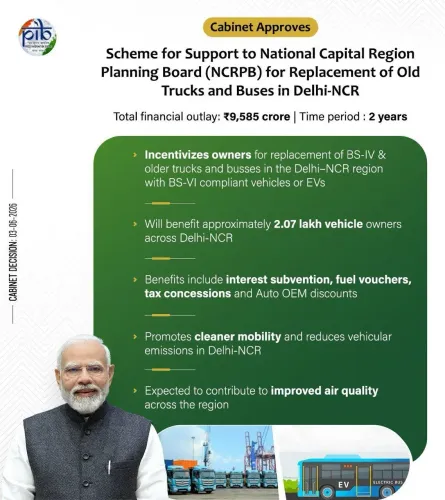
On the transport front, Yadav stressed that the deployment of electric buses and installation of EV charging stations across NCR municipal corporations in Uttar Pradesh must be expedited, noting significant gaps in the existing fleet. He also requested that authorities fast-track issuance of No Objection Certificates (NOCs) for transfer of eligible End-of-Life (EoL) vehicles outside the NCR, while encouraging scientific scrapping of old and unfit vehicles.
Whole-of-Government Approach
Earlier in the meeting, Yadav highlighted the importance of public participation and coordinated institutional action, stating that air pollution can only be effectively tackled through a 'Whole of Government' and 'Whole of Society' approach. He congratulated the Uttar Pradesh government on the rapidly increasing tree-covered area across the state.
Chief Minister Yogi Adityanath welcomed the Centre's measures and directed all state officials to take timely action on the points discussed. Others present included Union Minister of State for Environment Kirtivardhan Singh, UP Environment and Forest Minister Arun Kumar, and State Transport Minister Dayashankar Singh.
What Comes Next
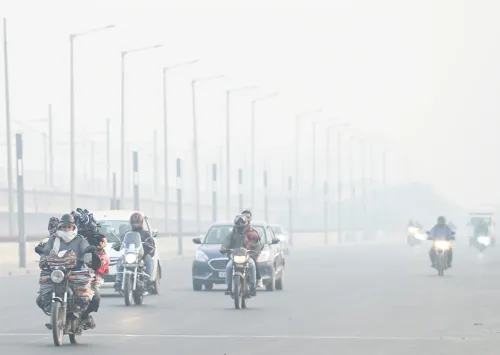
With Delhi-NCR's air quality index routinely breaching hazardous levels between October and January, the pressure on state and central agencies to deliver visible improvements before the season is acute. Execution of MRSM deployment, EV expansion, and road greening in the weeks ahead will determine whether this review translates into ground-level impact.
Point of View
But the deeper problem — stubble burning, unregulated construction dust, and diesel freight — sits largely outside the scope of what was discussed. Unless enforcement mechanisms are backed by consequences rather than advisories, Delhi-NCR's hazardous winter AQI is unlikely to see structural improvement. The emphasis on a 'Whole of Society' approach also risks diffusing state responsibility at precisely the moment when sharper institutional accountability is needed.
NationPress
18 Sept 2026
Frequently Asked Questions
Why did Bhupender Yadav meet CM Yogi Adityanath on air pollution?
Union Minister Bhupender Yadav met Uttar Pradesh Chief Minister Yogi Adityanath on 18 September 2026 in Lucknow to review UP's progress on air quality improvement measures for Delhi-NCR ahead of the winter season. Winter months typically see a sharp spike in pollution levels across the National Capital Region.
What are the key measures discussed for reducing Delhi-NCR air pollution?
Key measures include geo-tagging of Mechanical Road Sweeping Machines for real-time accountability, end-to-end road paving and roadside greening, faster deployment of electric buses and EV charging stations, and expediting No Objection Certificates for End-of-Life vehicle transfers out of the NCR.
What did CM Yogi Adityanath say at the pollution review meeting?
Chief Minister Yogi Adityanath welcomed the Centre's pollution control measures and directed all state government officials to take timely action on every point discussed during the meeting. He also thanked Yadav for organising the review and providing guidance.
Why is pre-winter action on Delhi-NCR pollution so urgent?
Delhi-NCR's air quality index routinely breaches hazardous levels between October and January, driven by stubble burning, road dust, vehicle emissions, and weather conditions that trap pollutants. Acting before temperatures drop is considered critical because remedial measures are far less effective once the smog season begins.
Who else attended the Lucknow pollution review meeting?
The meeting was attended by Union Minister of State for Environment Kirtivardhan Singh, UP Environment and Forest Minister Arun Kumar, State Transport Minister Dayashankar Singh, and senior state government officials.