Bhupender Yadav meets start-ups on Delhi air pollution tech fixes
Synopsis
Environment Minister Bhupender Yadav sat down with Delhi-NCR start-ups to map AI, drone, and satellite technologies onto nine specific air pollution problems — from stubble burning detection to tamper-proof PUC checks. With winter smog season imminent, the session signals a policy push to move from monitoring to real-time, tech-driven enforcement.
Key Takeaways
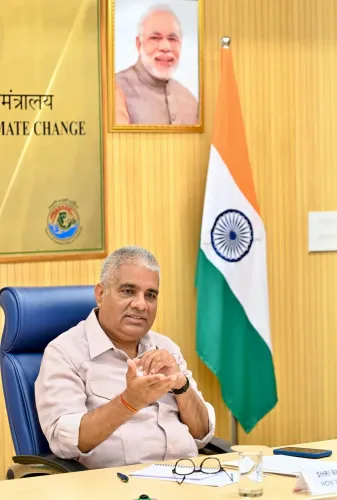
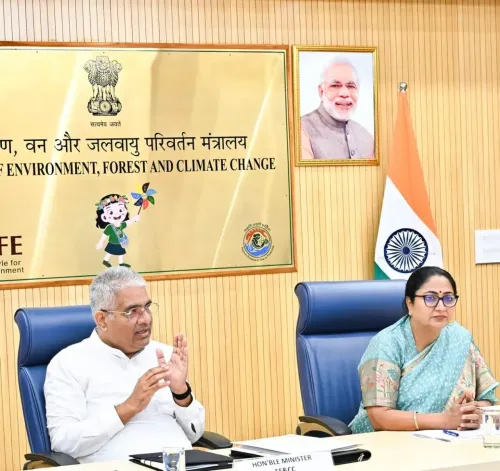
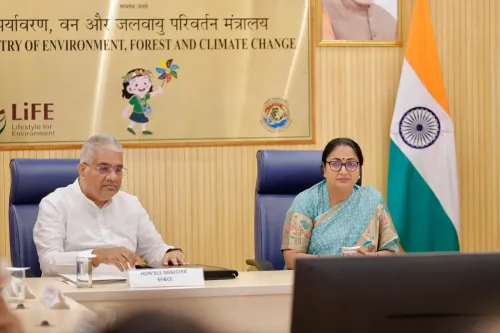
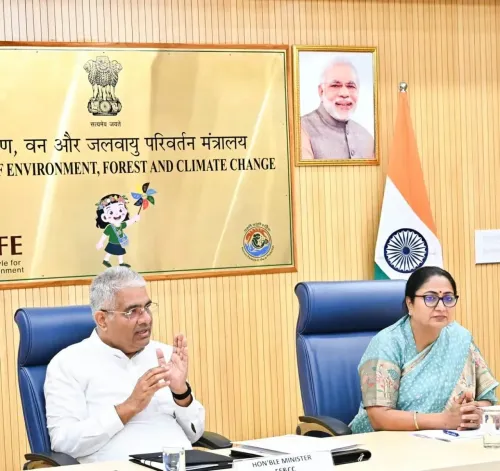
Union Environment Minister Bhupender Yadav met start-ups and innovators on 17 October to discuss air pollution solutions for Delhi-NCR .
The engagement covered nine key areas of air quality management, from crop residue to road dust.
Minister stressed integration of OCEMS data with plant-operation data and use of AI to detect industrial malpractices.
Technologies showcased included 24x7 stubble-burning detection , automated PUC violation identification , and AI-based traffic congestion prediction.
Start-ups also presented biochar and crop-residue-based solutions to convert agricultural waste into bioenergy and compost instead of burning it.
Guidelines on crop stubble storage are to be developed with the Ministry of Agriculture, CAQM , and CPCB .
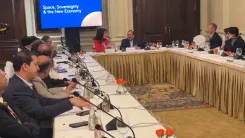
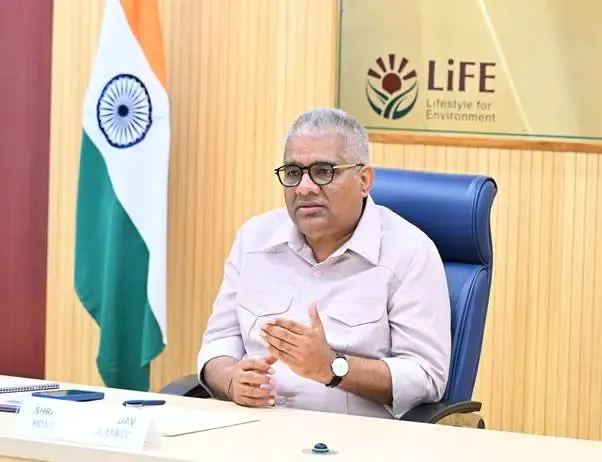
Union Environment Minister Bhupender Yadav on Saturday, 17 October held a structured dialogue with start-ups and innovation companies developing air pollution mitigation technologies for the Delhi-NCR region, underscoring the urgent need to close the gap between policymakers and technology innovators. The engagement, confirmed through an official ministry statement, centred on nine specific problem areas in air quality management.
Nine Problem Areas on the Table
Yadav presented a defined set of problem statements across nine key areas of air pollution management and invited innovators to demonstrate how their technologies could be adapted, scaled, and deployed operationally. He framed the interaction as a complement to existing measures — including the Graded Response Action Plan (GRAP), promotion of cleaner fuels, electric mobility, and the strengthening of air-quality monitoring networks — rather than a replacement for them.
The Minister stressed that such public-private engagement could bring greater uniformity in policy implementation and enhance governance transparency. On enforcement, he said integration of Online Continuous Emission Monitoring Systems (OCEMS) data with plant-operation data is essential to identify malpractices, and that artificial intelligence could play a critical role in achieving this.
AI, Drones and Satellites at the Centre of Solutions
The major thrust of the interaction, according to Yadav, was the application of AI, sensors, remote sensing, satellite imagery, drone-based technologies, and data analytics to build real-time understanding of air pollution dynamics. Solutions presented by participating innovators included hyperlocal air-quality monitoring, city-wide pollution mapping, hotspot identification and forecasting, AI-based source apportionment, and predictive traffic-congestion management.
Technologies for 24x7 detection of stubble burning and open biomass burning were also showcased, alongside automated systems for identifying vehicles without valid Pollution Under Control (PUC) certificates and over-aged vehicles — tools that could, according to the minister, significantly strengthen timely enforcement.
Crop Residue, Waste Management in Focus
Yadav called on start-ups to prioritise environment-friendly solutions for the scientific management of crop residue, solid waste, and construction and demolition (C&D) waste — three of the most persistent contributors to Delhi's seasonal pollution spikes. He also highlighted the need for guidelines on crop stubble storage, to be developed in coordination with the Ministry of Agriculture, the Commission for Air Quality Management (CAQM), and the Central Pollution Control Board (CPCB).
Several start-ups demonstrated technology-enabled systems to connect recycled C&D waste products with construction-sector demand, as well as integrated platforms for the collection, transportation, and productive utilisation of paddy straw — for bioenergy, biomass fuel, composting, and other value-added applications. Crop-residue-based materials and biochar-based solutions were also presented as pathways to convert agricultural residue into productive use rather than burning it.
Traffic and Road Dust Also on the Radar
Beyond industrial and agricultural sources, the Minister emphasised tamper-proof PUC monitoring and AI-based prediction of traffic congestion hotspots as tools for cleaner urban mobility. He also flagged faster and more efficient road maintenance as an active road-dust control measure — a dimension of Delhi's air quality challenge that often receives less policy attention than stubble burning or vehicular emissions.
What Comes Next
The ministry has not announced a formal timeline for deploying any of the showcased technologies, but the engagement signals a shift toward technology-enabled, data-driven enforcement in Delhi's air quality governance. With the winter pollution season approaching, the pace at which these innovations move from demonstration to ground deployment will be closely watched by regulators, residents, and environmental groups alike.
Point of View
But the gap between ministerial showcases and ground deployment has historically been wide in Delhi's air quality story. The nine problem areas Yadav identified — stubble burning, road dust, C&D waste, PUC enforcement — are not new; they have appeared in CAQM orders and Supreme Court directions for years. The real test is whether the ministry creates a structured procurement or pilot pathway for these start-ups, or whether this remains a demonstration event. With GRAP already in force and the winter crunch weeks away, the window for meaningful tech integration this season is narrow.
NationPress
17 Oct 2026
Frequently Asked Questions
What did Environment Minister Bhupender Yadav discuss with start-ups on 17 October?
Minister Yadav met start-ups and innovation companies working on air pollution mitigation in Delhi-NCR to discuss technology solutions across nine key problem areas, including AI-based monitoring, stubble burning detection, PUC enforcement, and waste management. The session was aimed at bridging the gap between policymakers and technology innovators.
What technologies were showcased at the air pollution start-up interaction?
Innovators demonstrated hyperlocal air-quality monitoring, city-wide pollution mapping, AI-based source apportionment, 24x7 stubble and biomass burning detection, automated identification of PUC-violating vehicles, and integrated paddy straw utilisation systems for bioenergy and composting.
What is the role of AI in Delhi's air pollution management as discussed at the meeting?
Artificial intelligence is being positioned for multiple functions — predicting traffic congestion hotspots, identifying industrial malpractices through OCEMS data integration, apportioning pollution sources in real time, and detecting open burning events. The minister said AI is essential to moving from periodic monitoring to real-time enforcement.
Which government bodies are involved in developing crop stubble guidelines?
The Ministry of Agriculture, the Commission for Air Quality Management (CAQM), and the Central Pollution Control Board (CPCB) are to be involved in developing guidelines on crop stubble storage and an in-situ crop-residue storage model, according to Minister Yadav.
How does this initiative relate to Delhi's existing air quality measures?
The start-up engagement is designed to complement — not replace — existing mechanisms such as the Graded Response Action Plan (GRAP), promotion of cleaner fuels, electric mobility, and air-quality monitoring networks. The minister framed technology-level interventions as a way to strengthen source-level enforcement within the existing policy framework.